
5 Best Australian Social History Books for Beginners
Table of Contents
- Quick Comparison: The 5 Best Australian Social History Books
- How We Chose These Books
- 1. Australia Remember When: The Best Starting Point
- 2. Photos and Memories of Australia from the 1940s: Wartime and Recovery
- 3. Photos and Memories of Australia from the 1950s: Suburbia Takes Shape
- 4. Photos and Memories of Australia from the 1960s: A Decade of Change
- 5. Photos and Memories of Australia from the 1970s: Turbulence and Transformation
- Australian Cultural History for Beginners: Where to Start
- Frequently Asked Questions
Last Updated: September 27, 2026
Quick Comparison: The 5 Best Australian Social History Books
Finding the best Australian social history books for beginners usually means wading through dense academic texts or generic lists that assume prior knowledge. This guide takes a different approach: five titles that bring Australian social history to life through photographs, personal memories, and accessible prose, covering the 1940s to the 1970s.
All five come from the Remember When series by veteran Australian media professional Bob Byrne, pairing researched narrative history with hundreds of reader-contributed photographs.
| Book | Decade Covered | Price | Best For |
|---|---|---|---|
| Australia Remember When | 1940s-1980s | $34.99 | Broad overview of the Baby Boomer years |
| Photos and Memories of Australia from the 1940s | 1940s | $29.99 | Wartime and post-war recovery stories |
| Photos and Memories of Australia from the 1950s | 1950s | $29.99 | Suburban life and post-war immigration |
| Photos and Memories of Australia from the 1960s | 1960s | $29.99 | Social change and cultural revolution |
| Photos and Memories of Australia from the 1970s | 1970s | $29.99 | Political upheaval and cultural transformation |
How We Chose These Books
We screened every title against five tests, and we're telling you exactly what they were, including where this list is deliberately narrow.

1. It has to be readable in a week, not a semester. We ruled out anything opening with a historiographical essay. The test: could a reader who last studied history in Year 10 finish a chapter on the train home? Narrative flow, short chapters and plain prose all count.
2. It has to use primary material, not just summarise it. Diaries, letters, oral history transcripts, newspaper clippings, government reports, photographs. Primary sources give beginners something to react to, which is what makes history stick; books that only recycle other historians' conclusions read as a list of dates.
3. It has to name the trade-offs, not hide them. Social history is contested. Was the 1950s a golden age of full employment and home ownership, or a conformist decade that sidelined women, migrants and First Nations people? A good beginner book shows you the argument.
**4.
What this list deliberately leaves out
Two honest limitations. First, this guide is weighted towards twentieth-century social history, because that is where most beginners start and where the strongest accessible writing sits. If your interest is colonial or frontier history, you will need a different list, start with the National Library of Australia's Australian history collection guide, which maps the major published sources by period.
A note on difficulty labels
Throughout this guide we label each title Narrative/Accessible or Academic. Narrative titles read like a story and assume no prior knowledge; Academic titles assume you know the broad chronology and are comfortable with footnotes, jargon and slow argument. Beginners should stay in the first category until they have finished two or three books, then the second becomes genuinely rewarding.
1. Australia Remember When: The Best Starting Point
Australia Remember When is the ideal first book for anyone exploring Australian social history. With more than 200 photos across 250-plus pages, it compresses four decades of social evolution into one sentimental, highly readable volume.
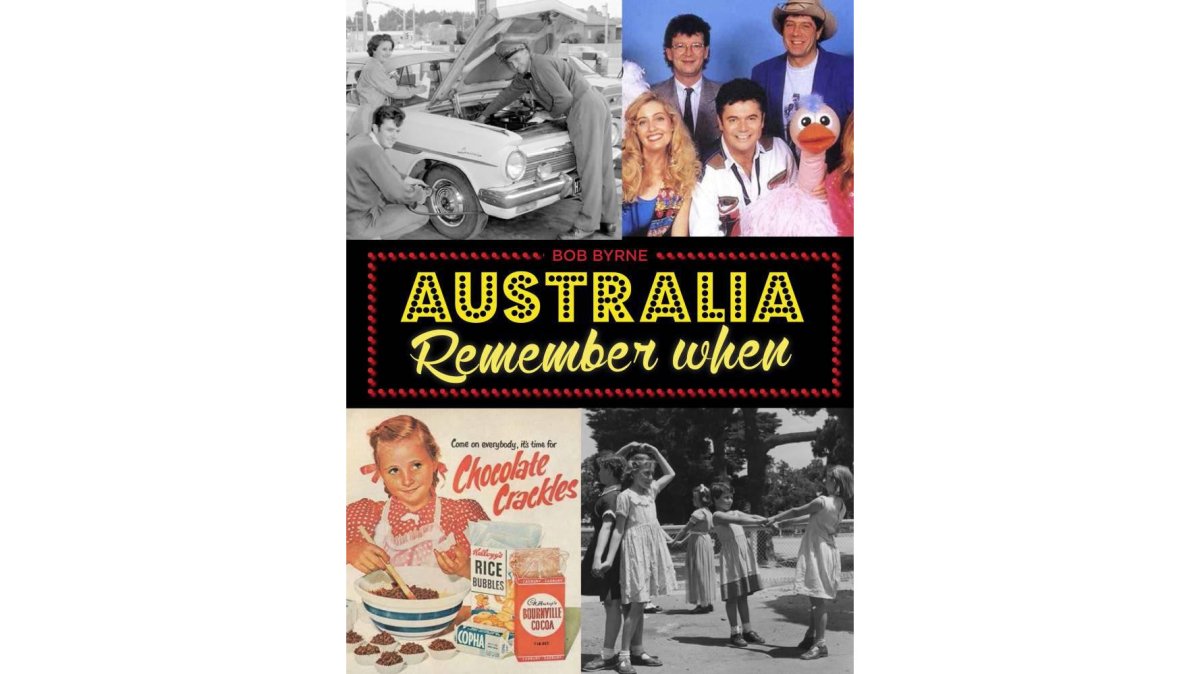
Why It Works for Beginners
Australian social history is the story of ordinary people, not just politicians and legislation, and each photograph opens a conversation, whether you're reading alone or sharing memories with family.
2. Photos and Memories of Australia from the 1940s: Wartime and Recovery
The 1940s shaped modern Australia more than any other decade, and this book captures that transformation through the eyes of people who lived it, from rationing and blackouts to victory gardens and air raid drills, documenting both hardship and resilience.
3. Photos and Memories of Australia from the 1950s: Suburbia Takes Shape
The 1950s brought television, European immigration, and the great Australian dream of a quarter-acre block. This 208-page volume captures the decade when families rebuilt their lives after World War II and a distinctive suburban culture took hold.
Book; Photos and Memories of Australia →
4. Photos and Memories of Australia from the 1960s: A Decade of Change
The "Swingin' Sixties" brought Beatlemania, decimal currency, and profound social change. This 181-page book documents the decade from the comfortable certainties of 1960 to the moon landing that closed it out.
Australian War Memorial's overview of Australia in the 1960s
5. Photos and Memories of Australia from the 1970s: Turbulence and Transformation
Australia's most turbulent decade gets the Remember When treatment in this volume covering the Whitlam years, the Dismissal, and the cultural revolution that followed. From fish and chips wrapped in newspaper to the arrival of fast food, from red phone boxes to colour television, the book captures a nation finding its voice.
Australian Cultural History for Beginners: Where to Start
Every other list on this topic gives you the same advice: start with a broad overview, then go deeper. That is fine as far as it goes, but it does not help you choose which book, because beginners do not arrive with a decade in mind. They arrive with an interest.
Pick your path by interest, not by decade
For the reader who wants the big picture first. Start with a single-volume overview, then branch out only once you know which period pulled you in. This is an entry point.
Match the difficulty to the reader
Label every title before you buy it. Narrative/Accessible books read like a story, use short chapters and assume no prior knowledge, these are the right first books. Academic books assume you already know the chronology and are comfortable with dense argument and footnotes. A beginner who starts with an academic title often concludes that history is boring, when the real problem was the wrong book.
Check the format before you commit
Beginners read in different ways, and format is not a trivial detail. Before buying, check whether the title you want is available as:
- Paperback, the default, and the best option for gifting and for shared reading.
- E-book, useful for searchable text, adjustable font sizes and reading on a phone.
- Audiobook, the format that matters most for commuters, for people with low vision, and for older readers who find small print tiring. A well-narrated audiobook can carry a beginner through a book they would never finish on paper.
Buying for someone else
Match the book to the period they remember, not the period you find most interesting. Someone who grew up in the 1950s will engage with the 1950s volume far more readily than with a book about the 1970s, even if the later book is objectively better written. If you are unsure, buy the broad overview, it covers four decades and is the safest gift.
Frequently Asked Questions
What is the best Australian social history book for a complete beginner?
Australia Remember When by Bob Byrne is the strongest starting point. It spans the 1940s to the 1980s in one volume, with over 200 photos and more than 250 pages of short, readable recollections. You do not need prior knowledge of Australian social history to follow it, and the pictorial format makes it easy to dip in and out. At $34.99 it also works well as a gift for someone reconnecting with the era they grew up in.
How does social history differ from political history?
Political history focuses on leaders, elections, legislation and the decisions made in parliament. Social history looks at how ordinary people actually lived: what they ate, how they worked, where they shopped and what they did for fun. The Photos and Memories series sits firmly in the social history camp, covering everything from rationing and blackouts in the 1940s to colour television and the Dismissal in the 1970s, all told through the experiences of everyday people rather than politicians.
Are there accessible books that cover Australian social history for non-academics?
Yes, and the decade-specific format is one of the most accessible. Each Photos and Memories title runs to roughly 180 to 210 pages, uses plain language and relies on photographs as much as text. Growing up in Adelaide in the 1950s, edited by Susan Blackburn, takes a similar approach through 13 personal reminiscences. None of these assume a university background in history, which makes them well suited to readers who want an engaging introduction rather than an academic text.
How can I use these books to preserve family memories?
Photos and Memories books work as conversation starters. Sit with a parent or grandparent and work through a decade they remember, and the images will often prompt stories that would not surface otherwise. Carers in aged care settings use them the same way for reminiscence activities with residents. You can also write names, dates and small notes in the margins as memories come up, turning the book into a record that stays in the family long after the first reading.
Can I order a signed copy as a gift?
Several titles in the range are available as author-signed copies, including Photos and Memories of Australia from the 1940s, the 1960s, the 1970s, Melbourne Remember When and Adelaide Remember When: The Boomer Stories. A signed copy adds a personal touch that suits milestone birthdays, anniversaries and Christmas gifts. If you are ordering for a specific date, check delivery timeframes when you place the order, particularly if you need it to arrive before a birthday.