
Australia Remember When Book Review: A Nostalgic Keepsake
Table of Contents
- Australia Remember When Book Review: First Impressions
- Inside the Book: Over 200 Photos and 250 Pages of Memories
- Themes of Nostalgia and a Bygone Era
- How to Preserve Family Memories with Australian History Books
- Best Australian History Gift Books for Older Generations
- Physical Quality and Print Resolution
- Who Is This Book For? Target Audience and Suitability
- Final Verdict: A Coffee Table Book Worth Keeping
- Frequently Asked Questions
Last Updated: September 12, 2026
Australia Remember When Book Review: First Impressions
Some books are read once and passed along. Others sit on the coffee table for years, picked up whenever a grandchild asks what life was like before mobile phones. This Australia Remember When book review from Remember When Shop looks at a title that falls firmly into the second category. Compiled by veteran radio broadcaster and Advertiser columnist Bob Byrne, Australia Remember When gathers more than 200 photographs and over 250 pages of memories spanning the 1940s to the 1980s (nla.gov.au). It began life as content from the Australia Remember When Facebook page, and the book carries that same community feel: contributed recollections, familiar landmarks, and images of an Australia that has largely disappeared. This review covers the photography, the themes, the print quality, and who it actually suits.

Inside the Book: Over 200 Photos and 250 Pages of Memories
The core of the book is its scale. More than 200 photos and over 250 pages make this a substantial pictorial record rather than a slim gift-shop novelty.

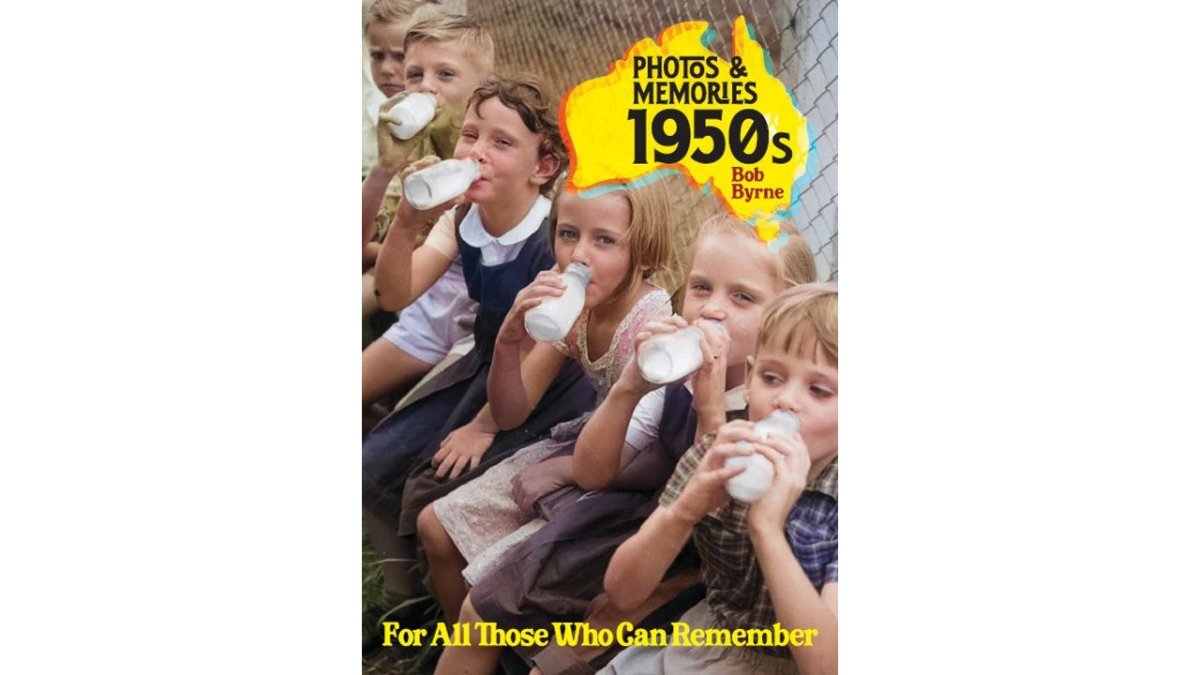
Each spread pairs an archival image with a short caption or anecdote, so you can open it anywhere and find something to talk about. That makes it easy to dip into rather than read cover to cover.
The sequence moves chronologically, which matters more than it sounds. Readers tend to gravitate to the decade they remember best, and the structure lets them find it quickly.
Themes of Nostalgia and a Bygone Era
Nostalgia here is not vague or sentimental in the abstract. It is specific: the milkman and his horse and cart, the paper boy selling the late edition, Graham Kennedy and Bert Newton on early television, 45rpm singles bought at the local record shop.
That specificity is what separates this book from a generic coffee table book. The recollections are anecdotal, drawn from ordinary people, and they read as lived experience rather than researched summary.
The underlying theme is social history: how daily life changed across four decades, from wartime rationing through to colour television and decimal currency. It is a visual history of the Baby Boomer years, and it treats those years with affection without pretending they were simpler than they were.
How to Preserve Family Memories with Australian History Books
A photo book is a starting point, not a finished record. The most effective approach is to use it as a prompt.
- Set aside 30 minutes with the reader and work through one decade at a time
- Record or write down the memories each page triggers, in the reader's own words
- Note names, suburbs, schools, and workplaces that come up
- Scan or photograph any family photos that match the era being discussed
- Store the notes with the book so the next generation finds them together
Reminiscence work of this kind is used widely in aged care, and it works best when the prompts are concrete. A picture of a Hills Hoist or an outside lav will draw out a story far faster than an open question like "what was it like back then?".
Best Australian History Gift Books for Older Generations
Choosing well comes down to matching the book to the decade the recipient actually remembers. Bob Byrne's catalogue is unusually well suited to this because it is organised by era.
| Book | Price | Best For |
|---|---|---|
| Australia Remember When | $34.99 | Broad 1940s-1980s overview |
| Remember When...Snapshots of Australia | $39.99 | Readers wanting a colour format |
| Photos and Memories of Australia from the 1940s | $29.99 | Readers born in the late 1930s-40s |
| Photos and Memories of Australia from the 1950s | $29.99 | Readers born in the 1940s-50s |
| Photos and Memories of Australia from the 1960s | $29.99 | Readers born in the 1950s-60s |
| Photos and Memories of Australia from the 1970s | $29.99 | Readers born in the 1960s-70s |
| Melbourne Remember When | $34.99 | Readers who grew up in Melbourne |
| Adelaide Remember When: The Boomer Stories | $29.99 | Readers who grew up in Adelaide |
Several titles are available as author-signed copies, which lifts them above the usual gift. For a milestone birthday, pairing a decade book with a signed copy gives the recipient something that cannot be bought off a general retailer's shelf.

For anyone weighing up how to preserve family memories with Australian history books, the practical answer is to buy the decade-specific title rather than the broad one, then use it as the prompt for a recorded conversation.
Physical Quality and Print Resolution
Here is what actually matters when you handle the book.
Format and trim. Australia Remember When is a paperback in a landscape (wide) format, which is the correct choice for archival photography, a portrait trim would force most period images into a letterbox strip with dead space above and below. Landscape lets a single street scene or shopfront fill the spread.
Paper and binding. The stock is a coated matte paper rather than a heavy art-book gloss. Matte suits black-and-white archival material because it suppresses the specular glare that makes old photographs hard to read under a lamp, and it takes handling better than gloss, which shows fingerprints (nla.gov.au). The binding is a standard perfect-bound paperback, fine for a coffee table that gets picked up weekly, but it is not a sewn hardback, and a book left open face-down will eventually crack the spine.
Reproduction. This is the honest trade-off. The source images are drawn from a community archive, which means they arrive as a mix of original prints, newspaper scans, and family snapshots. A handful of reproductions are visibly softer than the rest, you can see it in fine detail like signage lettering and number plates. That is a limitation of the source material, not the press. The stronger pages are the ones reproduced from good original prints, and they hold shadow detail well.
Colour versus monochrome. The bulk of the book is black-and-white, which is period-accurate for the 1940s to 1960s. Where the title benefits is in the later decades, and this is the argument for the colour-format companion, Remember When...Snapshots of Australia: 1970s and 1980s material is fundamentally about colour, packaging, advertising, fashion, car paint, and reproducing it in greyscale strips out the very thing that triggers recognition.
What to check before you buy. If you are ordering sight-unseen, confirm three things: whether the copy is signed, whether it is the colour or monochrome edition, and the trim size. A signed paperback and an unsigned one can look identical in a thumbnail.
Who Is This Book For? Target Audience and Suitability
The honest answer is that suitability is decided by one variable: whether the reader recognises the decade on the page. Recognition is the whole mechanism. A photograph of a milkman with a horse and cart only works if the reader either lived it or heard a parent describe it.
Segment by decade of memory, not by age. A reader born in 1945 has strong recall of the 1950s and 1960s and patchy recall of the 1970s. A reader born in 1965 has almost no memory of the 1950s but vivid recall of the 1970s and 1980s. The broad Australia Remember When title spans the 1940s to the 1980s, so it will land hardest with readers born roughly between 1935 and 1955, the cohort whose formative decades sit in the middle of the book's range. For anyone outside that band, a decade-specific title will outperform the broad one.
The gift-buyer. Adult children and grandchildren buying for a milestone birthday are the single largest use case, and the practical rule is simple: match the book to the decade the recipient talks about unprompted. If they reminisce about decimal currency and colour television, buy the 1960s or 1970s title. If they talk about rationing and the war years, buy the 1940s title. The broad volume is the safe default when you genuinely do not know.
Carers and reminiscence sessions. The format suits group use well, a single copy passed around a table can carry a full activity session, and the captions give a facilitator something to read aloud when a participant goes quiet. This is the strongest non-gift use case.
Who it is not for. Readers with no connection to the era will find it pleasant but not gripping, and younger readers expecting a narrative history will be disappointed, this is a pictorial record with anecdotal captions, not a chronological account with an argument. Collectors who already own the decade-specific titles should check for overlap before buying the broad volume, because some images recur across the range.
Final Verdict: A Coffee Table Book Worth Keeping
Overall Rating: 8.5/10
| Category | Score |
|---|---|
| Photographic content | 9/10 |
| Nostalgic value | 9/10 |
| Print quality | 8/10 |
| Gift suitability | 9/10 |
| Value for money | 8/10 |
What works: the sheer volume of archival images, the decade-by-decade structure, and the contributed recollections that give it a community voice rather than an authorial one.
What doesn't: some archival reproductions are soft, and the paperback format will not suit buyers expecting a hardcover keepsake.
It is a pictorial record built from the recollections of the people who were there, and it works because of it.
Finding a gift that genuinely engages an older parent or grandparent is harder than it looks, and most options sit unused within a week. Remember When Shop specialises in Australian nostalgia titles that give people something to talk about, with decade-specific photo books, author-signed copies, and a curated range built around the Baby Boomer years. If you are buying for a milestone birthday or putting together resources for reminiscence sessions, browse the collection and choose the decade that matches the memories you want to bring back.
Frequently Asked Questions
What is the book Australia Remember When by Bob Byrne about?
Australia Remember When is a nostalgic pictorial collection by Bob Byrne, featuring over 200 photos and more than 250 pages. It captures Australian life from the 1940s to the 1980s, covering childhood memories, cultural landmarks, and everyday experiences. The book draws from the popular Australia Remember When Facebook page and is designed to spark recollections and conversations across generations.
Is Australia Remember When suitable as a gift for older generations?
Yes. With its focus on the Baby Boomer years, the book resonates strongly with readers who grew up in the 1940s to 1980s. Its large collection of historical photographs and anecdotal content makes it a thoughtful gift for birthdays, anniversaries, or Christmas. Many customers describe it as an excellent gift that evokes happy memories and encourages shared storytelling among family members.
Where can I buy signed copies of Bob Byrne's history books?
Signed copies of several Bob Byrne titles, including Melbourne Remember When and Adelaide Remember When, are available through the Remember When Shop. These author-signed editions make meaningful collector's items and personalised gifts. Availability varies by title, so it is worth checking the product page for current stock before ordering.
Does Australia Remember When feature historical photographs?
Yes, the book contains more than 200 historical photographs sourced from the Australia Remember When Facebook community and Bob Byrne's personal archive. These archival images cover everyday life, cultural landmarks, and local identities from the 1940s through the 1980s. The visual history format makes it accessible for readers who prefer browsing photos over reading long passages.
What makes Bob Byrne's nostalgia books popular in the local market?
Bob Byrne's books tap into a shared cultural memory of the Baby Boomer years. His Australia Remember When Facebook page is popular, and his background as a radio broadcaster and newspaper columnist gives the writing an authentic, conversational tone. The curated content and decade-specific focus appeal to readers seeking a sentimental journey through Australian social history.