

Best Australian History Books for Elderly Readers
Table of Contents
- Why Australian History Books Matter for Older Adults
- Essential Colonial Era and First Nations Narratives
- Nostalgic Photo Books: Reliving the 1940s-1980s
- Large-Print History Books for Seniors
- Audiobooks for the Elderly: Listening to History
- Military History, Wartime Diaries and Pioneer Biographies
- Local History and Regional Perspectives
- Choosing the Right Book: A Quick Guide
Last Updated: August 14, 2026
Why Australian History Books Matter for Older Adults
Reading about Australian history offers more than nostalgia, it's a pathway to connection, meaning, and engagement for older adults. Whether reconnecting with formative decades or exploring stories you lived through, australian history books for elderly readers serve as windows into shared experiences, cultural heritage, and personal identity. History books, particularly those focused on nostalgia and lived experience, become powerful tools for reminiscence therapy and conversation in aged care settings.
For older adults, engaging with historical narratives about places, events, and eras they remember sparks memory recall, fosters intergenerational discussions, and provides continuity with the past. Books combining photographs with accessible narratives create a multisensory experience, visual memories often trigger deeper recollections than text alone.
This guide from Remember When Shop explores the best australian history books for elderly readers, with emphasis on accessibility, engaging storytelling, and formats suited to different reading preferences and memory-support needs.

Essential Colonial Era and First Nations Narratives
Colonial settlement narratives and First Nations perspectives form the foundation of understanding Australian identity. These books explore settler experience, frontier conflict, and the enduring legacy of Indigenous cultures. For older readers interested in understanding the broader historical context of their own lifetimes, colonial-era accounts provide essential background.
Books combining scholarly analysis with readable prose strike the right balance, often including archival research and primary sources that bring colonial and early Australian life into vivid focus. Understanding this foundational period enriches older adults' comprehension of the Australia they grew up in.
Nostalgic Photo Books: Reliving the 1940s-1980s
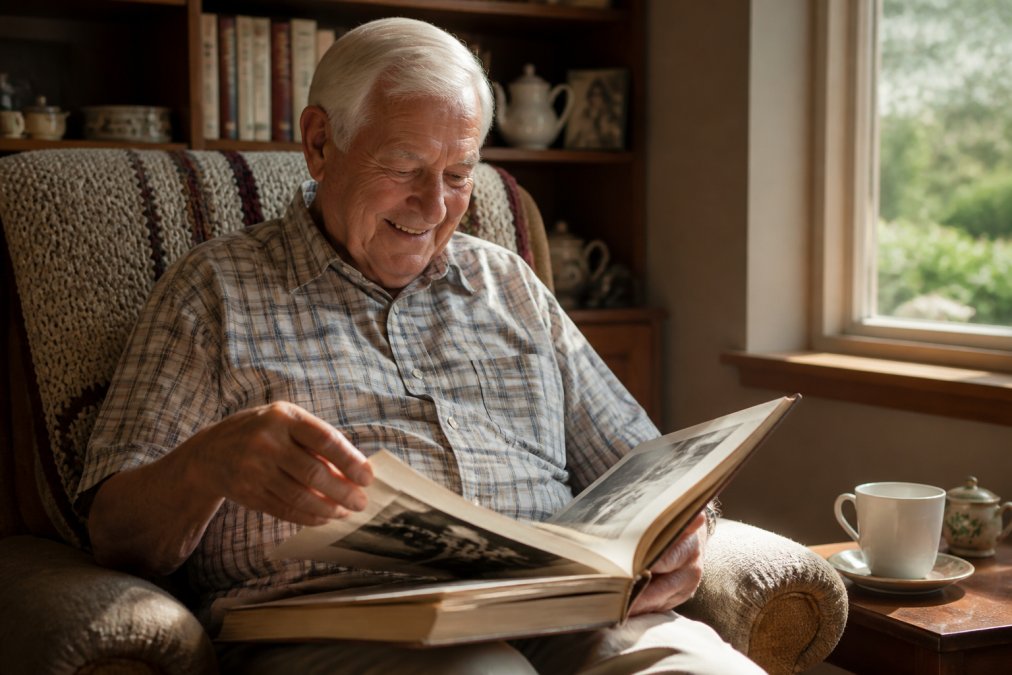
Nostalgia-focused photo books represent the most popular category for elderly readers. These volumes capture everyday life, cultural moments, and visual memories from the decades most older Australians lived through, the 1940s through 1980s. The combination of photographs and accompanying narratives creates a powerful trigger for personal memory and conversation.
Books in this category typically feature hundreds of photographs with brief captions and contextual commentary. The 1950s, 1960s, and 1970s appear most frequently, reflecting the peak years of the Baby Boomer generation. What makes these books particularly valuable is their ability to evoke specific, tangible memories: the appearance of streets, vehicles, shops, fashions, and public spaces as they actually were.
Remember When Shop specialises in curating decade-specific collections. Their australia remember when series, compiled by author Bob Byrne from the popular Australia Remember When Facebook page, brings together over 200 photographs spanning the 1940s to 1980s. These visual memory books are designed specifically to spark recognition and conversation.
Photos and Memories Decade Series
The Photos and Memories series offers focused, single-decade exploration with specific historical context relevant to each time period.
Photos and Memories of Australia from the 1940s ($29.99) captures Australia during wartime, rationing, and the foundation of modern Australia. The photographs provide visceral connection to formative years for those who lived through this era.
Photos and Memories of Australia from the 1950s ($29.99) documents post-war optimism, the end of rationing, the arrival of television, and suburban expansion. The 1950s shaped the childhood and adolescence of many current older adults, making this volume particularly resonant.

Photos and Memories of Australia from the 1960s ($29.99) captures the Swingin' Sixties, from Beatlemania to the 1967 referendum on Aboriginal rights, from decimal currency to cultural revolution.
Photos and Memories of Australia from the 1970s ($29.99) explores one of Australia's most turbulent decades, the Whitlam years, the Dismissal, colour television, and Vietnam.
All volumes are author-signed copies, adding personal touch as meaningful gifts. Each contains over 200 photographs and approximately 200+ pages.
Australia Remember When Collections
The Australia Remember When series spans multiple decades within single volumes, compiling popular posts from the Australia Remember When Facebook page, which has over 375,000 followers.
Australia Remember When ($34.99) features more than 200 photographs and 250+ pages spanning the 1940s to 1980s. Rather than organising by decade, this volume arranges memories thematically, the milkman, the paper boy, record shops, backyard cricket, allowing readers to follow threads of shared experience.
Australia Remember This Too ($34.99) serves as a follow-up with 250+ pages and 200+ photographs covering the 1950s through 1980s. Many readers appreciate having both volumes for different perspectives on the same era.
Remember When...Snapshots of Australia ($39.99) presents the latest collection with nearly 200 photographs across 250+ pages, capturing memories with emphasis on visual recognition.
All Australia Remember When collections are author-signed copies, transforming books into valued keepsakes.
Large-Print History Books for Seniors
Large-print editions represent a crucial accessibility consideration for many older readers. Vision changes with age, and standard print sizes become difficult for a significant portion of the elderly population. Books designed with larger fonts, improved spacing, and high-contrast printing make reading more comfortable and sustainable.
When seeking large print history books for seniors, look for editions specifically formatted for accessibility. Quality large-print books maintain readability through careful font selection, adequate line spacing, and paper quality that reduces glare.
Audiobooks for the Elderly: Listening to History
Audiobooks open history to readers who find physical reading challenging due to vision changes, arthritis, or other mobility issues. Audiobooks for the elderly offer particular advantages, listeners can engage with history while resting, during gentle exercise, or while performing other activities. The human voice reading history creates an intimate experience.
Australian history has seen growing audiobook production, with many classic and contemporary titles now available through major platforms. Memoirs, biographical narratives, and social history works translate particularly well to audio format. Many libraries offer free audiobook access through digital lending services, providing a low-cost way to explore the format.
Military History, Wartime Diaries and Pioneer Biographies
Military campaigns, wartime experiences, and diaries of those who lived through conflict form a significant category of Australian history. For older readers, particularly those who served or lived through wartime Australia, these narratives carry deep personal resonance.
Wartime diaries and personal accounts offer the immediate, unfiltered perspective of individuals experiencing events as they unfolded. Pioneer biographies celebrate lives that shaped Australian identity, helping older adults understand the historical context of their own lives.
Books focusing on these themes often appeal to readers seeking depth and complexity. Unlike photo-based nostalgia books, military history and biography typically demand more sustained engagement, providing substantial intellectual reward for readers with strong interests in history and narrative.
Local History and Regional Perspectives
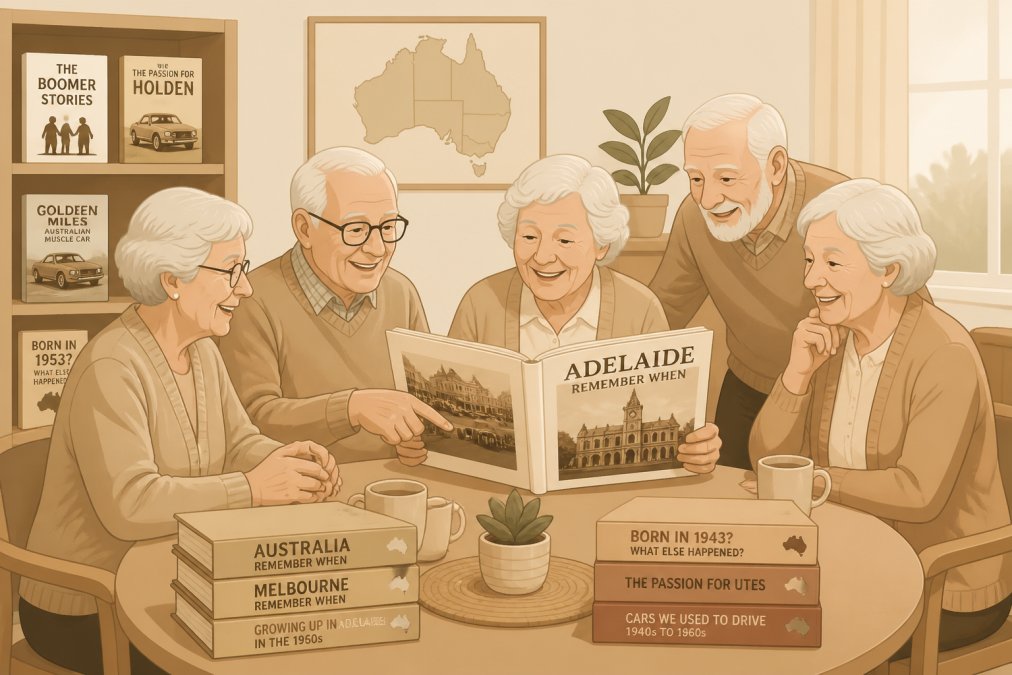
Local history books offer particular value for older readers with deep roots in specific regions. A book focusing on a particular town, suburb, or region often contains photographs and stories directly connected to readers' lived experience. Recognition of familiar landmarks, streets, and community figures creates powerful memory triggers.
Regional perspectives on Australian history provide context often missing from national narratives. Understanding local history helps older adults see their own lives as part of larger historical patterns.
Growing Up in Adelaide in the 1950s ($29.99), edited by Susan Blackburn, exemplifies this approach. Rather than presenting a single author's perspective, this book compiles reminiscences from multiple contributors who grew up in a specific place during a specific era. Readers from that region and era find themselves recognising not just places but often people and family connections.
Local history books work particularly well in group settings, aged care facilities, and community centres. When multiple readers share connection to the same region, discussing local history becomes a social activity that strengthens community bonds.
Choosing the Right Book: A Quick Guide
| Reading Preference | Best Option | Why This Works |
|---|---|---|
| Visual memory focus | Australia Remember When collections | 200+ photographs trigger recognition; thematic organisation suits casual browsing |
| Single-decade deep dive | Photos and Memories series | Focused exploration of specific era with historical context; 200+ pages provide substance |
| Local/regional connection | Growing Up in Adelaide in the 1950s | Community-specific narratives and familiar places create personal resonance |
| Accessibility priority | Large-print or audiobook formats | Reduces physical strain; audiobooks allow engagement during other activities |
| Military/biographical interest | Wartime diaries and pioneer biographies | Primary sources and personal narratives provide depth and emotional connection |
| Gift-giving occasion | Author-signed copies | Personal signature transforms book into keepsake; demonstrates thoughtful selection |
When selecting australian history books for elderly readers, consider these factors:

Reading capacity and physical comfort. If vision or arthritis present challenges, prioritise large-print editions or audiobooks. If physical reading remains comfortable, standard print works well for photo-heavy books with good design.
Memory and engagement style. Some readers engage best with visual recognition (photographs), others with narrative immersion (storytelling), others with intellectual depth (analysis). Match the book format to the reader's preference.
Personal history and regional connection. Books focusing on eras and places the reader lived through create stronger engagement than generic histories.
Social context. Books intended for individual reading differ from those designed for group discussion or reminiscence therapy. Aged care settings benefit from books that spark conversation and shared memory.
Gift-giving occasion. Author-signed copies add personal significance for birthdays, anniversaries, and milestone occasions.
Selecting the right australian history books for elderly readers means matching content, format, and presentation to individual preferences and needs. The Remember When Shop specialises in curating collections specifically designed for older adults, from decade-specific photo books that spark visual memory to author-signed volumes that make meaningful gifts. Whether you're seeking a personal reconnection with formative decades or a gift that evokes cherished memories, their collection of Australian nostalgia and history books provides options for every reading style and occasion. Shop Now to explore decade-specific collections, large-print options, and author-signed keepsakes that transform reading into meaningful engagement with Australian cultural heritage.
Frequently Asked Questions
What are the best Australian history books for seniors?
The best choices combine engaging narratives, clear typography, and content that resonates with lived experience. Books like Australia Remember When and the Photos and Memories decade series are specifically designed for older readers, featuring visual storytelling from the 1940s-1980s. For those interested in deeper historical analysis, biographies of pioneering figures and wartime diaries offer rich context. Choose based on the era your reader remembers most vividly, the 1950s, 1960s, or 1970s, to maximise personal connection and enjoyment.
Are there large-print history books for seniors available?
Yes. Many publishers now recognise the importance of accessibility for older readers. Large-print history books for seniors are increasingly available, though availability varies by title. When ordering, check product descriptions for print size specifications. Some nostalgia-focused titles prioritise readability with generous margins and font sizes. If a specific title isn't available in large print, audiobook versions offer an excellent alternative for those with vision concerns or a preference for listening.
How can reading history books help elderly people with memory and engagement?
Historical reading, especially nostalgia-focused titles, stimulates memory recall and provides meaningful conversation starters across generations. Care professionals and family members have found that books featuring familiar places, events, and cultural touchstones from a reader's formative years, the 1950s-1980s, encourage reminiscence and social engagement. This is particularly valuable in aged care settings, where reminiscence therapy using visual and narrative history books has demonstrated positive effects on wellbeing and cognitive stimulation for residents, including those living with dementia.
Are audiobooks for the elderly available for Australian history titles?
Audiobooks for the elderly are becoming more widely available, though selection for niche topics like Australian nostalgia history may be more limited than printed editions. Audiobooks offer significant advantages for older readers: no strain on vision, the ability to listen while relaxing or during daily activities, and the option to adjust playback speed. Check with retailers and libraries for audiobook versions of popular titles; many nostalgia-focused and biography-based history books now have audio editions.
Why do these books make good gifts for older relatives?
History books tailored to the elderly combine emotional resonance with practical accessibility. They celebrate shared cultural heritage, spark meaningful conversations between generations, and provide comfort through familiarity. Author-signed copies add a personal, collectible element that transforms a book into a keepsake. For milestone birthdays, anniversaries, or simply as a thoughtful gift, these titles acknowledge the reader's lived experience and offer hours of engaging, memory-rich reading that connects them to their past.
This article was written using GrandRanker