

Authentic Author Signatures on Vintage Books
Table of Contents
- Why Authentic Author Signatures Matter
- How to Spot a Fake Book Signature
- Book Signature Authentication Tools and Methods
- Verifying Provenance and Signature Vintage
- Understanding the Value of Signed Vintage Books
- Red Flags That Suggest Forgery
- Building Your Authentication Knowledge
- Frequently Asked Questions
Last Updated: September 17, 2026
Why Authentic Author Signatures Matter
When you're searching for a meaningful gift or building a collection of vintage books, discovering authentic author signatures transforms an ordinary book into something special. A hand-signed copy connects you directly to the author's hand and moment in time. At Remember When Shop, we understand that these signed editions carry genuine emotional weight, especially when they celebrate Australian history and nostalgia.
More importantly, it's the difference between owning a treasured keepsake and holding a carefully crafted fake. Whether you're buying a signed copy of a Melbourne Remember When book or any vintage title, learning to spot the real thing matters.

Authentic signatures tell stories. They mark moments when authors connected with readers. For collectors, carers using reminiscence therapy, and anyone seeking that personal touch, knowing how to verify authenticity gives you confidence and peace of mind.
How to Spot a Fake Book Signature
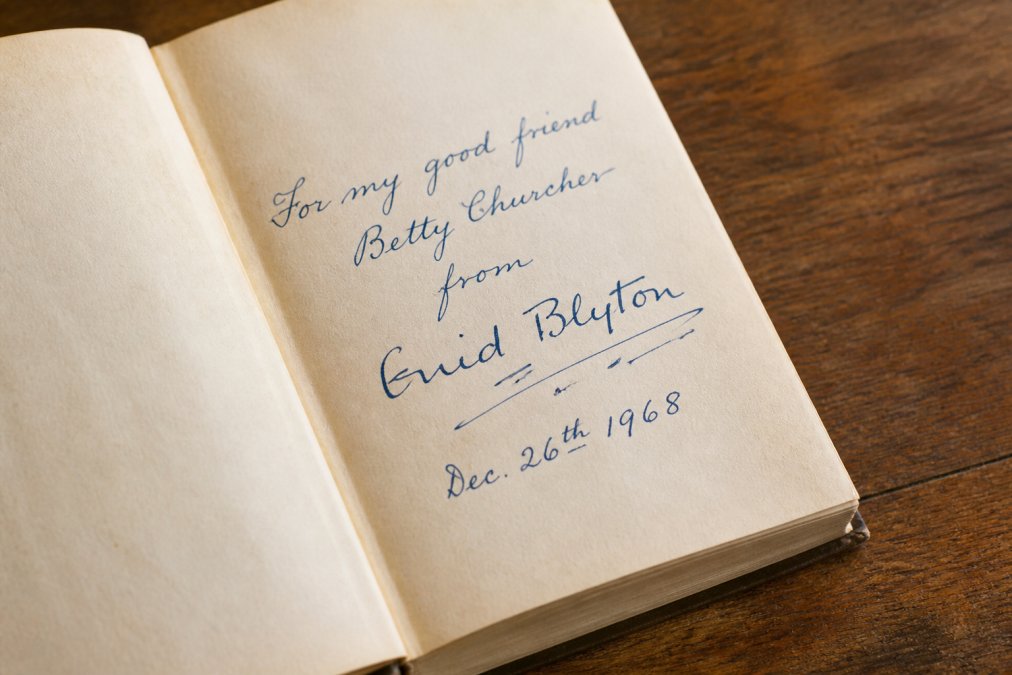
The most reliable way to spot a fake book signature starts with understanding what makes a genuine one. Real signatures contain consistent patterns that reveal the author's natural hand movement. Forgers, no matter how skilled, struggle to replicate these patterns consistently across multiple copies.
Handwriting Consistency and Pressure Points
Real handwriting shows natural variation. The same person never signs their name exactly the same way twice, yet authentic signatures maintain consistent pressure points and stroke patterns. Look at how the pen presses into the paper at the start of letters, especially capital letters. Genuine signatures show where the author pressed harder or lighter based on natural hand movement.
Forgers often create signatures that are too perfect. Every letter matches too precisely. The pressure remains uniform throughout. Real signatures show the author's unique rhythm, faster strokes, slower curves, natural hesitations. These imperfections are actually proof of authenticity.
When examining a signature, pay attention to:
- How the pen enters and exits each letter
- Where pressure increases or decreases
- The angle and slant of the writing
- The spacing between letters and words
Ink Aging and Paper Quality Assessment
Ink ages differently depending on its composition and the paper it's on. Genuine vintage signatures show ink that has oxidised slightly over decades. The colour may appear darker or have shifted slightly toward brown. Forged signatures often use modern ink that looks too uniform and bright.
Examine the paper quality carefully.
Check these details:
- Whether the ink has penetrated the paper evenly
- If the signature colour matches the age of the book
- Whether the paper shows natural aging around the signature
- If the ink appears to have oxidised appropriately for its age
Recognising Autopens and Mechanical Signatures
Autopens are mechanical devices that reproduce signatures with eerie precision. They were used by some authors and celebrities to sign books quickly. An autopen signature looks perfect, too perfect. Every stroke matches identically across multiple copies. The pressure remains constant. There's no natural variation whatsoever.
Real signatures vary slightly, even when the author was signing dozens of books in one sitting. Look for:
- Subtle differences between multiple signatures
- Natural variations in letter size and spacing
- Evidence of the author's hand tiring slightly as they signed
- Slight wobbles or imperfections that suggest human effort
Book Signature Authentication Tools and Methods
Professional collectors and dealers use several methods to verify signatures. Understanding these techniques helps you evaluate what you're looking at.
Microscopic Ink Analysis
A magnifying glass reveals details invisible to the naked eye. Under magnification, genuine ink shows the natural flow of the pen across the paper. You'll see tiny variations in ink density and small fibres from the paper catching the ink. Modern forged signatures often show uniform ink coverage that looks too clean under magnification.
Real signatures show:
- Ink that pools slightly at pressure points
- Tiny gaps where the pen lifted from the paper
- Natural feathering at the edges of strokes
- Ink that has settled into the paper's texture
Forged signatures often display:
- Uniform ink coverage
- No variation in ink density
- Overly clean edges
- Ink that sits on top of the paper rather than becoming part of it
UV Light Testing and Digital Resources
Ultraviolet light reveals details about ink age and composition. Genuine vintage ink often fluoresces differently under UV light than modern ink. The paper itself may also show different fluorescence patterns based on its age and composition.
Book; Melbourne Remember When. Bob →
When using digital resources:
- Compare your signature to multiple authenticated examples
- Look for consistent patterns across genuine examples
- Check whether the book's edition matches known signed copies
- Verify the signature location matches historical records
Verifying Provenance and Signature Vintage
Provenance, the documented history of a book, matters enormously. A book with clear provenance showing it was signed by the author at a specific event carries more weight than one with unknown history. When you purchase from Remember When Shop, you're buying books with clear sourcing. Establishing this chain of custody requires a rigorous approach to verifying provenance that mirrors the meticulous standards applied to fine art.
Track the book's history by looking for:
- Evidence of the signing event (publicity materials, newspaper mentions)
- Previous ownership marks or inscriptions
- Dust jacket condition and original pricing
- Publisher's first edition markings
Understanding the Value of Signed Vintage Books
Hand-signed copies command premium prices compared to unsigned editions. The difference reflects both rarity and the personal connection the signature creates. A signed vintage book becomes a more meaningful gift and a keepsake.
Edition Points and Collector Appeal
First editions signed by the author are often highly sought after. Collectors prioritise specific edition points, particular printings or versions that are harder to find. A signed first edition Australian nostalgia book appeals to both history enthusiasts and signature collectors.
Understanding edition points helps you assess value:
- First edition, first printing signed copies are most valuable
- Later printings signed by the author hold less value but remain desirable
- Signed later editions still command premiums over unsigned copies
- Rarity of the signature affects price significantly
How Hand-Signed Copies Compare to Bookplate Signatures
A bookplate signature differs from a hand-signed inscription. Bookplates are pre-printed labels pasted into books, sometimes signed by hand and sometimes printed. A hand-signed inscription directly on the title page or flyleaf carries more value and authenticity weight.
Hand-signed copies show:
- Direct pen-to-paper connection
- The author's personal effort and attention
- More intimate connection to the author
Bookplate signatures offer:
- A more formal presentation
- Consistency across multiple copies
- Lower production effort for the author
Red Flags That Suggest Forgery
Certain warning signs indicate a signature may be forged. Trust your instincts when something feels off. A signature that seems too perfect, ink that looks too fresh, or a signature location that doesn't match known examples all warrant caution.
Watch for these red flags:
- Signatures that are absolutely identical across multiple copies
- Ink that appears too bright or too uniform in colour
- Signatures that don't match authenticated examples of the author's hand
- Signatures in unusual locations (not on title page or flyleaf)
- Books with no provenance or unclear sourcing
- Signatures that appear to have been added long after publication
- Ink that looks suspiciously modern on a supposedly vintage book
- Pressure points that suggest tracing or copying
Building Your Authentication Knowledge
Learning signature authentication takes time and practice. Start by examining multiple genuine examples of the same author's signature. Notice the patterns. Compare them to suspicious examples. This comparative study builds your eye for authenticity.
Consider these steps:
- Study authenticated signatures from Remember When Shop and other reputable dealers
- Compare signatures across multiple books by the same author
- Read about the author's signing history and public appearances
- Document your observations in a personal reference guide
Frequently Asked Questions
How can I tell if a book signature is authentic?
Authentic author signatures show consistent handwriting patterns, natural ink flow, and appropriate pressure points that vary naturally across letters. Compare the signature against known exemplars from the author, look for matching letter formations, spacing, and baseline consistency. Check the inscription's placement on the title page or flyleaf; genuine signatures typically appear in expected locations. Examine the ink under magnification for age-appropriate characteristics and the paper for signs of oxidation matching the book's publication era. Forgeries often display mechanical uniformity, rushed penmanship, or ink that appears inconsistent with the book's vintage.
What is the difference between a hand-signed copy and a bookplate signature?
A hand-signed copy features the author's actual signature written directly on the title page or flyleaf, making it a direct example of their penmanship. A bookplate signature is a pre-printed or stamped label bearing the author's signature image, which the author then affixes to the book. Hand-signed copies are generally more valuable to collectors because they represent genuine interaction between author and book, while bookplate signatures, though authentic, are considered less personal and typically command lower prices. Both are legitimate forms of authentication, but collectors distinguish between them based on rarity and perceived intimacy.
Do author-signed vintage books increase in value?
Hand-signed vintage books are often highly sought after compared to unsigned copies, particularly if the author is well-known, the edition is limited, or the inscription is personalised. First editions with author signatures are especially sought after by collectors. However, perceived value depends on several factors: the author's prominence, the book's rarity, condition, edition points, and market demand. Condition matters significantly, a well-preserved signature in a book with strong binding adds more appeal than a faded inscription in a damaged copy.
What are the common signs of a forged author signature?
Forged signatures typically show mechanical uniformity, where every letter appears identical across multiple examples, genuine handwriting naturally varies. Look for unnatural pressure points, where ink appears uniformly heavy or light rather than flowing naturally. Forgeries often display rushed or shaky penmanship, inconsistent baseline angles, and letter formations that don't match known exemplars of the author's writing. The ink may appear too fresh for the book's age, lack appropriate oxidation, or show signs of photocopying. Secretarial or 'Frankensigned' copies, where signatures are forged by assistants or machines, often lack the personal flourishes and natural inconsistencies found in genuine autographs. Professional authentication can identify these through forensic examination and comparison against verified exemplars.