
Is a Born In Book a Good Gift? An Honest Review
Table of Contents
- What Makes a Born In Book a Good Gift?
- Why Choose Signed Nostalgia Books Over Generic Gifts
- Born In Books vs Digital Formats: Which Lasts Longer?
- The Best Nostalgia Gifts for Elderly Relatives
- Meaningful Gifts for Milestone Birthdays: Why Born In Books Fit
- Potential Drawbacks: When a Born In Book Might Not Be Right
- Preserving Your Born In Book: Care Tips for a Lasting Keepsake
- Conclusion: Is a Born In Book a Good Gift?
- Frequently Asked Questions
Last Updated: September 14, 2026
What Makes a Born In Book a Good Gift?
A born in book chronicles the events, culture and everyday life of the year someone entered the world, pairing those happenings with photographs, newspaper-style stories and social history, which is why they work for people who came of age in the 1950s through the 1980s (Making sure you're not a bot!).

A born in book succeeds or fails on one question: does it give the recipient something to say? This guide from Remember When Shop covers where these books work, where they fall short, and how to choose one that gets opened rather than shelved.
The Nostalgia Factor
Nostalgia is the engine of the category. A born in book hands someone a year they lived through but can no longer recall in detail: the rationing, the sporting moments, the radio serials, the price of a loaf of bread.
For older readers, that is autobiography, not trivia: naming the year's news, fashions and domestic details gives them permission to say "I remember that" out loud, and that sentence is the point.
Practicality vs Sentimentality
Most gifts force a choice: practical presents get used and forgotten, sentimental ones get kept and rarely touched. A born in book sits in the overlap, both an object and an experience, and it invites a second person in.
There is an honest limitation: a born in book is not a utility item. If the recipient has no interest in history and no patience for reading, nostalgia will not convert them.
Why Choose Signed Nostalgia Books Over Generic Gifts
A signed copy is the difference between a product and an object with a story. When an author signs the title page, the book carries a provenance a mass-market gift cannot: it was handled, signed and sent by the person who wrote it.
The case for signed nostalgia books over generic gifts holds up on three fronts:
- Personalisation. A signature turns a printed book into a one-off, the author's name makes it theirs.
- Keepsake value. Signed books are the kind of item families keep, pass on, or bring out at anniversaries; generic gifts rarely survive a house move.
- Gift-giving etiquette. A signed book reads as thought-through rather than expensive, signalling effort, not budget.
Remember When Shop stocks author-signed copies across its commemorative range.
Born In Books vs Digital Formats: Which Lasts Longer?
Physical born in books last longer than digital equivalents in almost every practical sense. A printed book needs no charged device, app, login or compatible screen, and it will still open in thirty years without a software update, the difference between owning an object and holding a licence to access one.

Digital formats have real advantages: search, portability and instant delivery. But the audience for born in books skews older, and older readers often prefer paper for reasons unrelated to nostalgia.
| Format | Lifespan | Needs Power or Software | Best For | Gift Feel |
|---|---|---|---|---|
| Signed paperback | Decades | No | Older recipients, keepsakes | High |
| Standard paperback | Decades | No | General reading | Moderate |
| E-book | Until the platform changes | Yes | Frequent tablet readers | Low |
| Audio | Until the platform changes | Yes | Vision-impaired readers | Moderate |
The table makes the trade-off plain. If the gift is meant to be kept, handled and shown to other people, paper wins.
The Ownership Question Nobody Asks
When you buy an e-book, you are usually buying a licence, not the file. That licence is tied to an account and a platform, and it can be revoked, migrated or abandoned when the retailer changes terms or shuts a storefront. A paperback cannot be deactivated and needs no password to open.
This matters for a born in book because the point of the gift is that it outlives the moment it was given. A file tied to a single account is a weaker heirloom than a book handed across a table.
What Actually Kills a Digital Keepsake
Digital longevity fails for predictable reasons, most unrelated to the content itself:
- Device obsolescence. A tablet bought today may not receive security updates in a decade, and an unpatched device is a poor place to store a family archive.
- Format drift. Proprietary formats fall out of support, so a file that opens today may need conversion software tomorrow.
- Account dependency. If the recipient loses access to the purchasing account, the book goes with it.
- Backup neglect. Most people do not maintain redundant backups of purchased media, so a single drive failure can erase the gift.
A printed book has one failure mode that matters: physical damage. That is manageable with the care tips later in this guide, and it leaves the object intact even when the cover is scuffed.
Where Digital Genuinely Wins
Paper is not always the better gift. Digital formats win in three situations:
- The recipient lives remotely. Instant delivery removes postage and customs delays, which matters for family spread across states or overseas.
- The recipient has low vision. Adjustable font size and text-to-speech make an e-book or audiobook far more usable than a fixed print size.
- The recipient is downsizing. Someone moving into a smaller home or a retirement village may not have shelf space to spare, and a digital title respects that constraint.
A Practical Hybrid
The Best Nostalgia Gifts for Elderly Relatives
The best nostalgia gifts for elderly relatives start a conversation rather than end one. A book that prompts "do you remember when" does more work than one that simply tells a story well.
This is where decade-specific titles earn their place. A relative born in 1943 does not want a general history of the twentieth century; they want 1943, the year Chifley reversed his position on invasion, the year butter, clothing and meat rationing arrived, the year blackout covers came off the windows and went back up again (Rationing of food and clothing during the Second World War). That specificity triggers recognition.

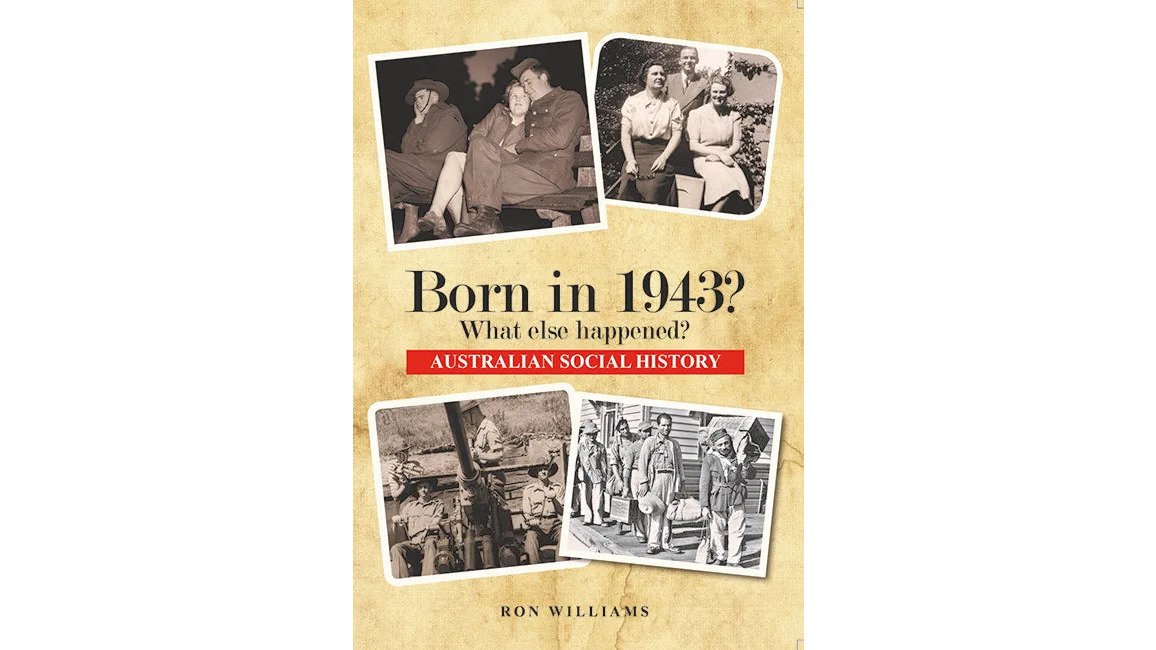
Ron Williams' Born in 1943? What else happened? is built exactly this way, and the same series runs year by year from 1939. Titles are available for Born in 1943, Born in 1953 and Born in 1963, among others, at $25.99 each.
Carers in aged care settings often use this material for reminiscence work: the book does the prompting so the carer does not have to (pubmed.ncbi.nlm.nih.gov).
Meaningful Gifts for Milestone Birthdays: Why Born In Books Fit
Milestone birthdays create a specific problem: a 70th or 80th demands a gift with weight, but the recipient usually wants for nothing practical. Meaningful gifts need to mark the occasion without adding clutter.
A born in book solves that. It is small, personal, and acknowledges the years the recipient has lived rather than the age they have reached. For a 70th birthday, a birth-year title gives the celebration a historical anchor.
The same logic applies to anniversaries. Two birth-year books, or a birth-year book paired with a title covering the wedding year, can carry more meaning than a single larger purchase.
Matching the Content to the Recipient's Age
This is where most gift guides stop and the real work begins. A born in book is not age-neutral: the same year reads very differently to a child, a middle-aged adult and an older recipient, and content that suits one can misfire for another.
For a child or young teenager. A birth-year book given to a child is really a gift to the parents, and works best as a time capsule rather than a reading book. Choose a title weighted toward photographs, everyday objects and popular culture rather than news and politics, images of the toys, fashions and technology of the world they arrived into, not a summary of parliamentary debates. Keep the language simple and the pages visual.
For a young adult. Recipients in their twenties and thirties respond to the cultural and technological detail of their birth year, the music, films, devices, the price of a house. They are old enough to remember fragments but young enough to have forgotten the specifics, so the nostalgia feels novel. A book naming the year's chart-toppers and screen releases lands better than one built around hardship.
For a recipient in their sixties or seventies. This is the core audience, and the content that works is what they lived through as adults or young parents. Domestic detail, sport, work and family life resonate more than grand political narrative. The price of a loaf of bread, the cars on the road and the radio serials of the era trigger recognition in a way a timeline of prime ministers will not.
For a recipient in their eighties or nineties. The birth year is often a wartime or immediate post-war year, so the content needs careful handling. A book leading with rationing, blackout covers and casualty figures can be accurate and still unwelcome. Look for titles balancing the historical record with everyday life, humour and popular culture, and read the product description closely before buying.
A Simple Selection Checklist
Before you commit to a title, run it through four questions:
- Does the year match the birth year exactly? A near-miss year is worse than a decade title, because it invites correction rather than recognition.
- Is the content weighted toward the recipient's actual memories? A city childhood and a country childhood produce different recollections, and the book should reflect the one your recipient had.
- Does the tone suit the occasion? A birthday is a celebration. A book that dwells on hardship may be historically honest but emotionally wrong for the day.
- Is the reading level appropriate? A text-heavy title given to a reluctant reader will sit unopened, no matter how good the year match is.
Pairing the Book With the Occasion
A born in book works well as the centrepiece of a milestone gift but need not stand alone. Common pairings include a birth-year book with a photo frame for a portrait taken at the party, or a birth-year title with a decade-specific companion volume for a recipient who enjoys a broader sweep of history. For a couple's anniversary, two birth-year books together mark both lives rather than one.
Let the book carry the meaning and any accompanying item carry the utility, so the gift has something to be used and something to be kept.
Potential Drawbacks: When a Born In Book Might Not Be Right
A born in book is the wrong gift in three situations:
The recipient does not read. If reading is a genuine struggle, the book will sit unopened. An audio option or a photo-led title with minimal text may serve better.
The year carries painful associations. A book about a war year can surface difficult memories. For someone who lost family in that period, a lighter decade title or one focused on domestic life and humour may be kinder than a news-heavy one.
The recipient has no interest in history. Some people simply are not nostalgic. If that describes your recipient, a born in book is a considered guess that misses.
Preserving Your Born In Book: Care Tips for a Lasting Keepsake
A born in book meant to be an heirloom needs treating like one from day one. Paperbacks are durable but not indestructible, and the two most common causes of damage are sunlight and shelving.
- Keep the book out of direct sunlight, which fades covers and yellows pages over time.
- Store it upright on a shelf rather than stacked, so the spine is not compressed.
- Avoid humid rooms such as bathrooms and laundries, where pages can warp and ripple.
- If the copy is signed, keep the title page away from direct handling where possible.
- For a book that will be passed down, note the year, the occasion and who gave it inside the front cover.
That last point matters more than it sounds. A born in book with a handwritten inscription becomes a family record, not just a gift.
Conclusion: Is a Born In Book a Good Gift?
Yes, for the right recipient. A born in book works when the recipient has a genuine connection to the year, an interest in how life used to be lived, and someone to share the memories with. It fails when chosen for the giver's sentiment rather than the recipient's.
For a parent or grandparent with a sense of their own history, this is one of the more reliable meaningful gifts you can choose, and a signed copy lifts it further.
Choosing a gift for someone who has lived through eight decades is harder than it looks, and generic presents rarely land. Remember When Shop curates Australian nostalgia titles by birth year, including author-signed copies of the Born In series, decade-specific photo books and classic car titles, backed by 597 customer reviews and consistently high product ratings. If you want a gift that starts a conversation rather than filling a shelf, browse the collection and pick the year that matters. Get started with Remember When Shop and give a memory they can hold.
Frequently Asked Questions
What makes a 'Born In' book a thoughtful gift?
A 'Born In' book is thoughtful because it connects the recipient to their own history. These books cover events, daily life, and cultural moments from the year they were born, sparking memories and conversation. For elderly relatives, it can be a bonding experience. Unlike generic gifts, it shows you've considered their personal story and the era that shaped them.
Are 'Born In' books suitable for all ages?
They are most suitable for adults who remember the era covered. The Ron Williams series spans from 1939 onwards, so someone born in 1950 would enjoy the 1950 edition. They are not intended for young children, as the content is historical and text-heavy. For milestone birthdays like 70th or 80th, they are ideal.
Why choose a signed nostalgia book over a generic gift?
A signed nostalgia book offers a personal touch that mass-produced gifts lack. An author's signature adds authenticity and makes the book a collectible keepsake. It shows the recipient that you value their interests and memories.
How do 'Born In' books help preserve family history?
These books act as conversation starters, prompting older relatives to share stories about their youth. By reading about historical events and daily life from their birth year, they may recall personal anecdotes. This can lead to recording family history. The books themselves become heirlooms, passing down memories to future generations.
Are 'Born In' books considered good value for money?
At $25.99, they are competitively priced for a quality paperback. The value lies in the curated content, often including rare photos and detailed research. Compared to other nostalgia gifts, they offer lasting entertainment and sentimental value.