

Why Choose Signed Nostalgia Books: 8 Compelling Reasons
Table of Contents
- Why Signed Nostalgia Books Carry an Emotional Weight That Standard Copies Simply Cannot Match
- The Sentimental Value of an Autograph: More Than a Signature on a Page
- Literary Nostalgia and the Psychology of Comfort Reading
- Why Signed Nostalgia Books Make Meaningful Gifts for Milestone Occasions
- Investment Potential vs Sentimental Value: Understanding What You Are Really Buying
- Authenticating Signed Editions: What Australian Collectors Need to Know
- How to Preserve Signed Books So They Last for Generations
- Collecting Signed Books in Australia: Building a Meaningful Personal Library
Last Updated: August 3, 2026
A signed nostalgia book is far more than a book with a name written inside it. At Remember When Shop, we have seen firsthand how a personally inscribed nostalgia book can transport someone back to a summer in 1967 and hold them there in the best possible way. Below, we show you exactly why these books carry a weight that a standard edition cannot match, and how to choose, authenticate, and preserve one so it lasts for generations.
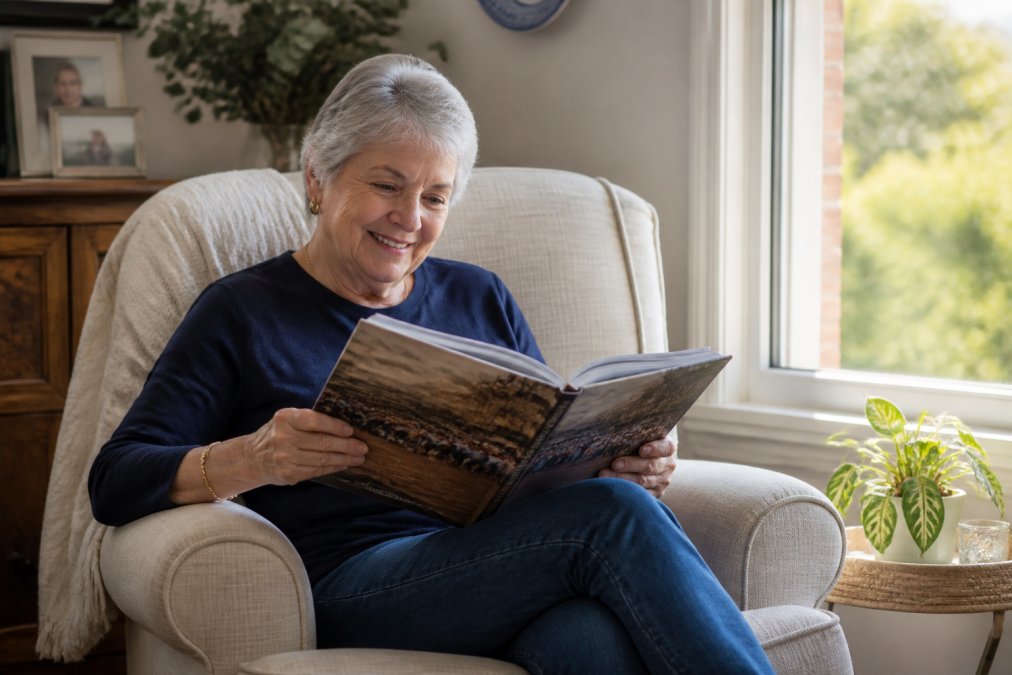
Why Signed Nostalgia Books Carry an Emotional Weight That Standard Copies Simply Cannot Match
A signed nostalgia book is a tangible memory connecting the reader's personal history to a shared cultural moment through a single physical object. That combination of intimacy and collective experience separates a signed copy from anything you can download or stream.
When someone opens a decade-specific photo book and finds the author's signature, they hold proof of a human chain: the author lived through those years, documented them, and touched this very page. For readers aged 60 and above who grew up in the 1950s through the 1980s, that chain runs straight back through their own lives. The book becomes a memento, not just a read.
Standard copies offer the same photographs and text but lack that personal connection. The nostalgic pull of a signed edition is qualitatively different because it layers two kinds of emotional resonance: the comfort of familiar imagery and the intimacy of knowing a real person endorsed this particular copy for you.
The emotional value of signed books comes from the act of inscription itself. A signed copy signals that someone cared enough to make this object unique, and for older readers or those living with memory challenges, that signal matters enormously.
The Sentimental Value of an Autograph: More Than a Signature on a Page
The sentimental value of an autograph operates on a far more personal level than market price suggests.
How a Personal Inscription Transforms a Book into a Memento
A personal inscription, where the author writes a name, date, or short message, transforms the book into a one-of-a-kind document that exists nowhere else in the world. For families marking milestone birthdays or anniversaries, that uniqueness is the entire point.
The inscription creates a narrative: this book was chosen for you, on this day, because someone thought of your life when they held it. According to the Australian Institute of Family Studies research on meaningful gift-giving, gifts that carry personal history and emotional significance strengthen relationships in ways that purely functional gifts do not. A signed nostalgia book sits squarely in that category.
Gift-Giving and the Intimacy of a Signed Copy
A signed copy works simultaneously as a thoughtful gift, a collectible, and a conversation starter. For carers in aged care settings or family members choosing a present for a parent's 70th birthday, that triple function is genuinely useful.
The intimacy of a signed copy also travels well across generations. A grandmother who receives a signed edition of a book about Australian life in the 1960s is holding something her grandchildren will eventually want to keep. The autograph becomes part of the family legacy.
Literary Nostalgia and the Psychology of Comfort Reading
Nostalgia is a complex emotional state in which positive memories of the past regulate present emotional wellbeing. Research from the Australian Psychological Society on nostalgia and wellbeing indicates that nostalgic recall reliably increases feelings of social connectedness and reduces loneliness, particularly in older adults. This is why comfort reading of familiar imagery from one's formative years is a genuine psychological resource, not escapism.
Signed nostalgia books activate this resource with particular force because they combine literary nostalgia with the physical act of holding a real object. Digital archives of old photographs exist, but they do not produce the same tactile response.
Hybrid Nostalgia: When Personal History Meets Shared Australian Memory
Hybrid nostalgia describes the experience of feeling nostalgic for both your own past and a shared cultural era you identify with. Australian nostalgia books covering the 1950s through the 1980s operate in exactly this hybrid space. A reader who grew up in suburban Melbourne in the 1970s finds photographs that trigger intensely personal memories alongside images representing a broader national story. The two threads reinforce each other.
This is why decade-specific books resonate so strongly with older Australian readers. They are not just looking at history; they are looking at themselves.
Why Signed Nostalgia Books Make Meaningful Gifts for Milestone Occasions
A signed nostalgia book solves the problem of choosing a 70th birthday gift for someone who has everything they need but nothing that genuinely moves them. The gift works because it is specific. A decade-specific book anchored to the recipient's formative years tells them that the giver paid attention to who they actually are.
Milestone occasions such as 70th and 80th birthdays, significant wedding anniversaries, and Father's Day or Mother's Day call for gifts that acknowledge the weight of a life lived. A signed copy celebrating Australian life in the years the recipient grew up carries that acknowledgement built in.
Decade-Specific Books and the Power of Tangible Memories
The decade-specific format concentrates nostalgic pull by anchoring imagery and stories to a specific cultural moment. For someone born in 1950, a book focused on Australia in the 1960s covers their adolescence: the music, cars, fashions, and social changes. Every page prompts a tangible memory. These books are widely recognised as useful tools in reminiscence therapy settings, including aged care facilities, where carers use them to facilitate conversation and engagement with elderly residents, including those living with dementia.
| Occasion | Recommended Format | Why It Works |
|---|---|---|
| 70th or 80th birthday | Decade-specific photo book, signed | Anchors to formative years; personal touch |
| Wedding anniversary | Era-specific nostalgia book | Shared memories of early relationship years |
| Father's Day / Mother's Day | Classic Australian car or history book, signed | Reflects personal interests and era |
| Christmas | 'Born In' commemorative title | Celebrates the recipient's birth year specifically |
| Aged care / reminiscence therapy | Decade-specific photo book | Stimulates memory and conversation |
Investment Potential vs Sentimental Value: Understanding What You Are Really Buying
Most buyers conflate sentimental value with investment potential, then feel confused when the two do not align. Signed nostalgia books can appreciate in value over time, particularly first editions with provenance documentation and signatures from authors whose cultural significance grows posthumously. However, the primary reason most Australians choose a signed nostalgia book is sentimental value and personal connection.
You are almost certainly buying this for what it means, not what it might one day be worth. That is a completely legitimate reason, and arguably the better one. A book that makes someone cry happy tears on their 75th birthday has already delivered its return.
Buying from reputable sources, keeping provenance documentation, and storing books correctly protects both the sentimental and financial dimensions of the purchase. The two are not mutually exclusive.
Authenticating Signed Editions: What Australian Collectors Need to Know
A signed copy is only as valuable as the confidence you have that the signature is genuine. For Australian collectors, this means understanding provenance: the documented history of who signed the book, when, and under what circumstances.
Provenance, Documentation, and Buying from Reputable Sources
Provenance is the chain of custody that establishes a signed book's authenticity. For a signed nostalgia book purchased directly from a publisher, author, or specialist retailer, provenance is often straightforward: the book was signed at a specific event or as part of a specific print run, and the seller can confirm this.
The Book Collectors' Society of Australia guidance on authentication and provenance recommends that collectors always ask for documentation when purchasing signed editions. At minimum, you want to know where the signature was obtained and whether the seller can provide supporting evidence.
Buying from a curated specialist rather than a general marketplace is the most reliable way to ensure authenticity. Remember When Shop sources author-signed copies directly, which means the provenance chain is short and verifiable. For collectors pursuing rare or first edition signed copies, Australian specialist booksellers such as Marlowes Books and Harry Hartog's signed rare books collection offer curated inventories with detailed condition descriptions.
How to Preserve Signed Books So They Last for Generations
A signed nostalgia book is only as permanent as the care you give it. Basic archival practice is straightforward and does not require specialist equipment.
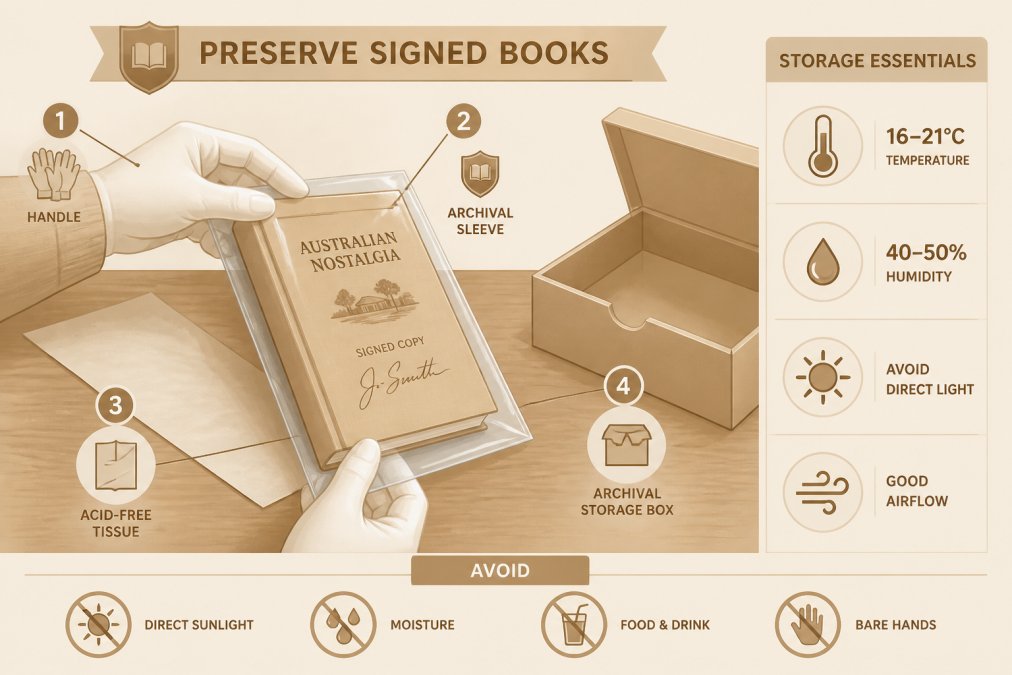
Storage, Handling, and Archival Materials for Signed Copies
High humidity, direct sunlight, and temperature fluctuations accelerate paper degradation. For a book you intend to pass down, these are avoidable risks.
Practical preservation checklist for signed nostalgia books:
- Store books upright or flat in a cool, dry environment away from direct sunlight
- Use acid-free archival sleeves or clamshell boxes for particularly valuable copies
- Handle signed pages with clean, dry hands or cotton gloves to prevent oils transferring to the paper
- Avoid rubber bands, adhesive labels, or sticky notes anywhere near the signed page
- Keep books away from external walls, which can introduce moisture fluctuations
- Do not store books in plastic bags, which trap humidity
- Photograph the signed page in high resolution as a digital backup record
For books that have suffered damage such as water staining or deteriorating spines, professional conservation is worth investigating. Australian services such as Traditional Bookbinding offer expert assessment and restoration combining archival science with craft skill.
Preservation is far cheaper than restoration. A small investment in archival materials now protects decades of sentimental and financial value.
Collecting Signed Books in Australia: Building a Meaningful Personal Library
The most rewarding approach to collecting signed books in Australia is to build around a theme rather than accumulate at random. For most people drawn to signed nostalgia books, that theme is Australian life and culture across a specific era, the 1950s through the 1980s.
A meaningful personal library might include decade-specific photo books covering the years most significant to the collector, classic Australian car books for those with a passion for automotive history, and commemorative 'Born In' titles. Each signed copy adds a layer of authenticity and personal connection that unsigned editions cannot provide.
For bibliophiles who want to deepen their knowledge, the Book Collectors' Society of Australia community and quarterly journal offers a genuine community resource with regular meetings, guest speakers, and publications covering rare and antiquarian books.
The real difference between a collection that means something and one that simply accumulates is curation. Choose books that connect to real memories, real people, and real moments in Australian history. A signed copy that makes someone remember the smell of a 1960s kitchen or the sound of a particular summer is worth more than any unsigned first edition chosen for market value alone.
Remember When Shop specialises in exactly this kind of curated collection, with author-signed copies of Australian nostalgia titles, decade-specific photo books, and classic car books chosen specifically for their ability to evoke the years that matter most to older Australians and the families who love them.
Choosing a meaningful gift for someone who has lived a full life is genuinely difficult. A signed nostalgia book solves the problem because it is specific, personal, and built around real memory rather than generic sentiment. Remember When Shop offers author-signed copies of Australian nostalgia titles, decade-specific photo books covering the 1950s through the 1980s, and a curated collection of classic Australian car books, all chosen for their ability to reconnect people with the moments that shaped them. Shop Now and find the signed nostalgia book that will mean something long after the occasion has passed.
Frequently Asked Questions
Are signed edition books worth it as gifts for older Australians?
Signed nostalgia books offer something a standard copy cannot: a direct, tangible connection to the author and the era being remembered. For older Australians reconnecting with memories of the 1950s to 1980s, that personal touch adds genuine sentimental value. Customers who have purchased signed nostalgia books from specialist Australian curators frequently describe them as the most meaningful gift they have given, with many noting the recipient's emotional response to seeing photographs and stories from their own lifetime.
Why do collectors value signed nostalgia books over standard editions?
A signed copy carries provenance: evidence of a direct link between the author and the reader. For bibliophiles focused on Australian history and culture, that link reinforces the book's authenticity as a collectible. Signed editions also tend to hold or appreciate in value more reliably than unsigned copies, particularly first editions. Beyond financial considerations, the autograph itself becomes part of the book's narrative, making the physical object irreplaceable in a way that a digital file or unsigned reprint never can be.
How can you verify the authenticity of a signed book in Australia?
When authenticating signed editions, look for provenance documentation such as a certificate of authenticity, a receipt from a reputable bookseller, or photographic evidence of the signing event. Buying directly from specialist Australian retailers or publishers who facilitate author signings is the most reliable approach. The Book Collectors' Society of Australia (BCSA) is a useful community resource for guidance on authentication standards. Avoid unsigned copies sold as signed without supporting documentation, and be cautious with online marketplace listings that lack seller history.
Can nostalgia books genuinely help people living with dementia?
Reminiscence therapy using familiar images and stories from a person's formative years is a recognised approach in aged care settings across Australia. Books filled with decade-specific Australian photographs and cultural references give carers a structured, comforting resource to prompt conversation and recall. The Remember When Shop's nostalgia titles, particularly those covering the 1950s to 1980s, have been acknowledged by carers in aged care facilities as helpful tools for engaging residents with dementia in a calm and positive way.
How should you store and preserve signed books to protect their condition?
When learning how to preserve signed books, the priorities are controlling light, humidity, and physical handling. Store signed copies upright in a cool, dry location away from direct sunlight, which fades ink and degrades paper. Use acid-free archival sleeves or clamshell boxes for particularly valuable editions. Handle books with clean, dry hands or cotton gloves to avoid transferring oils to the pages. For damaged or fragile volumes, professional book conservation services such as Traditional Bookbinding in Australia offer expert restoration and archival care.
Where is the best place to buy signed nostalgia books in Australia?
For signed Australian nostalgia books focused on the 1950s to 1980s, specialist curators who work directly with authors offer the strongest combination of authenticity and relevance. Collecting signed books in Australia is also supported by independent booksellers, rare book dealers, and community organisations like the Book Collectors' Society of Australia. The key advantage of buying from a dedicated nostalgia specialist rather than a general marketplace is the curation: every title is chosen for its emotional resonance with Australian readers, not simply its availability.
This article was written using GrandRanker