

Tips for Buying Signed Books at Auctions
Table of Contents
- Understanding Auction Terminology and How Bidding Works
- Authenticating Signed Books Before You Bid
- Rare Book Condition Grading Standards
- Auction Buyer's Premium Explained
- Setting Your Maximum Bid and Budget
- Online Bidding, Absentee Bids, and Shipping Logistics
- Distinguishing Signed Copies from First Editions and Inscribed Books
- Frequently Asked Questions
Last Updated: September 24, 2026
Understanding Auction Terminology and How Bidding Works
Auction houses use specific terminology that can seem confusing to newcomers. Understanding these basics makes the experience less intimidating.
Every book in an auction has a lot number, simply the item's position in the sale. The lot number helps you track items in the catalogue and place bids.
Lot numbers and reserve prices
The reserve price is the minimum amount the seller will accept. If bidding doesn't reach this threshold, the lot doesn't sell. Many auctions publish reserve prices in advance, though some keep them confidential.
When you see "reserve not met" next to a lot, bidding stopped before hitting that minimum. You might contact the auction house afterward to negotiate directly with the seller, or wait for the next sale.
Hammer price and opening bids
The hammer price is what someone actually paid for the book, the winning bid amount, before any buyer's premium is added.
The opening bid is where the auction starts. Bidding then increases in set increments, which vary depending on the price range. Lower-priced items might jump by $10 or $20 each round; higher-priced items jump by larger amounts.
Authenticating Signed Books Before You Bid
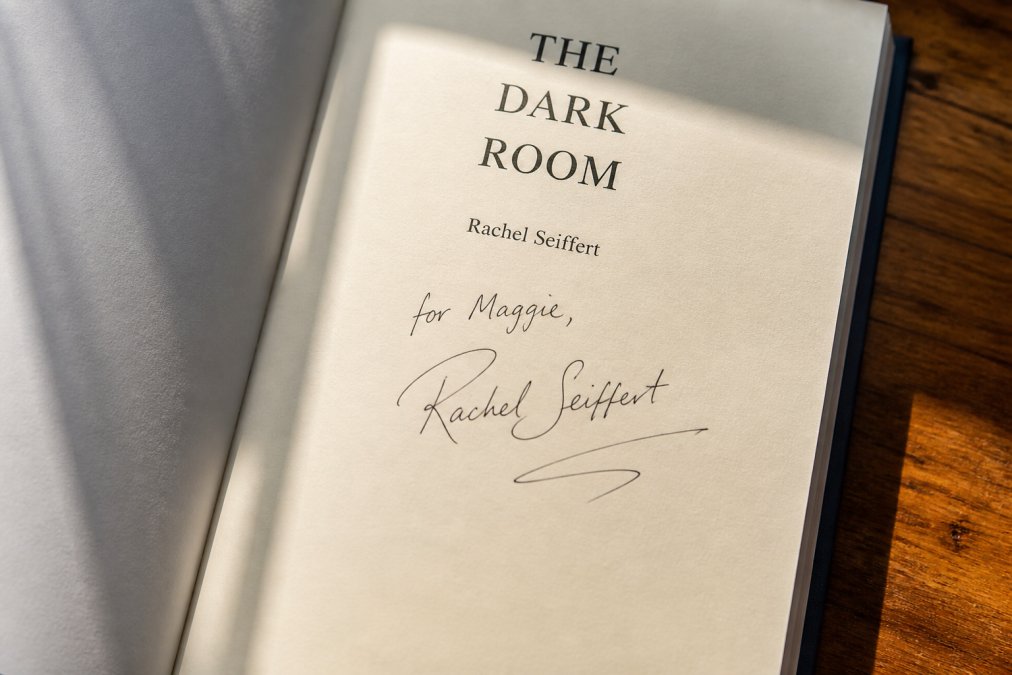
Before committing money when buying signed books auctions, you need confidence it's genuine. Forged signatures exist. Authentication is your protection.
Signature placement and characteristics
Authentic signatures have distinctive features. Real handwriting varies. Look for natural variation in pressure, angle, and spacing. The signature should show personality rather than mechanical uniformity. Developing a keen eye for these subtle inconsistencies remains the most reliable method for verifying authentic signatures when assessing the provenance of vintage memorabilia.
Check the pen used. Most signatures from the 1950s through 1980s were made with ballpoint or fountain pens. Examine whether the ink has oxidised naturally over time, genuine older signatures often show subtle browning or fading, whilst fresh ink suggests recent addition.
Red flags for forged or questionable signatures
Signatures that are too perfect lack natural irregularities. If multiple copies of the same book have identical signatures down to the millimetre, forgery is likely.
Signature placement inconsistencies across copies of the same edition are suspicious. Authors typically sign in the same location.
Ink that looks too fresh on a book claimed to be signed decades ago warrants scrutiny. Genuine signatures from the 1960s or 1970s show age.
Inconsistent pen pressure within a single signature, where some letters are heavily inked and others are faint, suggests the signature was traced rather than written naturally.
Certificate of authenticity and professional verification
A certificate of authenticity (COA) is a document stating an expert has verified the signature. It includes the expert's credentials, the date of verification, and the methodology used. A COA from a reputable source adds significant value.
When requesting a COA, ask who issued it, when it was issued, what methodology was used, and whether it's transferable.
In the Australian market, the Antiquarian Booksellers' Association of Australia maintains standards for authentication and can recommend qualified experts. For high-value purchases (over $1,000), consider commissioning independent expert verification before bidding. The cost, typically $50-$200, is insurance against a costly mistake.
Provenance and ownership history
Provenance is the book's documented history of ownership. A strong provenance chain, documented previous owners, exhibition records, institutional cataloguing, builds confidence in authenticity.
Ask the auction house for provenance details. Look for provenance that includes direct acquisition from the author, purchase from a known rare book dealer, institutional ownership, previous auction house sales, or published exhibition history.
Provenance gaps don't necessarily indicate forgery, but they reduce confidence. A signed book with continuous documented ownership is stronger than one with unexplained ownership changes.
Comparing against known examples
Before bidding, research other signed copies of the same book. Most major auction houses maintain searchable results databases. Compare signature placement, ink colour, inscription variations, and condition patterns.
For Australian authors, check the National Library of Australia's catalogue and major auction results from houses like Sotheby's Australia and Christie's Australia.
Rare Book Condition Grading Standards
Condition affects value significantly. You need to understand grading standards to evaluate what you're buying.
Reading condition reports
The condition report describes the book's physical state using standardized terminology. "Fine" means nearly perfect. "Very good" means minor wear. "Good" means noticeable use. "Fair" means heavy wear but still readable.
Book; Melbourne Remember When. Bob →
Read the condition report carefully. It lists specific issues: foxing (brown spots), edge wear, spine damage, loose pages, stains, markings. Look for mentions of the signature itself. Has it faded? Is the ink stable?
Inspecting dust jackets and binding
The dust jacket is the paper wrapper around the book. For signed books, dust jacket condition matters. Is it intact or torn? Faded or bright?
Examine the binding, the cover and spine. Cloth bindings should be tight. Check the corners for wear. Look at the spine for fading or creasing. Ask whether the signature is on the dust jacket or on the book itself.
Auction Buyer's Premium Explained
The hammer price isn't what you pay. The buyer's premium is a percentage added to the hammer price. If a book's hammer price is $200 and the buyer's premium is 20%, you pay $240.
Buyer's premiums typically range from 15% to 25%. Always check the auction house's terms before bidding. Calculate the total before you bid. If you have a $500 budget and the buyer's premium is 20%, your actual spending limit on hammer prices is around $417.
Setting Your Maximum Bid and Budget
Successful bidders set limits before the auction starts. Emotion clouds judgment during live bidding.
Start by researching comparable sales. What have similar signed books sold for recently? This research gives you a realistic price range.
Set your maximum bid conservatively. Factor in the buyer's premium when calculating your limit. Write your maximum down and keep it visible during the auction. When bidding reaches your limit, stop. Walking away from an overpriced lot is a win.
Online Bidding, Absentee Bids, and Shipping Logistics
Placing absentee and online bids safely
Absentee bids let you bid without attending the auction. You submit your maximum bid in advance, and the auction house bids on your behalf, incrementally, up to your limit.
Online bidding lets you bid in real time from home. Both methods require account setup with the auction house. Provide accurate information and use a secure password.
For online bidding, test your internet connection beforehand. Use a stable connection and avoid bidding on mobile networks if possible.
Australian Consumer Law protections for auction purchases
When you buy a signed book at auction in Australia, you have consumer protections under the Australian Consumer Law (ACL), part of the Competition and Consumer Act 2010.
Goods must be of acceptable quality. The book must be as described in the auction catalogue. If the condition report states "fine" but the book arrives in "good" condition, you may have grounds for dispute.
Understanding GST and tax implications
Goods and Services Tax (GST) applies to auction purchases in Australia. The buyer's premium is subject to GST. The hammer price may or may not be, depending on the seller's GST registration status.
When you see an estimate of "$500-$700" in an auction catalogue, this is typically the hammer price range before GST and buyer's premium. Calculate the total as follows:
- Hammer price: $600
- Buyer's premium (20%): $120
- Subtotal: $720
- GST (10% on buyer's premium): $12
- Total: $732
Import duties and international auction purchases
If you're buying from an international auction house, import duties and customs may apply.
Shipping, insurance, and handling
Once you've won a signed book, it needs to reach you safely. Shipping costs vary by weight, destination, and service level. A signed first edition might cost $30-$80 to ship domestically, or $100-$300 internationally.
Choosing between domestic and international auction houses
Domestic auction houses (based in Australia) offer advantages: no import duties, faster shipping, easier dispute resolution under Australian Consumer Law, and direct contact with local staff. Buyer's premiums are typically 15-22%.
Distinguishing Signed Copies from First Editions and Inscribed Books
A signed book has the author's signature only. No personal message.
Frequently Asked Questions
How can I verify the authenticity of a signed book at an auction?
Check the auction house's condition report for authentication details and provenance history. Examine the signature's placement, ink consistency, and whether it matches known examples of the author's handwriting. Request a certificate of authenticity if available. Reputable auction houses verify signatures before cataloging, and many provide detailed notes about how the signature was authenticated. Ask the auctioneer directly about their authentication process before bidding.
What is the difference between a signed copy and a signed first edition?
A signed copy is any edition of a book with the author's signature, regardless of when it was printed. A signed first edition is specifically the first printing of the book with an author's signature, making it rarer and typically more valuable. First editions are identified by the publisher's notation on the copyright page. When buying signed books at auction, always check the edition details in the catalogue description to understand what you're bidding on and its relative rarity.
What should I expect to pay in buyer's premium at an auction?
Buyer's premiums at auction houses typically range from 15% to 25% of the hammer price (the final bid amount). This fee is added to your winning bid and covers the auction house's costs. For example, if a book's hammer price is $100 and the buyer's premium is 20%, you'll pay $120 total plus any shipping. Always check the auction house's specific premium rates before placing a bid, as they vary by house and sometimes by lot category.
How do I know if a book's condition is acceptable before bidding?
Review the condition report provided by the auction house, which describes the dust jacket, binding, pages, and any damage or wear. Condition grading typically ranges from fine to poor. Request high-resolution photos if available and look for specifics about foxing (age spots), loose pages, or spine damage. For signed books, pay special attention to whether the signature has faded or been affected by handling. Contact the auctioneer with questions about condition before placing your bid to avoid surprises.