
Benefits of Nostalgia for Seniors: A 2026 Guide
Table of Contents
- Why Nostalgia Matters for Seniors
- How Nostalgia Improves Emotional Well-Being and Self-Continuity
- Reminiscence Therapy Activities for Seniors: Practical Approaches
- How to Use Music for Dementia Care and Memory Stimulation
- Nostalgia as a Tool for Social Connectedness and Reducing Loneliness
- Potential Risks: When Over-Reminiscing Becomes Unhelpful
- Conclusion
Last Updated: August 10, 2026
Why Nostalgia Matters for Seniors
Nostalgia isn't just a sentimental feeling. For older adults, reconnecting with cherished memories serves a genuine psychological purpose. The practice of revisiting the past, particularly through reminiscence therapy, has become recognised as a meaningful tool in aged care settings across Australia, helping seniors maintain emotional well-being and a sense of continuity with their life story.
When seniors engage with nostalgia for seniors through meaningful activities, they're doing more than passing time. They're actively strengthening their sense of self and reinforcing the narrative that connects who they were to who they are today. This psychological anchoring becomes increasingly important as we age, particularly for those navigating health challenges or transitions in living circumstances.
At Remember When Shop, we've observed firsthand how our curated Australian nostalgia books, particularly titles covering the 1950s through 1980s, resonate deeply with older adults and their families. The response from carers in aged care facilities has been consistent: these materials spark meaningful conversations, evoke genuine emotion, and create moments of authentic connection.

The reason this matters now is straightforward. Australia's ageing population is growing, and traditional aged care approaches are evolving. Facilities and families are increasingly seeking evidence-based, low-cost interventions that improve quality of life without pharmaceutical intervention. Nostalgia and reminiscence work fit that need perfectly.
How Nostalgia Improves Emotional Well-Being and Self-Continuity
Emotional well-being in older adults depends significantly on maintaining a coherent sense of self across time. This is where nostalgia becomes therapeutic. When seniors reflect on their past experiences, they're reinforcing the narrative thread that connects their younger selves to their present identity, what researchers in gerontology call self-continuity.
This psychological continuity matters because it anchors meaning. A 75-year-old who remembers building a house in the 1970s, raising children, or working in a trade isn't just recalling facts. They're reconnecting with purpose, accomplishment, and identity. That reconnection has measurable effects on emotional regulation and positive affect.
The mechanism is straightforward: reflection on past achievements and meaningful relationships activates what psychologists term meaning-making. Seniors who engage in regular reminiscence report higher life satisfaction and reduced symptoms of depression. The practice validates their lived experience and reinforces that their life has mattered.
For many Australian seniors, nostalgia for seniors is particularly powerful because it's tied to a specific cultural moment. Someone who grew up in Adelaide in the 1950s or lived through Australia's economic boom years in the 1970s has a rich repository of shared cultural memory. Products like Growing up in Adelaide in the 1950s by Susan Blackburn directly activate this cultural self-reference, making the reminiscence process more vivid and emotionally resonant.
Identity formation in older age isn't about creating new selves, it's about integrating and validating the selves you've already been. Nostalgia provides the scaffolding for that integration.
Reminiscence Therapy Activities for Seniors: Practical Approaches
Reminiscence therapy activities for seniors work best when they're structured around genuine personal memory rather than generic prompts. The difference between "Tell me about your childhood" and "What was your street like in 1962?" is the difference between vague reflection and vivid recall.
Effective reminiscence therapy activities for seniors typically fall into a few categories. Photo-based work is most common because images are powerful memory triggers. Conversation and life review provide the social and narrative structure that makes reminiscence meaningful. Music, which we'll cover separately, deserves its own attention because the neurological pathways it activates are distinct.
The key principle: reminiscence therapy activities for seniors should be person-centred, not facility-centred. What worked for one person, a detailed conversation about their trade, their children's milestones, a particular holiday, won't necessarily work for another. The carer's role is to listen for the threads that generate genuine engagement, then follow those threads.
Photo-Based Reminiscence
Photo-based work is the most accessible entry point for reminiscence therapy activities for seniors. It requires no special training, minimal equipment, and produces immediate engagement.
The process begins with identifying photographs that hold personal significance. These might be family photos, images of places the senior lived, or published materials that capture a particular era they remember. Australian decade-specific photo books, like those from Remember When Shop featuring 1950s-1980s imagery, work particularly well because they combine personal memory triggers with cultural context. A senior sees a photo of a Melbourne street corner from 1965 and suddenly recalls not just the location, but the feeling of that era: the cars, the fashion, the pace of life.
The therapeutic element isn't passive viewing. It's conversation. A carer asks open questions: "What do you remember about this?" "Who did you know there?" "What was it like?" The senior's response activates memory networks, strengthens narrative coherence, and creates a moment of meaningful social connection.
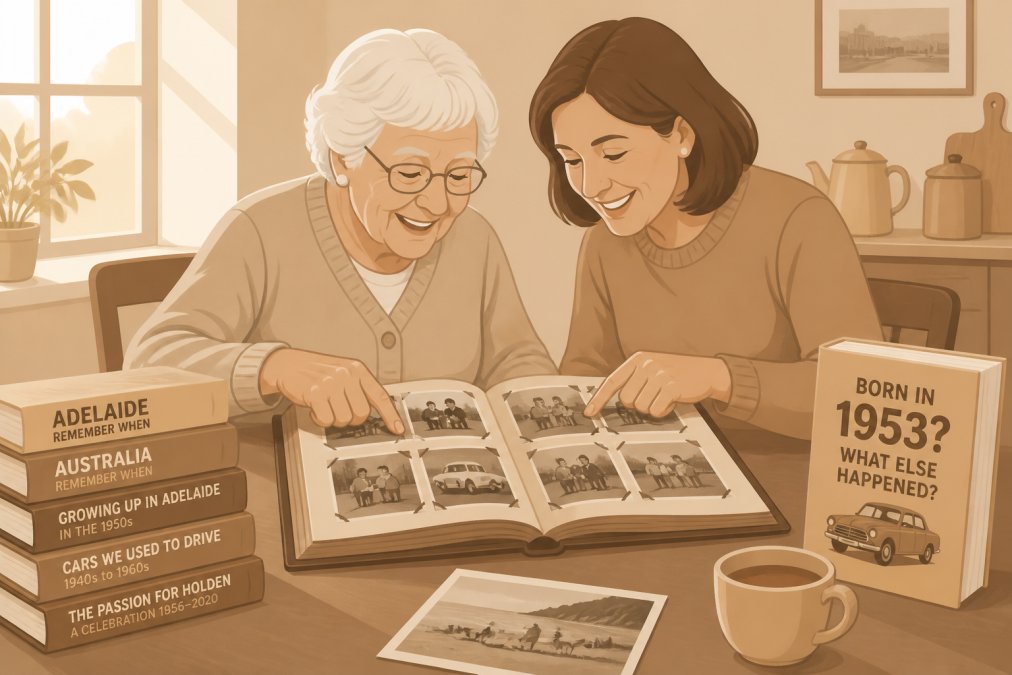
For carers in aged care settings, having a consistent collection of era-appropriate materials is essential. Rather than relying on family members to provide photographs, which isn't always possible, facilities benefit from having curated books that reliably trigger relevant memories across multiple residents. This is why books like Australia Remember This Too have become widely recognised as helpful resources in Australian aged care.

The practical implementation is simple: schedule regular photo-based sessions, ideally with one-on-one or small-group participation. Duration typically ranges from 20 to 45 minutes, depending on the senior's engagement level. Some will want to spend an hour with a single photograph; others will move quickly through several. Follow their pace.
Conversation and Life Review
Life review is a more structured form of reminiscence therapy activities for seniors. Rather than responding to visual prompts, the senior guides a narrative of their life, often organised chronologically or thematically.
A life review conversation might follow this arc: childhood and family background, education and early work, meeting a partner, raising children, career highlights and challenges, retirement, and reflections on what mattered most. The carer's role is to ask clarifying questions and help the senior construct a coherent narrative.
This process serves multiple functions. It gives the senior an opportunity to integrate their life experience into a meaningful whole. It allows them to articulate what they're proud of, what they struggled with, and how they made sense of it all. For those with dementia or memory challenges, it provides structure that compensates for fragmented recall.
Life review conversations work best when they're recorded or documented in some way. Not as a clinical assessment, but as a gift, something the senior and their family can return to. This documentation also provides carers with a reference point for future conversations, helping them ask informed questions that feel personal rather than generic.
Practical timing: life review typically requires multiple sessions. A single conversation might cover one decade or life chapter. Regular weekly sessions over several months allow for depth without overwhelming the senior.
How to Use Music for Dementia Care and Memory Stimulation
Music activates memory pathways that remain accessible even when other cognitive functions decline. This is why music is so effective in dementia care, it bypasses some of the neurological barriers that make standard conversation difficult.
How to use music for dementia care begins with understanding what music matters to the individual. A senior who grew up listening to Frank Sinatra, radio dramas, and Australian bush ballads will respond more strongly to that repertoire than to generic relaxation music. The specificity is critical.
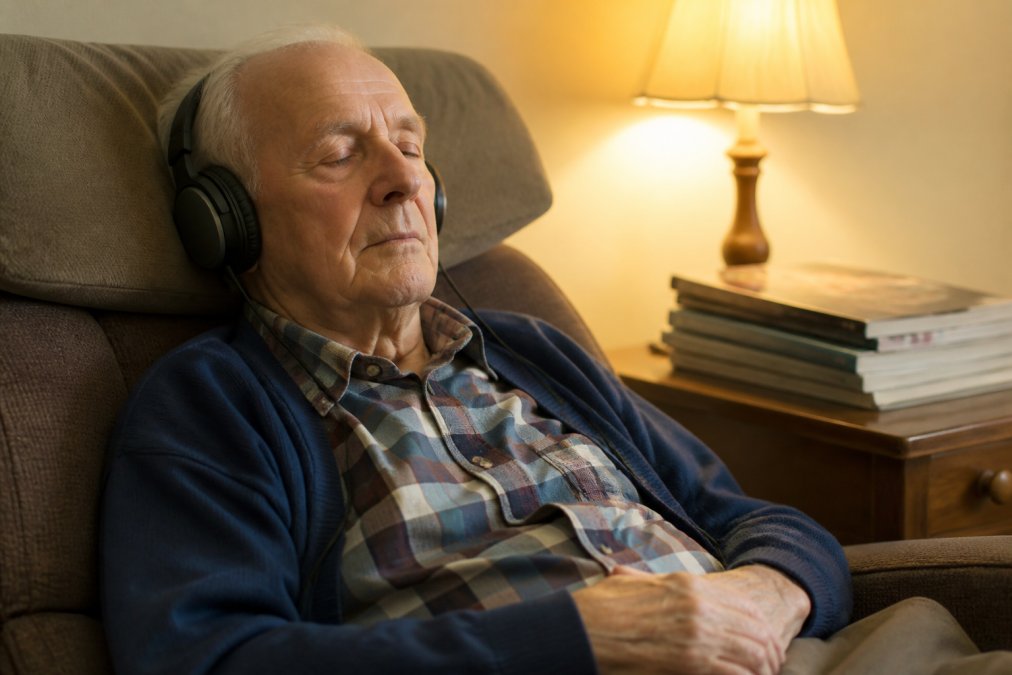
The mechanism is straightforward: familiar music triggers autobiographical memory, memories linked to specific times, places, and people in the listener's life. A particular song might instantly transport someone back to a dance in 1965, a car journey, or a moment with someone they loved. That transport is therapeutic. It's not just nostalgia; it's a genuine reconnection with identity and meaning.
For dementia specifically, music offers something conversation often cannot: access to emotional and autobiographical memory when factual memory has declined. Someone with moderate dementia might not remember their grandchild's name but can sing along to a song from their youth, word perfect. That capacity reveals that the memory is still there, it's just accessed through a different pathway.
Practical implementation for how to use music for dementia care:
- Identify the senior's preferred music from their era and cultural background
- Use curated playlists rather than shuffle mode, consistency matters
- Combine music with other reminiscence activities: play a song, then discuss what it reminds them of
- Observe non-verbal responses: foot tapping, hand movements, facial expressions often indicate engagement even if verbal response is limited
- Schedule regular listening sessions, ideally at times when the senior is most alert
- Live music or singing (even amateur) produces stronger engagement than recorded music
The duration varies. Some seniors will listen for 30 minutes; others will engage with individual songs. Follow their attention and interest rather than imposing a fixed schedule.
Nostalgia as a Tool for Social Connectedness and Reducing Loneliness
Loneliness is a documented health risk for older adults, with impacts comparable to smoking or obesity. Nostalgia for seniors provides a structured pathway to meaningful social connection, which is why reminiscence activities are so effective in reducing isolation.
Shared memory creates shared meaning. When a carer sits with a senior and discusses a photograph from 1960s Melbourne, they're not just having a conversation. They're participating in that senior's world, validating their experience, and creating a moment of genuine connection. That moment has measurable effects on emotional well-being and sense of belonging.
Social connectedness through nostalgia works across multiple contexts. Family members using reminiscence materials gain insight into their relative's life and identity. Carers in group settings can facilitate conversations where multiple residents discover shared memories, "You lived in Perth? I lived there too!", creating peer connection around common experience.
The loneliness-reduction effect is particularly pronounced for seniors who are geographically isolated, have limited family contact, or are adjusting to residential aged care. Reminiscence activities provide both one-on-one meaningful interaction and opportunities for peer connection within a group setting.
Practical application: structured reminiscence groups in aged care facilities, family-led memory conversations at home, and peer-based discussion groups all use this mechanism. The common element is intentional social engagement around shared memory.
Potential Risks: When Over-Reminiscing Becomes Unhelpful
While nostalgia for seniors is generally therapeutic, excessive or unguided reminiscence can become counterproductive. Understanding these risks helps carers and families use reminiscence appropriately.
The primary risk is rumination, dwelling on negative memories or losses without integration or meaning-making. A senior who spends hours reflecting on regrets, failures, or people they've lost without any forward movement or resolution can experience increased depression rather than improved well-being. Reminiscence becomes rumination when it's repetitive, unguided, and focused on what cannot be changed.
A second risk involves triggering trauma. For seniors who experienced significant adversity, war, loss, abuse, reminiscence activities can activate painful memories without adequate support for processing them. This is why reminiscence therapy in clinical settings involves trained professionals who can recognise when a conversation is moving into traumatic territory and provide appropriate containment or referral.
A third risk is social withdrawal. Some seniors, particularly those with depression or anxiety, might use reminiscence as a way to avoid present-moment engagement. "I prefer talking about the past" can signal that the present feels too difficult or isolating. In these cases, reminiscence should be paired with present-focused activities and, if needed, professional mental health support.
The protective factor is structure and social engagement. Reminiscence that's guided by a carer, paired with meaningful interaction, and balanced with present-focused activities remains therapeutic. Reminiscence that's solitary, repetitive, and focused on loss or regret risks becoming harmful.
Practical safeguard: monitor the emotional tone and outcomes of reminiscence activities. Is the senior expressing a range of emotions, joy, sadness, pride, humour, or stuck in one emotional register? Are they engaging socially, or withdrawing? Are they expressing closure and integration, or rumination and regret? These observations guide whether to continue, adjust, or seek additional support.
Nostalgia for seniors is far more than sentimental indulgence. It's a evidence-informed tool for maintaining identity, emotional well-being, and social connection during a life stage when these elements face genuine challenge. For families and carers supporting older adults, creating intentional space for meaningful reminiscence, through photographs, conversation, music, or curated materials, offers measurable benefits without cost or medication.
Remember When Shop's carefully curated collection of Australian nostalgia books, including Adelaide Remember When: The Boomer Stories and decade-specific titles, provides the kind of era-appropriate, culturally relevant materials that make reminiscence therapy genuinely effective. Whether you're supporting a family member at home or working in an aged care setting, having access to materials specifically designed to trigger authentic Australian memories transforms reminiscence from an occasional activity into a sustainable therapeutic practice. Start with the era your senior remembers best, create space for conversation around those memories, and watch how connection deepens.

Frequently Asked Questions
Is nostalgia actually good for seniors with dementia?
Yes. Nostalgia and reminiscence therapy have been shown to improve emotional well-being, reduce anxiety, and enhance communication in people with dementia. Engaging with familiar memories through photos, music, or conversation can trigger cognitive function and provide comfort. Many aged care facilities in Australia now use reminiscence therapy as part of dementia care because it meets people where they are emotionally, rather than focusing on what they've lost.
How can families encourage positive reminiscing with elderly relatives?
Start with tangible prompts: old photographs, music from their era, or objects with personal meaning. Ask open-ended questions about specific memories rather than testing their recall. Share the activity together, this builds social connectedness. Books like Australia Remember When provide decade-specific photos and stories that naturally spark conversation. Keep sessions relaxed and brief; the goal is connection, not comprehensive life review. Allow the conversation to flow naturally without correction if details shift.
What's the difference between healthy nostalgia and rumination in seniors?
Healthy nostalgia focuses on positive past experiences and builds identity and meaning. It's reflective and often shared with others. Rumination, by contrast, involves dwelling on negative aspects of the past, often in isolation, and can increase anxiety or depression. If reminiscence is accompanied by withdrawal, persistent sadness, or feelings of hopelessness, it may have crossed into rumination. Professional support from a gerontologist or mental health practitioner can help distinguish between the two and adjust activities accordingly.
Can reminiscence therapy help seniors cope with loneliness?
Absolutely. Reminiscence therapy strengthens social connectedness by creating shared experiences and conversation. Group reminiscence activities in aged care settings or family-led sessions reduce isolation and provide emotional regulation. Sharing memories with others affirms that one's life has meaning and value. For seniors living alone, reminiscence combined with regular contact, whether through visits, phone calls, or shared reading of nostalgia materials, addresses both cognitive engagement and the psychological need for connection.
This article was written using GrandRanker