
Reminiscence Therapy Books for Dementia: A Family Guide
Table of Contents
- What Is Reminiscence Therapy and How Do Reminiscence Therapy Books Help?
- Benefits of Life Story Books for Dementia Patients
- How to Create a Life Story Book: Step-by-Step Instructions
- How to Facilitate Reminiscence Therapy with Memory Books
- Dementia Memory Book Ideas: Types of Reminiscence Props and Content
- Using Pre-Made Australian Nostalgia Books for Reminiscence Therapy
- Troubleshooting Common Engagement Challenges
- Conclusion
Last Updated: August 7, 2026
What Is Reminiscence Therapy and How Do Reminiscence Therapy Books Help?
Reminiscence therapy is a person-centred therapeutic approach that uses memories, photographs, and personal memorabilia to stimulate conversation, improve mood, and enhance quality of life for people living with dementia. Rather than forcing engagement with the present moment, which can feel frustrating when cognitive function is declining, reminiscence therapy invites people to revisit cherished periods of their life, where long-term memory often remains intact even when short-term recall fades.
When someone with dementia holds a photograph from their 1960s wedding or recognises a car model from their most active decade, something shifts. The conversation flows naturally. Anxiety decreases. A person who seemed withdrawn becomes animated, sharing stories and connecting with family or carers in genuinely meaningful ways.
Reminiscence therapy books, particularly life story books and decade-specific nostalgia collections, serve as the practical tool that makes this therapeutic approach accessible at home or in aged care settings. These books contain carefully curated photographs, memorabilia, and prompts designed to evoke autobiographical memories and encourage social interaction. They tap into the neurological reality that long-term memory often persists longer than short-term recall in dementia, making them one of the most evidence-based psychosocial interventions available.
Benefits of Life Story Books for Dementia Patients
Life story books deliver measurable improvements across multiple dimensions of wellbeing for people living with dementia, extending benefits to caregivers, family members, and the broader care environment.
Improved mood and reduced depressive emotions represent the most immediate benefit. When someone engages with positive memories, neurochemical changes occur. Many carers report that a person who arrives anxious or withdrawn becomes noticeably calmer and more engaged within minutes of opening a memory book.
Enhanced social interaction and connection happens naturally when reminiscence therapy is facilitated properly. A family member sitting with an older adult, looking through a life story book together, creates an opportunity for genuine conversation without the pressure of being tested on information they can't retrieve.
Preservation of identity and personhood is perhaps the most profound benefit. A life story book affirms: "Here is who you were. Here are the things you did. Here is your story." This affirmation has been linked to improved self-esteem and reduced neuropsychiatric symptoms including agitation and aggression.
Reduced caregiver distress is a significant secondary benefit. When carers have effective tools for engagement, the emotional burden of care decreases. Instead of struggling to find conversation topics, carers can facilitate meaningful interaction.
Mental stimulation and cognitive engagement occur throughout reminiscence therapy activities. Accessing existing long-term memory, narration, and social exchange provide valuable cognitive exercise that may help slow cognitive decline.
How to Create a Life Story Book: Step-by-Step Instructions
Creating a life story book is an accessible project that families can complete at home with basic materials. The process typically takes 4-8 weeks. Start early, the person with dementia can often participate in early stages, adding another layer of meaning to the final product.
Gather Photos and Memorabilia
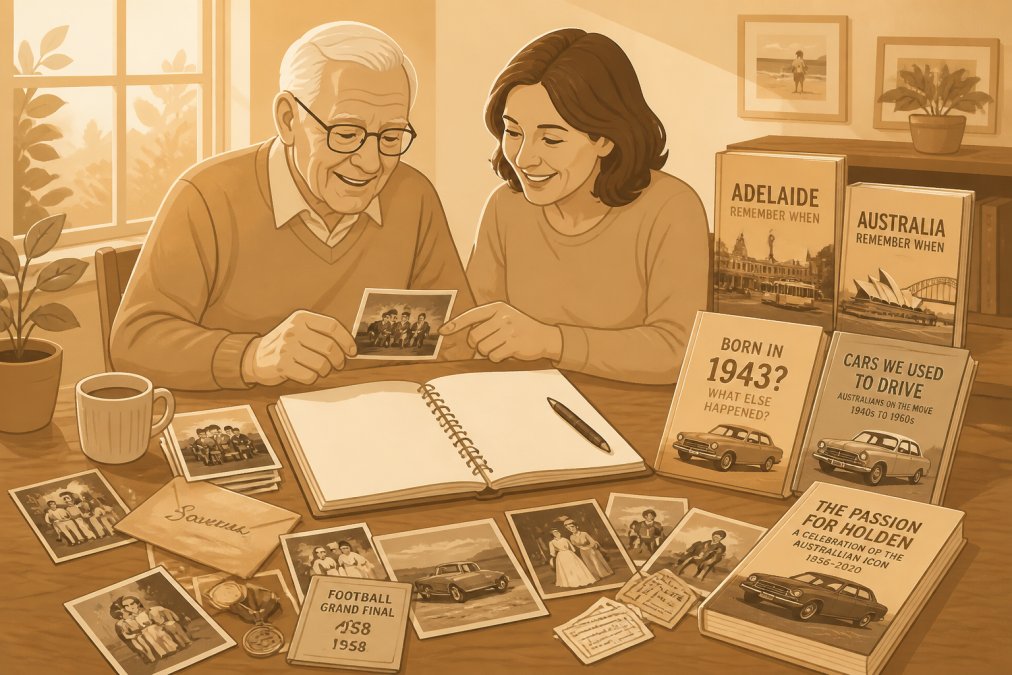
Begin by collecting photographs, documents, and objects that span the person's life. Aim for 2-4 representative images from each major decade or life stage:
- Childhood and school photos
- Young adult years (work, relationships, early family)
- Middle age (career highlights, family milestones, travel)
- Retirement years and recent decades
- Significant events (weddings, births, anniversaries, holidays)
- Objects connected to their interests
Scan or photograph originals so you can work with high-quality reproductions without risking damage to irreplaceable items.
Organise by Decade or Life Stage
Rather than arranging photos chronologically from birth onwards, organise by decade or significant life stage. This mirrors how people naturally recall their lives. Create loose sections:
- Birth and early childhood (1930s-1940s)
- School years (1940s-1950s)
- Young adult and working years (1950s-1960s)
- Family building (1960s-1970s)
- Peak career and middle age (1970s-1980s)
- Retirement and later years (1990s onwards)
Adjust these categories based on what was significant in the person's life. The structure should reflect their actual life narrative.
Add Captions and Stories
For each photograph or group of related images, add brief captions that answer simple questions: Who is in the photo? Where was it taken? When? What was happening in their life at that time?
Keep captions short, 2-3 sentences maximum. The goal is a memory trigger, not a detailed biography. If the person is still able to participate, record their words directly in the book. This captures their voice and perspective while creating a richer memory resource for later.
For photos where you don't have specific information, use general contextual captions: "Melbourne in the 1960s" or "Australian fashion from the 1950s." Even without personal detail, these images will prompt memories and conversation.
How to Facilitate Reminiscence Therapy with Memory Books
Creating the book is only half the work. The real therapeutic benefit emerges through how you facilitate engagement with it.
Choose the right time and environment. Engage with the memory book when the person is alert and calm, ideally during their best time of day. Create a quiet, comfortable space with good lighting. Minimise distractions.
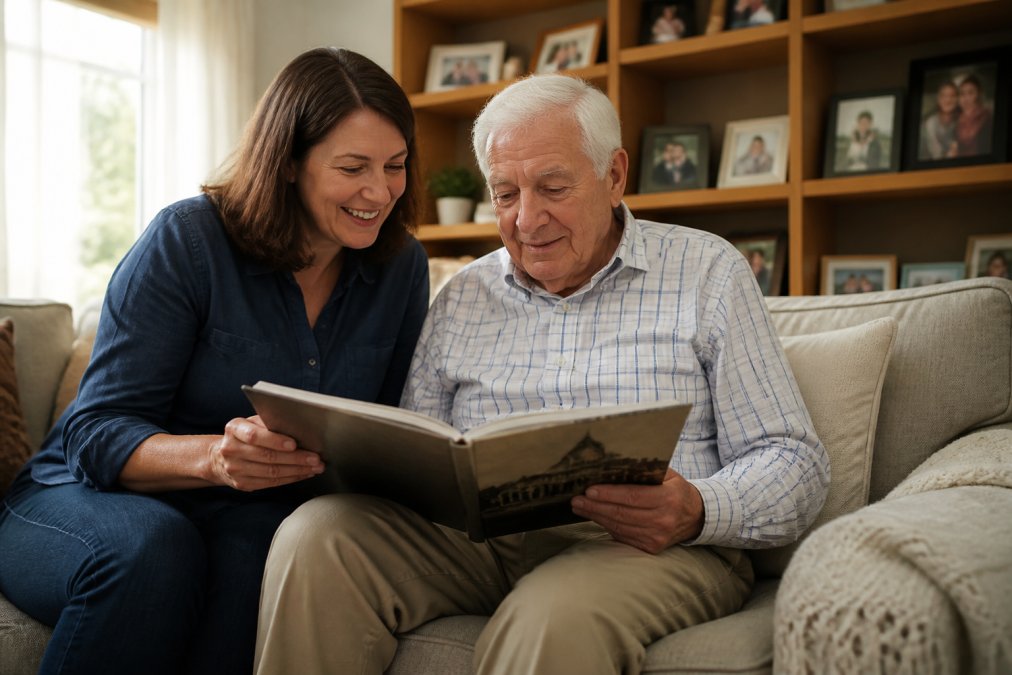
Let them lead the conversation. Don't quiz them. Don't correct them if they misremember details. Your role is to listen, affirm, and gently expand on what they share. If they mention something factually incorrect, it doesn't matter. The memory they're accessing, the feeling, the relationship, the significance, is real and valuable.
Use open-ended prompts. Instead of "Do you remember this?" try "What do you see here?" or "Tell me what was happening in your life at this time." Open-ended questions allow them to access whatever memories are available without pressure.
Pace the session appropriately. Reminiscence therapy sessions typically last 20-45 minutes, depending on the person's attention span and engagement level. Follow their pace. If they become tired or frustrated, stop.
Create regular routines. The most effective reminiscence therapy happens when it's a regular part of the week. Consistency helps the person anticipate the activity and look forward to it.
Involve multiple people. Different family members or carers might facilitate reminiscence therapy at different times. A person might share different memories with their daughter than with a professional carer.
Dementia Memory Book Ideas: Types of Reminiscence Props and Content
Reminiscence therapy extends beyond traditional photo albums. Different types of props and content serve different therapeutic purposes.
Decade-specific nostalgia books are among the most accessible starting points. These books feature photographs and memorabilia from specific eras, capturing Australian life, fashion, vehicles, street scenes, and cultural moments. For someone who grew up during the 1960s, flipping through images of Australian streets, cars, and fashion from that era triggers autobiographical memories tied to their own experiences.
The Remember When Shop specializes in this type of resource. Their decade-specific books, particularly their 1950s collection and 1960s collection, feature hundreds of photographs documenting Australian life during those formative decades. Many are author-signed, adding a personal touch that makes them feel like meaningful keepsakes. These work beautifully as standalone reminiscence resources or as inspiration for creating personalised life story books.


Sensory props complement visual reminiscence. Old coins, fabric samples from different eras, recordings of music from their youth, or objects related to their work or hobbies can be incorporated into reminiscence sessions. Someone who was a gardener might respond powerfully to holding seeds or tools.
Memory boxes are three-dimensional versions of reminiscence therapy. A decorated box contains small objects, photographs, newspaper clippings, and memorabilia related to a specific period or theme. The tactile, multisensory experience often triggers richer memories than photographs alone.
Conversation cards designed specifically for dementia engagement prompt discussion without requiring the person to retrieve information from memory. Rather than "What did you do for work?", a card might say "Look at this photograph of a 1960s workplace. What do you notice?" These cards remove the pressure of being tested while still facilitating meaningful conversation.
Themed reminiscence activities connect memory work to seasonal events or life milestones. A Christmas reminiscence session might focus on holiday memories. An anniversary of their wedding might involve revisiting photographs from that era.
Using Pre-Made Australian Nostalgia Books for Reminiscence Therapy
While personalised life story books are powerful, pre-made Australian nostalgia books serve an important complementary role and for some families, they're the primary reminiscence resource.
The advantage of ready-made books is accessibility and immediacy. You don't need to spend weeks gathering photographs. You open the book and begin facilitating reminiscence therapy immediately. This matters for families managing competing demands or for aged care facilities implementing reminiscence therapy across multiple residents.
Books like the Remember When Shop's 1970s collection and 1940s collection offer curated Australian content specifically designed to resonate with people who lived through those decades. Rather than generic international imagery, these books feature Australian streets, cars, fashion, and cultural moments. For someone who grew up in Melbourne or Sydney, seeing recognisable landmarks creates immediate connection and more vivid memory activation.

High-quality photography matters significantly. Well-reproduced images are easier for people with vision changes to engage with and feel more substantial, like a meaningful keepsake rather than a casual reference. Author-signed copies add another dimension, creating a sense that the book is a personal gift.
Many aged care facilities have discovered that having a collection of decade-specific books allows them to match residents with the eras most relevant to their lives. Someone who was a teenager in the 1950s engages differently with 1950s imagery than someone whose formative years were the 1970s.
These books also work well for family gift-giving. A decade-specific nostalgia book tied to someone's era of youth becomes a meaningful, conversation-starting present that signals you understand their life story and value their memories.
Troubleshooting Common Engagement Challenges
Even with well-designed reminiscence therapy resources, engagement sometimes stalls. Understanding common obstacles makes the difference between a resource that sits on a shelf and one that becomes a regular, meaningful part of care.
The person seems uninterested or withdrawn during reminiscence sessions. This often reflects timing rather than lack of interest. Try shifting to their best time of day. Also assess the environment, is there background noise, poor lighting, or interruptions? A quiet, well-lit space often dramatically improves engagement. If disinterest persists, try a different reminiscence resource.
They become upset or distressed when looking at memory materials. Some photographs trigger grief or difficult memories. Rather than avoiding reminiscence entirely, work with a professional to identify which topics and images are safe. Reminiscence therapy should enhance wellbeing, not cause distress.
They repeat the same stories or seem stuck on a single memory. This is normal and not necessarily problematic. Repetition of cherished memories can be comforting and affirming. If repetition seems compulsive or distressing, try gently redirecting to a different section of the book or a different reminiscence resource.
The person doesn't seem to remember the book from session to session. This is expected in moderate to advanced dementia. Short-term memory loss means they won't remember previous sessions. But the therapeutic benefit still occurs in each individual session, the conversation, the connection, the mood improvement happen in the moment.
Engagement is brief, they lose interest after 5-10 minutes. Shorter sessions are perfectly acceptable. A 10-minute engaged conversation is more valuable than a 45-minute session where they're struggling to focus.
Multiple people are involved in care, and engagement varies depending on who's facilitating. A brief conversation between family members and professional carers about what works best, what prompts generate conversation, what pacing feels right, and what topics resonate helps create consistency.
Reminiscence therapy books offer a powerful, evidence-based approach to enhancing quality of life for people living with dementia. Whether you're creating a personalised life story book or using pre-made Australian nostalgia resources, the core principle remains the same: meet people where they are, honour their life story, and create space for meaningful connection. The Remember When Shop's curated collection of decade-specific books provides an accessible starting point, particularly their author-signed copies that combine therapeutic value with the personal touch that transforms a book into a cherished keepsake. Begin with whichever approach feels most manageable for your situation, and remember that even brief, regular reminiscence sessions create measurable improvements in mood, engagement, and wellbeing.
Frequently Asked Questions
How do reminiscence therapy books actually help someone with dementia?
Reminiscence therapy books work by triggering long-term memories, the ones that typically remain intact longer in dementia. When a person with dementia looks at familiar photos and objects from their past, it activates autobiographical memory and can spark conversation, reduce agitation, and improve mood. Research shows that this type of memory stimulation also reduces neuropsychiatric symptoms like anxiety and depression. The person-centred approach validates their identity and life story, which is especially important as cognitive decline progresses.
What should I include in a life story book template for dementia?
A life story book should include clear, large photos from different decades, names of people and places, brief captions describing what's happening, and objects that trigger sensory memories (textures, scents). Organise content chronologically, childhood, working years, family milestones, hobbies, and travels. Include both major life events and everyday moments. For Australian audiences, decade-specific books covering the 1950s-1980s work well because they combine personal photos with cultural context. Keep pages uncluttered and use high-contrast, readable fonts.
How do I know if reminiscence therapy is actually working for my relative?
Signs that reminiscence therapy is effective include increased engagement during sessions, improved mood or reduced agitation, spontaneous comments or stories about the past, and better social interaction with family or carers. Some people become more talkative; others show contentment through facial expressions and body language. Quality of life improvements may appear gradually. If your relative shows no response after several sessions, try different props, different times of day, or one-on-one sessions instead of groups. Consistency matters, regular, brief sessions often work better than occasional long ones.
Are there ready-made reminiscence therapy books I can use instead of creating one?
Yes. Pre-made Australian nostalgia books, particularly decade-specific titles covering the 1950s-1980s, are designed to evoke memories and spark conversation. These books feature authentic photographs, cultural references, and historical context that resonate with older Australians. They're especially useful if you don't have enough personal photos or want to supplement a homemade book. Many carers in aged care facilities use them as therapeutic tools because they're professionally curated, durable, and immediately ready to use. Author-signed copies add a personal, meaningful touch as gifts.
This article was written using GrandRanker