

Nostalgia Books vs General Retailers: What's Worth It?
Table of Contents
- What You're Actually Comparing: Nostalgia Books vs General Retailers
- Curated Discovery vs Algorithmic Recommendations
- Buying Books Online vs In-Store: The Real Trade-Offs
- Pricing, Value and What You Get for Your Money
- Why Support Local Bookstores and Specialist Retailers
- The Role of Nostalgia Books in Aged Care and Dementia Support
- Economic Sustainability and Environmental Impact
- Which Option Is Right for Your Situation?
Last Updated: August 6, 2026
What You're Actually Comparing: Nostalgia Books vs General Retailers
Most people searching for nostalgia books face the same choice: a specialist shop with curated selections, or a general retailer with broad inventory. The difference matters significantly.
Nostalgia books are titles curated to evoke personal and cultural memory, typically organised by era, region, or theme. They prioritise emotional recognition over scholarly distance. A photograph of a Holden FJ parked outside a milk bar in 1957 resonates differently than a written account of postwar Australia.
General retailers, by contrast, are built around inventory breadth. They stock what sells widely, meaning nostalgia titles compete for shelf space against crime thrillers, self-help books, and memoirs. The browsing experience is designed for volume, not discovery.
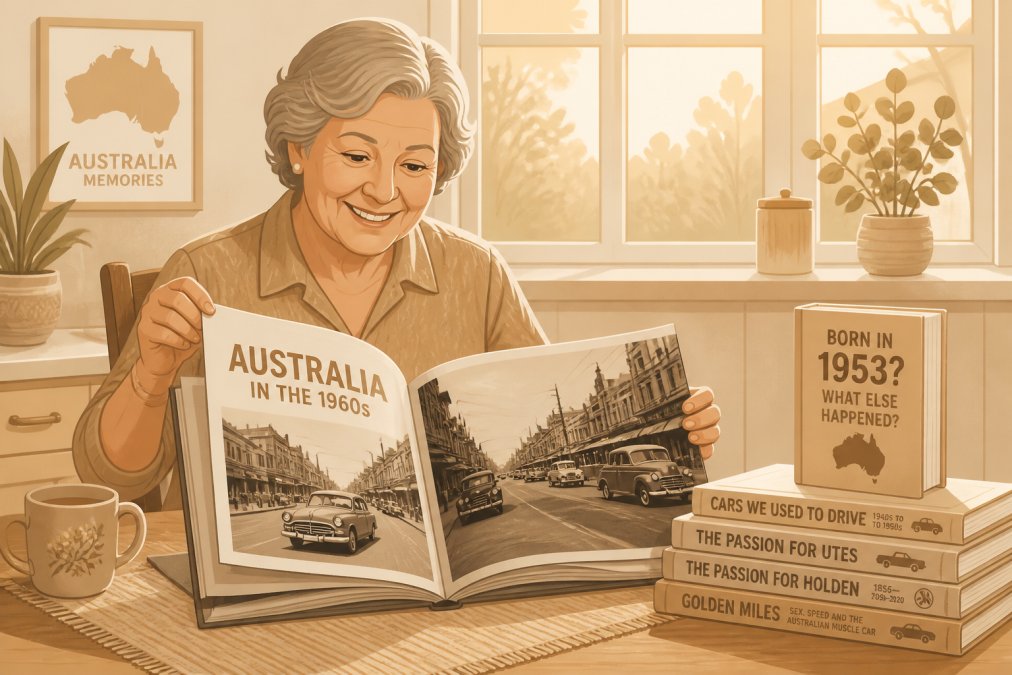
The real comparison is whether the book will actually land. For milestone gifts, aged care settings, or anyone reconnecting a loved one with their past, "landing" is the whole point.
| Factor | Specialist Nostalgia Retailer | General Retailer |
|---|---|---|
| Curation depth | High - era and region-specific | Low - broad interest only |
| Author-signed copies | Available | Rarely available |
| Australian-specific content | Core focus | Incidental |
| Price sensitivity | Mid-range, value-justified | Variable, often discounted |
| Best for | Meaningful gifts, aged care, collectors | Convenience purchases |
| Discovery experience | Guided, intentional | Algorithmic, broad |
Curated Discovery vs Algorithmic Recommendations
The biggest practical difference between specialist and general retailers is how you find the right title. Specialist shops guide you toward something meaningful. General retailers show you what's popular.
How Specialist Shops Select Their Titles
Specialist nostalgia retailers build catalogues around coherent editorial vision. Every title meets specific criteria: does it speak to a particular decade, region, or shared cultural experience? Does it use original photography? Will it resonate with someone who lived through that era?
This curation requires deep familiarity with the used book market, understanding of which titles endure, and relationships with authors in the nostalgia space. The result is a collection where almost any title is a reasonable gift choice.
For Australian content, this matters enormously. A book about 1960s Australian life with a Sydney lens may mean little to someone from Adelaide or regional Queensland. Specialist shops aware of this select titles with broad national resonance or are transparent about regional focus.
What General Retailers Prioritise Instead
General retailers optimise for consumer behaviour at scale. Their recommendation engines surface titles based on purchase history and trending categories. If you search "Australia history book," you'll see what others also bought. This works for mainstream titles but poorly for niche markets.
The algorithmic approach disadvantages specialist content. A book with strong sales in a broad category outranks deeply resonant nostalgia titles with smaller readerships. For buyers seeking a decade-specific photo book covering Australian life in the 1950s, general retailer discovery tools are inadequate.
Buying Books Online vs In-Store: The Real Trade-Offs
Buying books online versus in-store involves genuine tension between tactile browsing pleasure and practical digital convenience. For nostalgia books, this plays out differently than general book shopping.
Physical Browsing and the Retail Atmosphere
Physical browsing activates different discovery. You pick up a book because the cover catches your eye, flip to a random page, and find a photograph that stops you cold. That serendipitous encounter is hard to replicate online.
The retail atmosphere, the smell of paper, the quiet, the sense that time moves differently, contributes to how a book feels as a gift. Research in shopping psychology consistently finds that tactile engagement increases perceived value and purchase satisfaction.
The challenge for nostalgia books is that physical storefront options for specialist Australian content are limited. A general bookshop may carry one or two broadly nostalgic Australian titles, not a signed copy of a decade-specific photo book.
Digital Convenience and Book Availability
Online retail solves the availability problem physical stores cannot. A specialist online retailer can maintain curated inventory no physical store could afford to stock and serve customers anywhere in Australia without storefront overhead.
For buyers seeking nostalgia books as gifts, digital convenience is substantial. You can browse by decade, read detailed descriptions, check for author-signed copies, and complete purchase in one session. According to Australia Post's eCommerce Industry Report, online shopping has become the default purchasing channel for a significant and growing proportion of Australian consumers, including older demographics.
The trade-off is you cannot flip through the book before buying. For nostalgia titles where photography quality and emotional resonance are central, this matters. Good specialist retailers compensate with detailed descriptions, sample images, and customer reviews addressing the emotional experience.
Pricing, Value and What You Get for Your Money
Nostalgia books from specialist retailers cost more than discount titles from general retailers. The question is: what are you paying for?
At Remember When Shop, author-signed copies of Bob Byrne's Australian nostalgia titles are priced between $29.99 and $39.99. Remember When: Snapshots of Australia is $39.99 as a signed copy. The decade-specific Photos and Memories titles covering the 1940s, 1950s, and 1960s are $29.99 each. Australia Remember This Too is $34.99 as a signed copy.

Compare that to a general nostalgia title from a large retailer. You might find something cheaper, but it will not be signed, curated for Australian audiences specifically, or carry the same depth of original photography and local cultural context.
The value calculation changes when you consider use case. A signed copy of a book covering the decade when your father turned 21 is not the same purchase as a generic "Australian history" title. One is a keepsake. The other is a book.
Why Support Local Bookstores and Specialist Retailers
Specialist retailers maintain expertise and curated inventory that general retailers will not, because niche market economics do not reward breadth.
When a specialist nostalgia retailer disappears, the knowledge and curation it represented disappears with it. General retailers do not fill that gap. The long tail of Australian cultural memory, regional histories, and decade-specific photo books becomes progressively harder to find.
According to the Australian Booksellers Association, independent and specialist booksellers play a disproportionate role in supporting Australian authors and Australian-specific content that larger retailers deprioritise. When you buy from a specialist, you participate in a supply chain that keeps that content viable.
Specialist retailers often function as community spaces. They attract customers who share genuine interest in Australian cultural memory and build loyalty through expertise and personal service rather than price competition. Customer loyalty, once earned, tends to be durable.
The Role of Nostalgia Books in Aged Care and Dementia Support
Nostalgia books have a specific and well-documented application in aged care and dementia support that general retailers are not positioned to serve. Reminiscence therapy, which uses sensory triggers including images to stimulate autobiographical memory in older adults, has become standard in Australian aged care facilities.
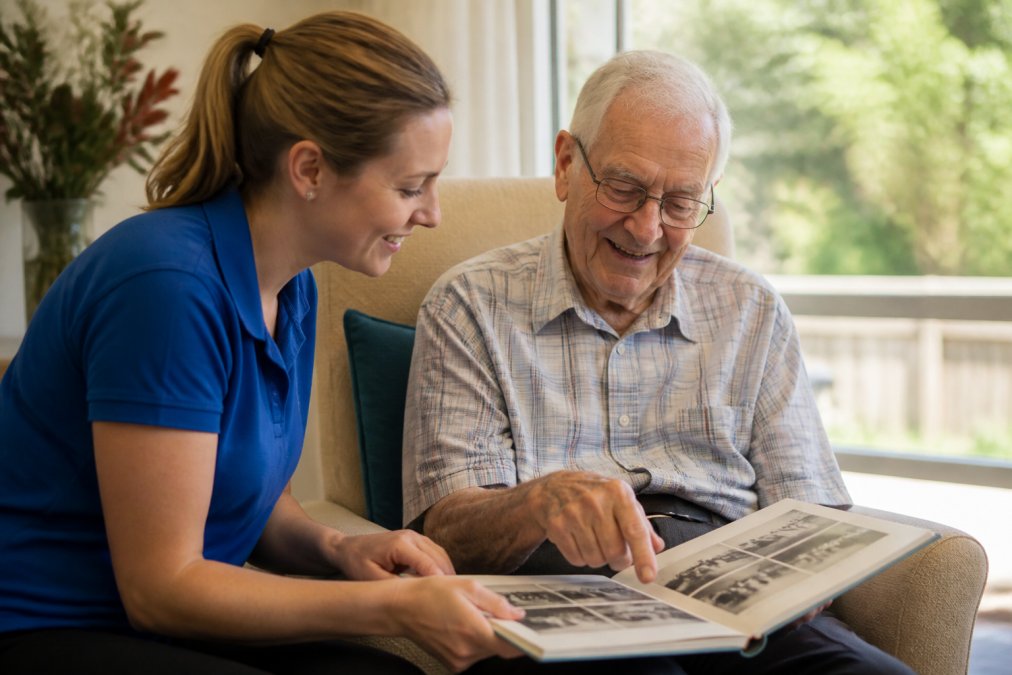
Books with high-quality photographs from specific eras and regions are particularly effective. They give residents something concrete to respond to, a familiar face, a street they recognise, a car they once owned, and create a framework for conversation. The Dementia Australia resources on reminiscence therapy describe how familiar images from a person's past support engagement and reduce distress in people living with dementia.
General retailers carry books that might incidentally serve this purpose. Specialist nostalgia retailers carry books designed to serve it. The distinction is significant for carers seeking resources that actually work.
The Australia Remember When and Remember When: Snapshots of Australia 1950s-1980s titles from Remember When Shop have been recognised by carers in aged care settings as particularly effective. The combination of original photography, Australian cultural specificity, and decade-based organisation makes them easy to use in structured reminiscence sessions.

Economic Sustainability and Environmental Impact
The economic sustainability of physical versus digital retail, and environmental implications, deserve direct attention.
Physical bookstores carry significant overhead: rent, staffing, and inventory management. The economics of specialist physical retail are challenging, which is why many have moved to online-only models. This preserves curation and expertise while reducing unsustainable overhead.
Online specialist retailers have different cost structures. Lower overhead translates to more resources for inventory quality and customer service. For buyers, this often means better availability of specialist titles.
The environmental comparison is nuanced. Physical retail requires energy for storefronts and logistics, often resulting in unsold inventory that must be remaindered. Online retail concentrates impact in last-mile delivery but avoids waste from overstocking.
Used book markets offer lower-impact options for price-sensitive buyers not seeking signed editions. For nostalgia titles no longer in active print, the used market is often the only option.
The most environmentally considered approach is prioritising titles that will be genuinely used and valued over time. A $39.99 signed copy that becomes a family keepsake has better environmental profile than a $12 discount title discarded after a year.
Which Option Is Right for Your Situation?
The right choice depends entirely on what you need the book to do.
For a meaningful milestone gift, a signed copy from a specialist retailer is the clear answer. The combination of Australian-specific content, original photography, and personal signature transforms a book into a keepsake. General retailers cannot offer this.
For aged care and dementia support, the same logic applies with more force. Effectiveness in reminiscence therapy depends on specificity and resonance. A curated, Australian-specific title outperforms generic nostalgia books.
For general reading or casual purchase, a general retailer may be adequate. If someone simply wants an interesting book about Australian history without specific gift or therapeutic purpose, broader selection and competitive pricing serve that need.
General retailers are optimised for convenience and breadth. Specialist retailers are optimised for meaning and specificity. When meaning matters, for gifts, aged care, and reconnecting loved ones with their past, the specialist wins.
According to the Australian Institute of Health and Welfare's report on aged care, the number of Australians accessing aged care services continues to grow, meaning demand for effective reminiscence resources is increasing. Specialist nostalgia content is not a niche curiosity. It is a growing necessity.
| Situation | Best Option | Why |
|---|---|---|
| Milestone birthday gift (70th, 80th) | Specialist retailer | Signed copy, Australian-specific, era-matched |
| Aged care reminiscence therapy | Specialist retailer | Curated for emotional resonance, locally relevant |
| Last-minute general gift | General retailer | Convenience and availability |
| Rare or out-of-print title | Used book marketplace | Widest access to discontinued titles |
| Budget-conscious casual read | General retailer | Competitive pricing, broad selection |
| Collector seeking signed edition | Specialist retailer | Only source for author-signed copies |
Choosing the right book for someone who lived through Australia's postwar decades is not trivial. The wrong choice sits unread; the right one gets passed around the family. Remember When Shop carries author-signed copies of Bob Byrne's decade-specific Australian nostalgia titles, including Remember When: Snapshots of Australia, Photos and Memories of Australia from the 1950s, Photos and Memories of Australia from the 1960s, and Australia Remember This Too, all curated specifically for Australian audiences and backed by over 597 customer reviews. Shop now and find the title that matches the decade your recipient will remember most.

Frequently Asked Questions
Are nostalgia books considered a niche market in Australia?
Yes, nostalgia books occupy a clear niche within the broader Australian retail landscape. General retailers stock titles based on mass-market demand, which means highly specific content, such as decade-by-decade Australian social history or regional photo collections, rarely makes the shelf. Specialist shops like Remember When Shop focus entirely on this niche, making it far easier to find titles covering the 1950s through 1980s that resonate with older Australians and Baby Boomers specifically.
What are the main pricing differences between specialist nostalgia bookshops and general Australian retailers?
Specialist nostalgia books from Remember When Shop are priced between $29.99 and $39.99, for example, the author-signed Photos and Memories of Australia from the 1950s is $29.99, while Remember When: Snapshots of Australia is $39.99. General retailers often stock lower-cost titles, but those books rarely include author signatures, Australian-specific decade content, or the curation that makes a gift genuinely meaningful. The price difference reflects specialisation, not simply margin.
Do nostalgia bookstores offer better curation than general online retailers?
For Australian nostalgia specifically, yes. General online retailers use algorithmic recommendations based on purchasing patterns, which works well for popular genres but struggles with niche, sentiment-driven content. A specialist shop curates by hand, selecting titles that genuinely connect with a particular era, region, or cultural experience. For someone searching for a meaningful gift tied to a specific decade of Australian life, that human curation produces far more relevant results than a general search algorithm.
How does buying from a specialist Australian bookshop impact the local economy?
Purchasing from an Australian specialist retailer keeps spending within the local economy rather than routing it through large international platforms. It also supports Australian authors, such as Bob Byrne, whose books are stocked and sold through Remember When Shop, and sustains the kind of niche literary culture that larger retailers have little commercial incentive to maintain. Over time, consumer spending at specialist shops helps preserve access to titles that document and celebrate Australian history and identity.
Can nostalgia books actually help someone with dementia, or is that overstated?
Reminiscence therapy, using familiar objects, images, and stories to stimulate memory and conversation, is a recognised approach used in aged care across Australia. Nostalgia books filled with photographs of everyday Australian life from the 1950s to 1980s can serve as practical tools in this context. Remember When Shop's titles, particularly Australia Remember When and Remember When: Snapshots of Australia, have received direct feedback from carers and aged care professionals noting their usefulness in prompting engagement and positive emotional responses in residents with dementia.
This article was written using GrandRanker