

Best Ways to Store Signed First Editions
Table of Contents
- Why Proper Storage Matters for Signed First Editions
- Choosing the Right Shelving and Storage Orientation
- Environmental Controls: Temperature and Humidity
- Archival Book Storage Supplies and Materials
- Protecting Signed Dust Jackets from Damage
- Rare Book Handling Best Practices
- Long-Term Preservation: Insurance, Appraisals, and Digital Records
- Emergency Preparedness and Storage Contingencies
- Frequently Asked Questions
Last Updated: September 1, 2026
Why Proper Storage Matters for Signed First Editions
Signed first editions are tangible connections to authors and literary history, often representing significant financial investments. Yet many collectors store them carelessly, allowing foxing, spine damage, and faded signatures to develop within years. Proper storage requires understanding how environmental factors, handling practices, and protective materials work together to preserve both physical integrity and the author's inscription.
At Remember When Shop, we've worked with collectors who recognise that preservation is essential for signed copies. Whether inherited or acquired as a treasured keepsake, your storage approach today determines whether that book remains pristine for decades or deteriorates slowly.

A first edition in fine condition with a clear, well-preserved signature commands significantly more value than the same book showing signs of poor storage. Acid migration, mould growth, and spine damage are all preventable with the right strategy.
Choosing the Right Shelving and Storage Orientation
How you position a signed first edition affects weight distribution across the spine, dust accumulation, and accessibility.
Vertical vs. horizontal storage
Vertical shelving is standard for most collections, distributing weight along the book block's entire length rather than concentrating it on the spine. However, horizontal storage (lying flat) becomes preferable for books with fragile spines, oversized editions, or delicate dust jackets. The trade-off is that horizontal stacks occupy more space and accumulate dust more readily on top surfaces.
Assess the individual book's condition: a strong, tightly bound signed edition thrives vertically, while a more delicate copy benefits from horizontal placement.
Shelving materials and air circulation
Wood shelves can off-gas acidic compounds that migrate into paper and cloth bindings, causing yellowing and brittleness. Metal shelving avoids this problem and allows superior air circulation, reducing mould and mildew risk.
If you prefer wooden shelving, use only acid-free, archival-quality timber or line wooden shelves with acid-free paper. Never use standard plywood or particle board.
Leave at least 5-10 centimetres of space between the back of books and the wall, and avoid storing signed editions in damp basements or sealed cabinets without climate control.
Environmental Controls: Temperature and Humidity
The environment surrounding your signed first editions is the single most influential factor in their long-term preservation. Fluctuating temperature and relative humidity are the primary culprits behind deterioration.
Relative humidity should remain between 30% and 50% year-round (loc.gov). Below 30%, paper becomes brittle and leather bindings crack (peer-reviewed research). Above 50%, you risk mould, mildew, and foxing. Fountain pen ink signatures can fade or blur if exposed to prolonged moisture.
Temperature fluctuations are equally damaging. A room swinging from 15°C in winter to 25°C in summer stresses the book's structure. Cloth expands and contracts at different rates than paper, creating internal stress. The ideal storage environment maintains a steady temperature between 18°C and 21°C with minimal daily or seasonal variation (loc.gov).
For most Australian homes, a dedicated bookshelf away from external walls, windows, and heat sources is a good start. In high-humidity regions, consider a small dehumidifier near your collection. In arid climates, a humidifier may be necessary during dry months.
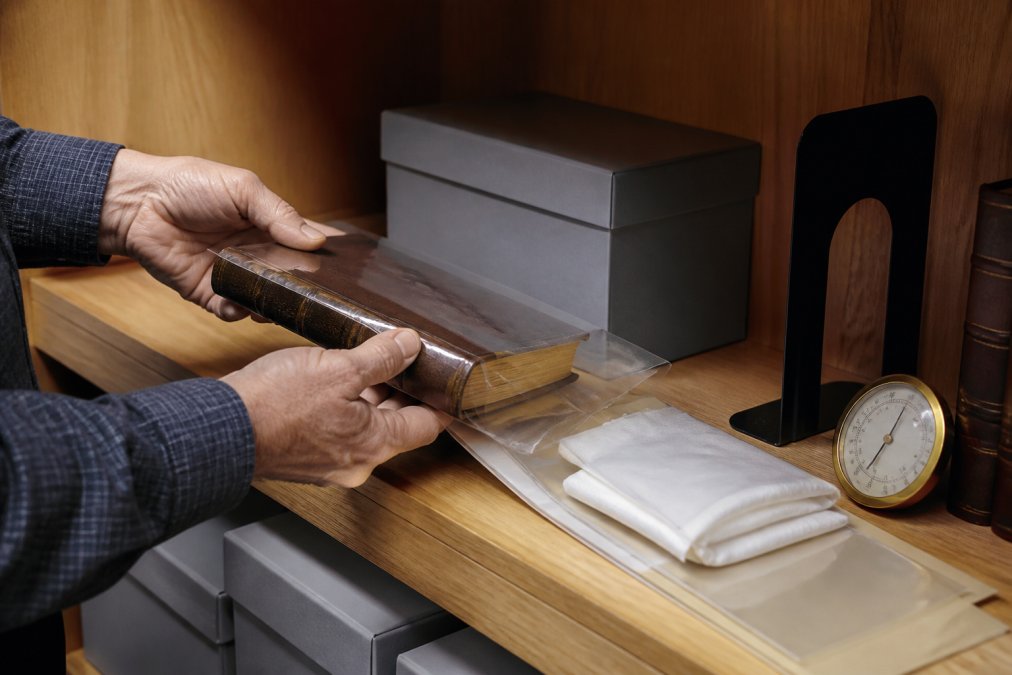
Invest in an inexpensive hygrometer to monitor conditions. Many collectors place one near their signed first editions and check it monthly, often revealing problems before they damage the collection.
Archival Book Storage Supplies and Materials
Once you've established proper shelving and environmental controls, protective materials determine how well your signed first edition resists deterioration over decades.
Acid-free protection and Mylar sleeves
The dust jacket on a signed first edition is often the most vulnerable component. An archival-quality protective sleeve made from inert Mylar polyester creates a transparent barrier that allows the jacket's design and signature to remain visible while shielding them from physical contact.
Look for sleeves made from uncoated, inert polyester specifically labelled as archival-grade. Avoid cheaper plastic sleeves or PVC-based materials, which become sticky and can damage the dust jacket surface over time.
For the book itself, acid-free tissue paper can be placed between the endpapers and book block to absorb residual moisture without introducing acidity. Many collectors also use acid-free storage boxes for particularly valuable signed editions, creating a controlled microenvironment that protects against dust, light, and accidental damage.
The Remember When Shop's author-signed copies, such as Australia Remember When and Remember When: Snapshots of Australia, are treasured keepsakes that deserve this level of protection. A Mylar sleeve costs little but extends the life of the signature and dust jacket dramatically.

Slipcases and Solander boxes
For signed first editions of exceptional value or sentimental importance, a Solander box provides museum-quality protection. These fully enclosed boxes with clamshell openings offer superior dust and light protection compared to slipcases.
Boxes should be constructed from acid-free board and lined with acid-free paper or cloth. The book inside should rest on acid-free tissue to prevent the board from contacting the binding directly. Slipcases and Solander boxes typically cost $50-150 AUD depending on size and materials, but they're worth the investment for irreplaceable or historically significant signed editions.
The advantage is comprehensive protection from light, dust, accidental damage, and humidity fluctuations. The disadvantage is reduced accessibility, though this actually benefits preservation if the goal is long-term storage rather than regular reading.
Protecting Signed Dust Jackets from Damage
The dust jacket is often the most visible and valuable part of a signed first edition. An author's signature on the jacket front adds significant premium compared to a signature on the title page alone.
Signed dust jackets vs. signed title pages
A signature on the dust jacket is exposed to every handling, environmental fluctuation, and moment of shelf time. The ink sits on the surface, susceptible to fading from light exposure, smudging from fingerprints, and deterioration from humidity changes. protecting important documents.
A signature on the title page enjoys more protection, sheltered from light and physical contact, though still vulnerable to moisture and acid migration from poor storage materials.
If your signed first edition has the signature on the dust jacket, treat that jacket with particular care. Limit handling, keep it in a Mylar sleeve, and minimise light exposure.
UV exposure and light damage prevention
Light, particularly ultraviolet and direct sunlight, fades ink, yellows paper, and degrades cloth bindings. An author's signature will fade noticeably if exposed to direct sunlight for extended periods.
Store signed first editions away from windows and direct light sources. If your bookshelf receives direct sunlight, rearrange it or install UV-filtering film on nearby windows. Many collectors use closed shelving or curtains to protect valuable signed copies.
Even indoor artificial light contributes to fading over years. LED bulbs emit far less UV than incandescent bulbs. If installing new lighting near your collection, choose warm-white LEDs with minimal UV output.
For display purposes, consider rotating which signed editions are visible. Keep the most valuable or rare copies in protective boxes or in dimly lit areas, bringing them out occasionally for viewing rather than displaying them permanently.
Rare Book Handling Best Practices
How you physically interact with a signed first edition matters as much as where you store it. Careless handling introduces damage that environmental control cannot later reverse.
Handling techniques and cleaning
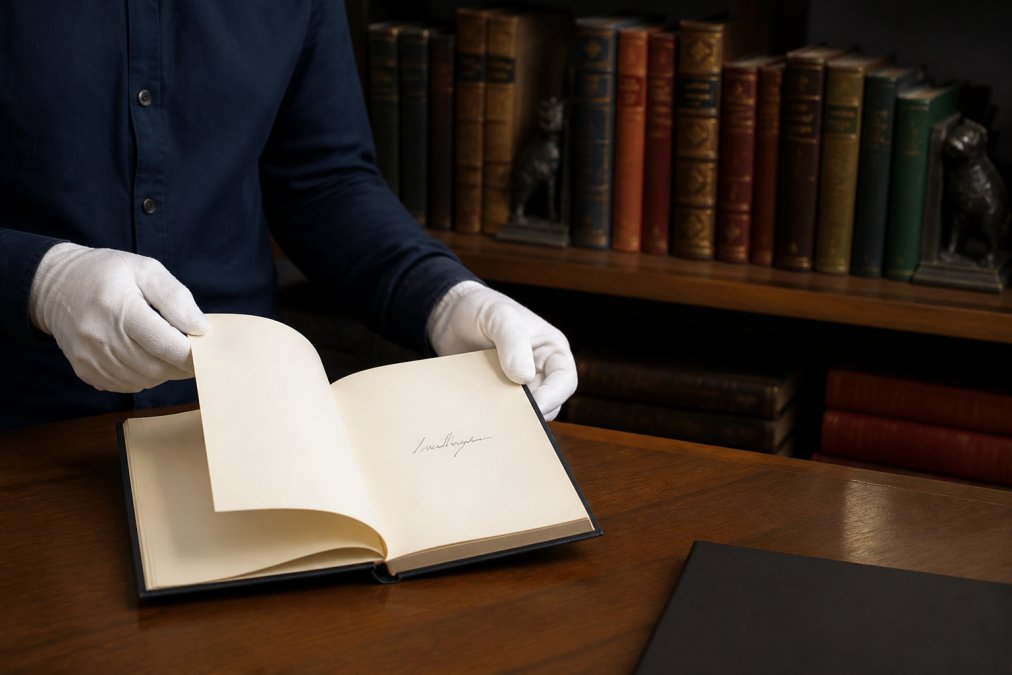
Always wash your hands before touching a signed first edition. Oils from your skin transfer to paper and binding, attracting dust and contributing to deterioration. Many collectors wear white cotton gloves when handling valuable signed copies.
When opening a signed first edition, support the spine gently. Never force the book open flat; open it gradually, allowing the spine to adjust naturally. For older or fragile copies, open only to 90 degrees rather than fully flat, reducing stress on the binding.
Never attempt to clean a signed first edition yourself unless you have specific training. Dust can be gently removed with a soft brush, but stains, foxing, or mould require professional conservation work. Attempting to remove marks with erasers, solvents, or water causes permanent damage.
If you notice foxing (brown spots caused by paper oxidation or mould), resist treating it. Foxing is often considered part of a book's character, and attempting to remove it chemically damages the paper irreversibly.
Using bookends to prevent spine damage
Proper bookend placement prevents the spine from bearing uneven weight, which accelerates deterioration. Bookends should be placed snugly against the outside of the last book in a row, firmly enough to prevent shifting but not so hard as to bend the covers.
Choose bookends made from smooth, non-abrasive materials. Avoid sharp metal edges or rough surfaces that can catch and tear a dust jacket. Some collectors use padded or felt-lined bookends specifically designed for rare books.
Long-Term Preservation: Insurance, Appraisals, and Digital Records
Proper storage protects physical condition, but long-term preservation also requires documentation, insurance, and a backup plan.
Have valuable signed copies professionally appraised. An appraiser will assess condition, rarity, and current market value, providing documentation for insurance purposes.
Photograph each signed first edition, including close-ups of the author's signature and any notable condition issues. Store these images digitally in multiple locations: cloud backup, external hard drive, and perhaps a printed copy in a safe deposit box.
Create a simple digital inventory recording author, title, publication date, edition details, condition notes, and appraised value. This inventory helps you understand what you own, supports insurance claims if needed, and guides your collection's future development.
For signed editions of particular sentimental value, such as those from Remember When Shop's author-signed collections like Melbourne Remember When or Adelaide Remember When: The Boomer Stories, add a note about the book's personal significance alongside condition documentation. Future generations will appreciate knowing why a particular signed copy mattered.

Emergency Preparedness and Storage Contingencies
The best storage strategy accounts for unexpected events. A water leak, fire, or break-in can devastate a collection in minutes.
If you live in a flood-prone area, never store signed first editions in a basement. Ground-level storage is vulnerable to water damage. Choose upper floors or elevated shelving instead.
For fire-prone regions, consider storing your most valuable signed editions in a home safe or bank safety deposit box. For irreplaceable or exceptionally valuable signed copies, the protection justifies the inconvenience of limited access.
Develop a simple emergency action plan. Know where your fire extinguisher is located. Identify which books you'd prioritise saving in an evacuation. Keep your digital inventory and insurance documents in a waterproof, fireproof container or backed up to cloud storage.
Many collectors maintain a "go bag" during high-risk seasons, a small box containing their most treasured signed editions, ready to grab quickly if evacuation becomes necessary.
For carers and aged care facilities using signed nostalgia books like those from Remember When Shop for reminiscence therapy, proper storage ensures these valuable tools remain in excellent condition for ongoing use. A well-preserved book remains more engaging for residents and lasts longer, maximising the investment in therapeutic resources.
Storing signed first editions properly requires attention to detail across multiple dimensions: environmental stability, protective materials, careful handling, and documentation. The approach you adopt today determines whether your signed copies remain in fine condition for decades or gradually deteriorate. Start with the basics, stable temperature and humidity, acid-free materials, and careful handling, and build from there. For signed editions of particular value or sentimental importance, consider professional appraisal and insurance. At Remember When Shop, we understand that signed copies carry emotional weight alongside their physical presence. Treat them accordingly, and they'll remain treasured keepsakes for generations to come.
Frequently Asked Questions
Is it better to store books laying down or standing up?
Store signed first editions upright on shelves with bookends to support the spine, preventing warping and stress on the binding. Horizontal storage can cause the book block to sag and damage the spine integrity over time. Ensure shelves are level and that books are not crammed too tightly, which restricts air circulation and can trap moisture.
What are the best archival materials for protecting signed dust jackets?
Use acid-free Mylar sleeves and acid-free tissue paper to wrap signed dust jackets. Avoid plastic sleeves that trap moisture and promote mildew. For valuable signed copies, consider Solander boxes or custom slipcases made from archival materials. These provide superior protection from dust, UV light, and environmental fluctuations whilst preserving the dust jacket's condition and the author's signature.
How do environmental factors like humidity affect rare books?
Relative humidity between 30-50% is ideal for rare books. High humidity promotes mildew, foxing (brown spots), and acid migration, whilst low humidity makes paper brittle and causes leather bindings to crack. Fluctuating humidity is particularly damaging. Monitor conditions with a hygrometer and maintain consistent temperature (around 18-21°C) in a climate-controlled space away from direct sunlight and heat sources.
Should signed first editions be stored in plastic sleeves?
Standard plastic sleeves should be avoided as they trap moisture and can damage signatures and paper. Instead, use archival-grade Mylar sleeves that allow air circulation and do not off-gas harmful chemicals. If using sleeves, ensure they are acid-free and of museum quality. For signed dust jackets, archival tissue paper is often preferable to any sleeve, allowing the signature to breathe whilst protecting from dust and light.
This article was written using GrandRanker