

Reminiscence Therapy for Dementia: A Complete Guide
Table of Contents
- What is Reminiscence Therapy for Dementia Patients?
- How Reminiscence Therapy Works: The Science Behind Memory and Well-Being
- Key Benefits: Cognitive Function, Emotional Connection, and Behavioural Change
- Reminiscence Therapy Activities for Seniors: Practical Ideas to Try
- Using Photo Books for Dementia Patients: A Powerful Memory Trigger
- Reminiscence Therapy Session Structure: Planning and Facilitating Sessions
- Safety, Contraindications, and When to Pause Reminiscence Work
- Conclusion
Last Updated: August 30, 2026
What is Reminiscence Therapy for Dementia Patients?
Reminiscence therapy for dementia patients is a person-centred therapeutic activity that encourages older adults to recall and discuss past events, relationships, and experiences from their lives. It works by triggering long-term memory through conversation, photographs, music, objects, and sensory stimulation to foster emotional connection and improve well-being.
Unlike interventions focused solely on cognitive rehabilitation, reminiscence therapy recognises that people with dementia often retain access to distant memories even when recent events fade. This approach taps into what remains intact, creating opportunities for meaningful engagement rather than frustration over what's been lost.
The therapeutic foundation rests on a simple principle: people with dementia respond to emotional and sensory triggers even when cognitive function has declined. A photograph from the 1960s, a familiar song, or an object from their era can unlock recollection and spark conversation.

How Reminiscence Therapy Works: The Science Behind Memory and Well-Being
Reminiscence therapy operates on the understanding that dementia affects different types of memory in different ways. Long-term memory, particularly autobiographical memories from early adulthood and middle age, tends to remain more accessible than recent memory (peer-reviewed research). A person who can't remember breakfast may vividly recall their wedding day or their first car.
When sensory triggers activate long-term memory, they engage the brain's emotional centres, strengthening memory retrieval and creating a sense of continuity with one's past self. People often experience improved mood, reduced agitation, and a temporary sense of coherence about their identity.
Reminiscence therapy also addresses quality of life beyond cognition. Engagement in meaningful activity reduces neuropsychiatric symptoms like wandering, repetitive behaviours, and expressions of distress (peer-reviewed research). The social dimension matters equally, reminiscence work creates a structured opportunity for verbal communication and shared attention between carer and person with dementia.
Research indicates that person-centred approaches correlate with improvements in behavioural and psychological symptoms (peer-reviewed research). When people with dementia feel seen, heard, and engaged with their own history, challenging behaviours often decrease.
Key Benefits: Cognitive Function, Emotional Connection, and Behavioural Change
The benefits of reminiscence therapy extend across cognitive, emotional, and behavioural domains. While it doesn't reverse cognitive decline, it creates measurable improvements in quality of life and reduces symptom severity.
Cognitive engagement and mental activity. Reminiscence work requires the person to search their memory, organise thoughts, and articulate experiences. This mental exercise maintains cognitive function at an appropriate level using existing neural pathways, making success achievable and reinforcing rather than frustrating.
Emotional connection and sense of identity. Dementia often strips away a person's sense of self. Reminiscence therapy actively reconstructs identity by affirming that their past matters, their experiences were real, and their life has continuity. This emotional affirmation reduces existential distress and strengthens bonds between the person with dementia and their carers.
Reduction in agitation and neuropsychiatric symptoms. People with dementia often experience agitation and anxiety as a result of confusion, fear, or unmet emotional needs. Reminiscence therapy addresses these root causes by creating clarity, safety, and meaningful engagement.
Improved social interaction and communication. Reminiscence therapy provides a framework for conversation that doesn't rely on recent memory. A person who can't discuss breakfast may speak fluently about their childhood home or working life, restoring communicative competence and reducing isolation.
Enhanced well-being and life satisfaction. People report feeling happier, more connected, and less alone after reminiscence sessions. For carers, it provides a way to engage meaningfully that feels mutually rewarding.
Reminiscence Therapy Activities for Seniors: Practical Ideas to Try
The most effective reminiscence activities are those tailored to the individual's personal history and preferences.
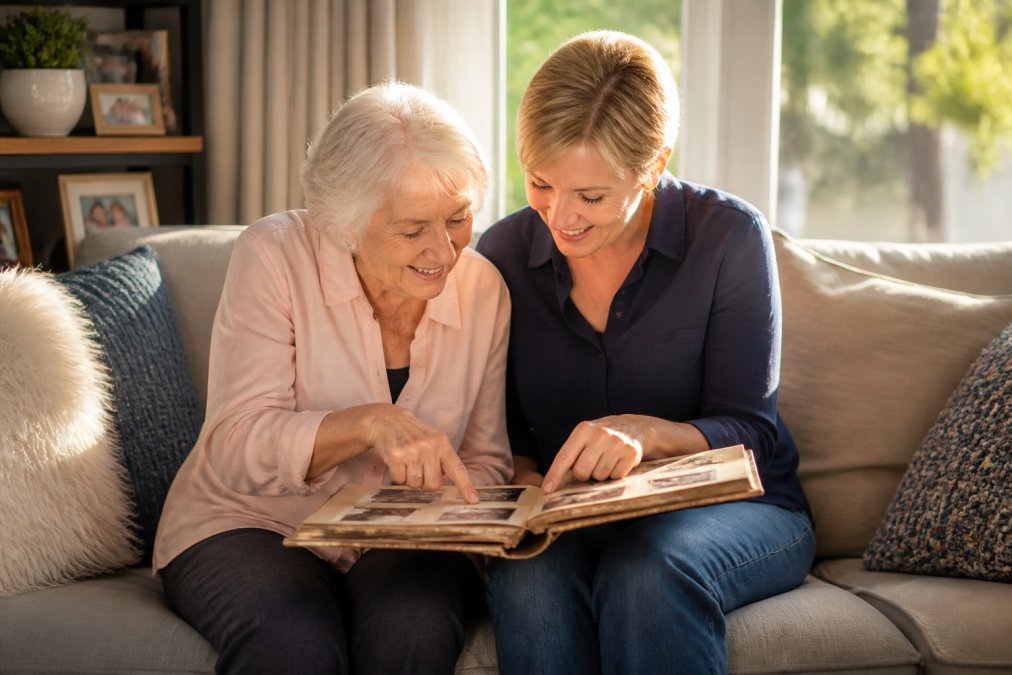
Photo-based reminiscence. Sit together with old family photos or decade-specific photo books. Ask open-ended questions: "Tell me about this photo" or "Where was this taken?" Listen more than you prompt. Let the person lead the conversation. If they misremember details, it doesn't matter; the emotional engagement and storytelling are what matter.
Music and song. Music from the person's formative years (typically their teens and early adulthood) is particularly effective. Playing songs from the 1950s, 1960s, or 1970s often triggers both memories and emotional response. You might listen together, sing along, or discuss the song and what they were doing at the time.

Objects and tactile reminiscence. Everyday objects from the past, old coins, vintage tools, period clothing, kitchen implements, can trigger vivid memories through sensory experience.
Storytelling and life review. Encourage the person to tell stories about their life, childhood, work, relationships, or travels. You might start with a prompt: "Tell me about your first job" or "What was your wedding day like?" Record these stories if possible; they become precious records for family.
Decade-specific reminiscence. Books that capture the era of the person's youth are particularly engaging. Decade-specific photo books showing Australian life, fashion, vehicles, and culture from the 1950s through 1980s provide rich material for reminiscence.
Sensory activities. Scents, textures, and tastes can trigger memory powerfully. Cooking a favourite dish from their era, smelling a familiar perfume, or feeling fabric textures can unlock memories that visual prompts alone might not reach.
Group reminiscence. Group sessions can be equally effective as one-to-one work, reducing isolation and creating social connection as one person's story prompts another's.
The key principle across all activities: follow the person's lead, accept their version of events without correction, and prioritise emotional engagement over accuracy.
Using Photo Books for Dementia Patients: A Powerful Memory Trigger
Photo books designed for reminiscence are among the most effective tools available to carers. Unlike generic photo albums, decade-specific reminiscence books provide curated images of the era in which the person lived, Australian culture, fashion, vehicles, homes, and daily life.
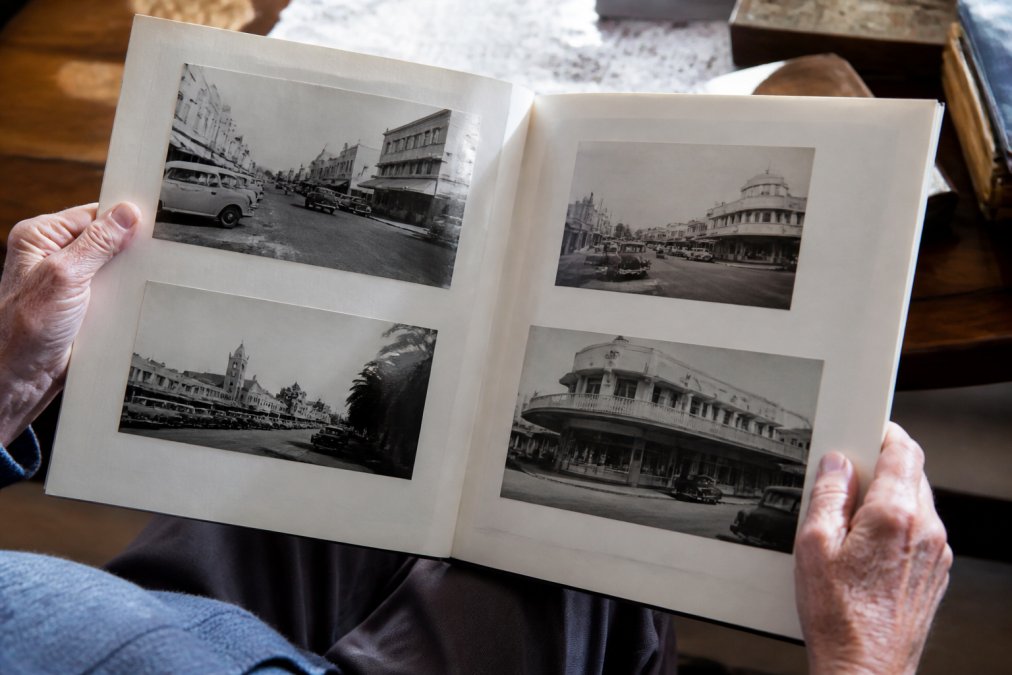
Why photo books work so effectively. A photo book provides structure and continuity to reminiscence work. Rather than searching through disorganised boxes of personal photographs, a curated book presents images in logical sequence. Decade-specific books are particularly valuable because they show not just personal memories but cultural memory, creating a bridge between personal and shared experience. maintaining independence with dementia.
Selecting the right book. The most effective photo books align with the person's formative years, typically their teens through early adulthood. Someone born in the 1940s would engage most deeply with books covering the 1950s and 1960s. Books focusing on Australian culture and history are particularly relevant.

Remember When Shop specialises in decade-specific photo books celebrating Australian nostalgia and history. Books like Photos and Memories of Australia from the 1950s, 1960s, 1970s, and 1940s are designed specifically for reminiscence work, featuring carefully curated photographs of Australian life, culture, and landmarks from each era. Many copies are author-signed, adding a personal touch that makes the book feel like a special keepsake.
Using photo books in reminiscence sessions. Sit together with the book in a comfortable setting with good lighting. Let the person turn the pages at their own pace. Ask open-ended questions about the images: "What do you remember about this?" or "Did you have one of these?" Listen to their responses without correcting details. The emotional connection matters more than historical accuracy.
Photo books as gifts and keepsakes. Photo books serve dual purposes: they're therapeutic tools for reminiscence work and meaningful gifts. For family members looking for birthday or anniversary gifts for older relatives, decade-specific photo books offer something more thoughtful than generic presents. For aged care facilities, having a collection of decade-specific photo books creates a library of reminiscence resources.
Reminiscence Therapy Session Structure: Planning and Facilitating Sessions
Effective reminiscence therapy sessions follow a simple structure that creates safety, clarity, and engagement.
Preparation and setting. Choose a quiet, comfortable space with good lighting and minimal distractions. Gather your materials, photographs, objects, music, or a photo book. Ensure the person is comfortable physically. A relaxed, unhurried atmosphere is essential.
Opening and connection. Begin with a warm greeting and simple conversation to create a sense of connection and safety. You might say, "I've brought some photographs I'd like to look at together" or "I thought we might look through this book about the 1960s today."
Reminiscence activity. Introduce your chosen activity and follow the person's lead. If they're engaged with a particular photograph or memory, stay with it rather than moving on. Allow silences; not every moment needs to be filled with conversation.
Gentle prompting. Use open-ended questions rather than yes/no questions. Instead of "Do you remember this car?" ask "What do you remember about cars like this?" Open-ended questions invite storytelling.
Validation and affirmation. Respond to their memories with genuine interest. "That sounds like a wonderful time" or "Your father must have been proud" validates the memory and the person. Avoid correcting inaccuracies.
Closure and transition. End the session gently. You might say, "Thank you for sharing these memories with me." Summarise something they shared to create a sense of completion and affirm that their memories were valued.
Duration and frequency. Sessions typically last 20-40 minutes, depending on the person's attention span and engagement level. More frequent, shorter sessions often work better than occasional long ones. Twice weekly or more is ideal.
Safety, Contraindications, and When to Pause Reminiscence Work
Reminiscence therapy is generally safe and beneficial, but certain situations warrant caution or modification.
Identifying potentially distressing memories. Some memories carry emotional weight, loss, trauma, or unresolved grief. If someone becomes upset, pause gently. Acknowledge their emotion: "I can see this brings up strong feelings." Offer comfort and ask if they'd like to continue or shift to a different memory. Some people find it therapeutic to process grief within a safe, supported context; others find it overwhelming. Follow their lead.
Avoiding topics that trigger distress. Over time, you'll learn which memories or topics are distressing. Respectfully avoid these topics in future sessions. There are plenty of positive memories to explore.
When someone is in acute distress. If a person becomes highly agitated or distressed during reminiscence work, pause the session. Return to the present moment with grounding techniques: "You're safe here. It's 2026. You're with [name]." Reminiscence can resume another day.
Contraindications and cautions. Reminiscence therapy is contraindicated in very late-stage dementia when the person has minimal language or responsiveness. For people with a history of significant trauma or untreated mental health conditions, reminiscence work should be approached carefully and ideally with professional guidance.
Recognising when to involve professionals. If reminiscence sessions consistently trigger distress or if you're uncertain about how to proceed, consult with a healthcare professional. Aged care facilities often have access to psychologists or dementia specialists who can provide guidance.
Reminiscence therapy for dementia patients offers a pathway to meaningful connection that transcends the limitations of memory loss. By engaging long-term memory, creating emotional safety, and affirming the person's history and identity, reminiscence work improves quality of life and reduces isolation.
For family carers, reminiscence provides a structured, purposeful way to spend time with a loved one that feels mutually rewarding. For aged care professionals, it's an evidence-informed psychosocial intervention that addresses behavioural and emotional symptoms while honouring the person's humanity.
The most effective reminiscence work uses materials tailored to the individual. Decade-specific photo books celebrating Australian culture and history, such as those from Remember When Shop, provide rich, curated material that triggers both personal and cultural memory. These books serve as therapeutic tools during reminiscence sessions and as meaningful gifts that affirm the value of a lifetime of memories. Start with materials aligned to the person's formative years, follow their lead, and create space for stories to emerge naturally.
Frequently Asked Questions
Q: How does reminiscence therapy help people with dementia?
A: Reminiscence therapy activates long-term memory, which remains more intact in dementia patients than short-term recall. By discussing past events, objects, and photographs, the therapy stimulates cognitive function and creates opportunities for meaningful social interaction. Research shows it can reduce agitation, improve mood, and enhance quality of life. The process also gives carers insight into the person's life story, strengthening emotional connection and enabling more person-centred care.
Q: What are some simple reminiscence therapy activities for seniors I can try at home?
A: Start with familiar objects: old photographs, music from their era, vintage household items, or memorabilia. Look through decade-specific photo books together and ask open-ended questions about what they remember. Play songs from their youth, cook traditional meals, or sort through old letters. Handle sensory stimulation, smell lavender or bake bread to trigger memories. Simple conversation prompts work well: 'What was your first car?' or 'Tell me about your school days.' Keep sessions short (15-30 minutes), relaxed, and focused on enjoyment rather than accuracy.
Q: Can reminiscence therapy reduce agitation and neuropsychiatric symptoms in dementia patients?
A: Yes. Agitation often stems from confusion, frustration, or isolation. Reminiscence therapy provides sensory stimulation, meaningful engagement, and a sense of purpose, all of which can calm anxiety and reduce behavioural symptoms. By reconnecting with positive memories and familiar life stories, people with dementia feel more grounded and understood. Sessions that include social interaction and emotional validation are particularly effective at lowering stress responses and improving overall well-being.
Q: What makes photo books effective for reminiscence therapy with dementia patients?
A: Photo books serve as memory triggers and conversation starters. Visual cues are often more accessible than verbal prompts for people with dementia. Decade-specific books featuring Australian history and culture provide authentic, relatable imagery that evokes genuine memories. The tactile experience of holding a book, turning pages, and discussing images engages multiple senses. Books also offer flexibility, sessions can happen one-to-one or in groups, and provide a structured, non-threatening way to explore the person's past.
Q: How should I structure a reminiscence therapy session?
A: Begin with a calm, comfortable environment free from distractions. Start with a gentle introduction and familiar topic. Choose a memory trigger, a photo book, music, or object, and allow time for the person to respond at their own pace. Ask open-ended questions and listen actively without correcting inaccuracies. Aim for 15-30 minutes depending on their attention span. End on a positive note and allow time to transition back to everyday activities. Consistency matters: regular sessions build trust and deeper engagement over time.
Q: Are there any times when reminiscence therapy should be avoided or paused?
A: Pause reminiscence work if the person is unwell, in pain, or highly agitated. Avoid topics linked to trauma, loss, or distressing life events unless the person specifically wants to discuss them with support present. Be cautious with memories involving grief, acknowledge sadness but balance with positive recollections. If the person becomes distressed, confused, or withdrawn, stop the session and return to comforting, present-focused activities. Always monitor their emotional and physical state and adjust based on their response.
This article was written using GrandRanker