
Aged Care Reminiscence Therapy Resources: A Complete Guide
Table of Contents
- What Is Reminiscence Therapy and Why It Matters in Aged Care
- How to Use Memory Books to Facilitate Reminiscence Sessions
- Reminiscence Therapy Activities for Dementia: Practical Techniques
- Life Story Work Templates: Building Personal Narratives
- Digital vs. Analog Reminiscence Tools: Choosing What Works
- Cultural Sensitivity and Person-Centred Reminiscence
- Measuring Success: Tracking Outcomes and Well-Being
- Conclusion: Building a Reminiscence Therapy Programme That Works
Last Updated: August 26, 2026
What Is Reminiscence Therapy and Why It Matters in Aged Care
Reminiscence therapy is a person-centred therapeutic approach that uses memories, personal history, and tangible prompts to engage older adults, particularly those living with dementia. It works by triggering autobiographical memory through photographs, music, objects, and conversation. Rather than focusing on what someone has forgotten, reminiscence therapy celebrates what they remember and builds meaningful connection around those memories.
For aged care facilities and family carers, reminiscence therapy resources provide cognitive stimulation without formal assessment pressure, creating genuine emotional connection. When someone living with dementia engages with a memory book or holds an object from their past, they're reconnecting with their identity. The evidence supporting reminiscence therapy is substantial: residents show improved mood, reduced anxiety, and increased social engagement when reminiscence activities are part of their routine (peer-reviewed research). For carers, the shift from correcting memory loss to celebrating memory recall transforms the entire dynamic of care from deficit-focused to strength-focused.
A well-chosen memory book or structured life story template becomes the bridge between past and present. At Remember When Shop, decade-specific photo books and Australian nostalgia resources help aged care workers unlock conversations and moments of joy with residents.

How to Use Memory Books to Facilitate Reminiscence Sessions
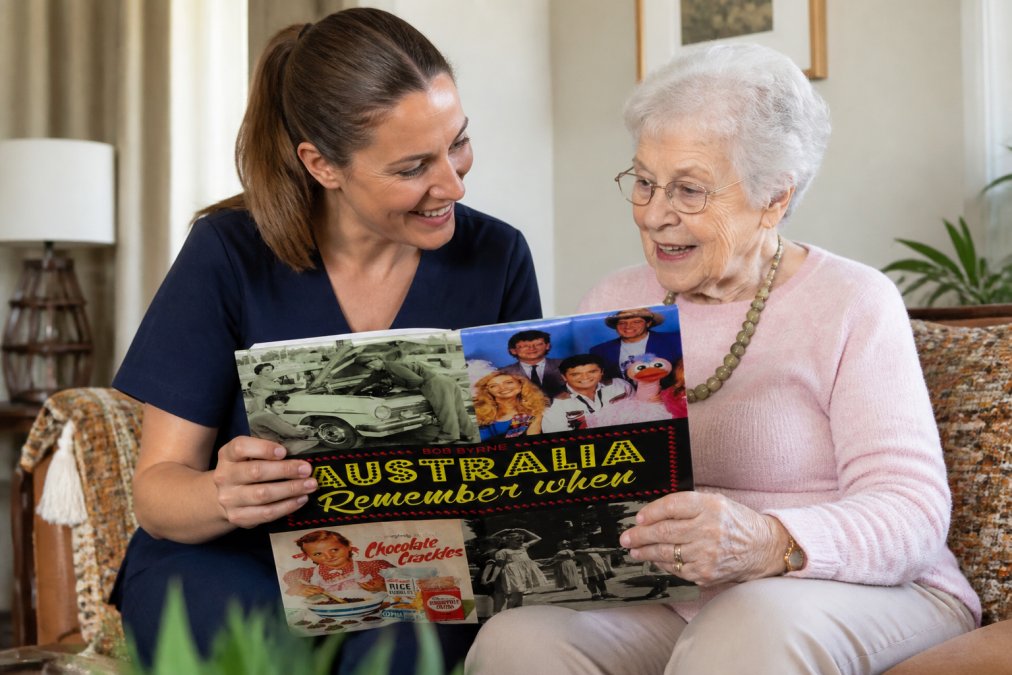
Memory books are among the most accessible and effective reminiscence therapy resources for aged care settings. They're tangible, visual, and require no special training to use. The key to using them effectively lies in understanding that you're not testing memory but creating an environment where memory naturally emerges. When someone sees a photograph of a street they walked down or a shop they visited, the memory comes without effort. Your role is to listen and let the conversation flow.
Selecting the Right Memory Book for Your Residents
Not all memory books serve the same purpose. A book about Australian history from the 1950s-1980s will resonate powerfully with someone who lived through those decades. The most effective reminiscence therapy resources are decade-specific and geographically relevant.
Start by identifying the person's key life years, roughly ages 15 to 35, when most autobiographical memories form (apa.org). If your residents were children in the 1960s, a book filled with photographs from that era will trigger far more genuine engagement than a generic history book. Books like Australia Remember When, which spans the 1940s to 1980s with over 200 photographs, work well for mixed-age groups because residents can skip to the years that matter most to them. Decade-specific books allow deeper exploration of a single era, with photographs of everyday life, cultural moments, and local landmarks that trigger genuine memory recall.
When choosing a memory book, ask: Does this book contain the places, objects, and cultural references this person actually lived through?
Creating a Comfortable Environment for Memory Sharing
The physical setting matters as much as the resource itself. Memory sharing works best in a quiet, comfortable space where the person feels unhurried and safe. Harsh lighting, background noise, or time pressure all work against reminiscence.
Emotional safety is equally important. Some memories are joyful; others carry loss. A skilled facilitator watches for signs that a memory is becoming distressing and gently redirects without dismissing feelings. Timing matters too, reminiscence sessions work best when the person is alert, typically late morning or early afternoon. Sessions typically last 20-45 minutes, depending on the individual's engagement (peer-reviewed research).
Reminiscence Therapy Activities for Dementia: Practical Techniques
Reminiscence therapy activities use memory and personal history as the vehicle for engagement and well-being. For people living with dementia, they sidestep the pressure to remember facts or follow complex instructions, instead inviting the person to share whatever comes to mind when presented with a sensory trigger.
Individual and Group Activity Options
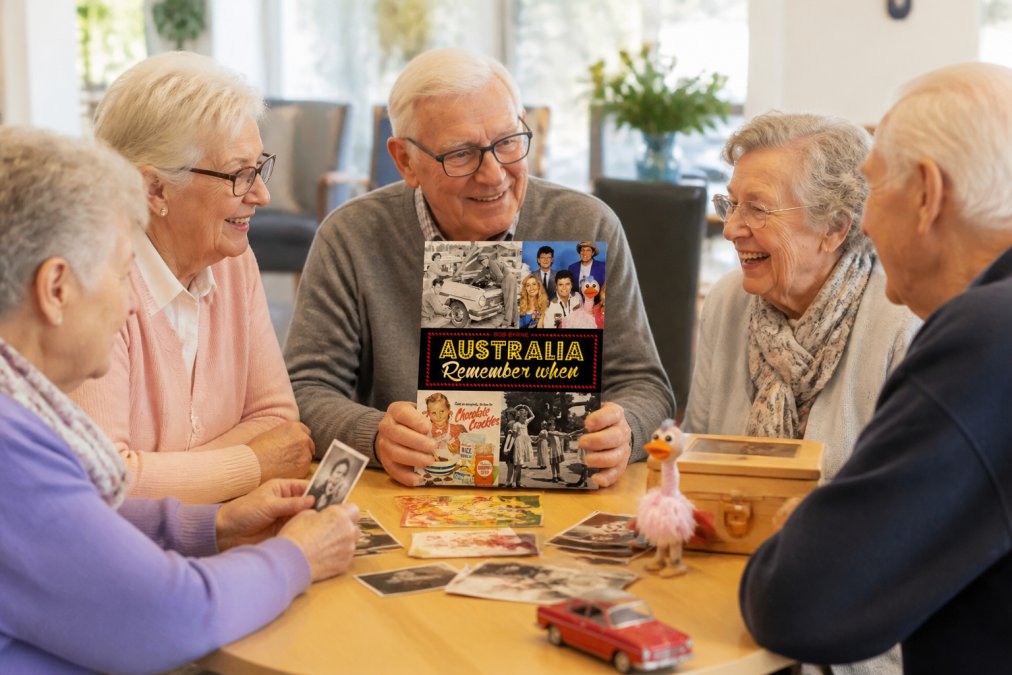
Reminiscence therapy works in both one-on-one and group settings. Individual sessions allow for deeper personalisation and give carers the chance to learn the person's unique history. Group reminiscence activities create social engagement and often spark conversation between residents who might not otherwise interact.
For individual sessions, a memory book or collection of personal photographs works beautifully. Follow the person's lead, they might spend 10 minutes on a single photograph or flip through quickly. Group reminiscence activities often work best around a theme or decade. Gather residents in a comfortable space, introduce a memory book or collection of objects from a shared era, and let conversation emerge naturally. The shared experience often prompts residents to compare memories, deepening engagement for everyone.
Using Tangible Prompts and Sensory Stimulation
The most effective reminiscence therapy resources engage multiple senses. Photographs are powerful, but they're even more effective when paired with music from a person's youth, familiar scents, or objects they can hold. When someone holds an object they recognise, a postcard, toy, or piece of jewellery from their era, memory often surfaces without effort.
Some aged care facilities create dedicated reminiscence boxes for individual residents, filled with personal items and photographs. Others use structured reminiscence kits containing decade-specific items and prompts. A box created specifically for one person will be more powerful than a generic kit, but a well-curated generic kit can still unlock meaningful engagement in group settings.

Life Story Work Templates: Building Personal Narratives
Life story work is a structured form of reminiscence therapy that documents a person's autobiography in a way that can be revisited, shared, and added to over time. For aged care settings, it gives staff deeper understanding of each resident's background and identity, improves person-centred care, and gives the person living with dementia a tangible reminder of who they are.
Documenting Autobiographical Memory
Life story work begins with gathering information about the person's life in a structured way through interviews, family conversations, and collection of photographs and documents. A basic life story template might include: early childhood and family background, education and first jobs, significant relationships, major life events, interests and hobbies, favourite places, cultural or spiritual identity, and current preferences. managing dementia health.
Many aged care facilities use simple life story books, either created individually for each resident or using a template that residents and families complete together. These books become part of the person's care record and inform staff interactions. When a carer knows that a resident was a teacher, musician, or parent, that knowledge changes how they approach care.
Integrating Life Stories Into Daily Care
The real value of life story work emerges when the documented story is actually used in daily care. A carer who knows a resident was a keen gardener might engage them in conversation about plants or involve them in a gardening activity. A carer who knows a resident's favourite music might play it during care routines, transforming potentially distressing moments into something familiar and comforting.
Life story integration also means the story continues to grow. New memories, photographs, and observations are added over time. For family members, contributing to and reviewing life story work is deeply meaningful, a way to stay connected to the person's identity and share their history with care staff.
Digital vs. Analog Reminiscence Tools: Choosing What Works
The choice between digital and analog reminiscence therapy resources comes down to practical considerations: access, ease of use, maintenance, and user preferences.
Analog resources, physical books, printed photographs, tactile objects, have distinct advantages in aged care settings. They require no technical knowledge, batteries, or internet connection. They're immediately accessible and familiar to older adults who grew up without digital technology. For many residents, particularly those with advanced dementia or limited digital literacy, analog resources simply work better.
Digital reminiscence tools offer different advantages: they can store thousands of photographs in a small space, allow easy sharing between family members, and can be updated quickly. For tech-savvy residents or family carers managing reminiscence from a distance, digital tools provide flexibility.
The best approach for most aged care settings is hybrid: core reminiscence therapy resources are analog (memory books, printed photographs, physical objects), but digital tools support documentation and sharing for family members. For purchasing reminiscence therapy resources, analog memory books offer the most immediate and reliable return on investment.
Cultural Sensitivity and Person-Centred Reminiscence
Reminiscence therapy resources must reflect the cultural identity and lived experience of the people using them. A memory book filled with Australian landmarks from the 1950s will resonate powerfully with someone who grew up in Australia during that era but be less meaningful for someone whose formative years were spent elsewhere.
Person-centred reminiscence means starting with the individual's actual history: What decade matters most to this person? What country or region shaped their early life? What cultural or spiritual traditions are important to them? For aged care facilities serving multicultural communities, a library of reminiscence resources spanning different cultures, countries, and time periods is ideal.
Person-centred reminiscence also means being alert to memories that carry difficult emotions. A skilled facilitator acknowledges these memories without dismissing them and gently redirects if the person becomes distressed.
Measuring Success: Tracking Outcomes and Well-Being
Reminiscence therapy is valued for its immediate, observable benefits, a resident who smiles, engages in conversation, or becomes calmer during a session. Measuring success more systematically helps aged care facilities understand impact and make informed decisions about resource allocation.
Key indicators include improved mood, increased social engagement, reduced anxiety or agitation, better sleep patterns, and decreased medication need. For individual residents, success might look like increased participation in activities, more frequent smiling, initiation of conversation, or improved cooperation during care routines. For group sessions, success includes increased interaction between residents, sustained engagement, and positive feedback.
Tracking outcomes also helps identify which reminiscence therapy resources work best for which residents. Does a particular memory book generate more engagement? Do individual sessions produce better outcomes than group sessions? These observations, gathered over time, help carers refine their approach and choose resources more effectively.
Building a reminiscence therapy programme requires the right combination of resources, training, and person-centred practice. Start with a curated collection of memory books reflecting the cultural backgrounds and life experiences of your residents. Books like Australia Remember When, spanning multiple decades with over 200 photographs, provide a strong foundation for both individual and group reminiscence sessions. Complement physical books with simple life story templates and sensory prompts. Train staff in facilitation techniques that prioritise listening and connection over correction. When reminiscence therapy is done thoughtfully, using resources specifically designed for this purpose, the outcomes are clear: residents become more engaged, calmer, and more connected to themselves and those around them. Remember When Shop's collection of Australian nostalgia books has been recognised by aged care professionals as particularly valuable, offering authentic, decade-specific content that resonates deeply with residents who lived through those eras. Get started with a memory book matching your residents' life experiences, and watch how a simple resource can transform moments of care into moments of genuine connection.
Frequently Asked Questions
Q: How can reminiscence therapy resources actually help someone with dementia engage better?
A: Reminiscence therapy activates autobiographical memory, the part of memory that holds personal experiences, which often remains intact longer than other cognitive functions in dementia. Memory books and tangible prompts provide concrete visual anchors that help residents recall and share stories from their past. This cognitive stimulation improves communication, reduces behavioral symptoms, and creates meaningful social engagement. Many carers report that residents who rarely speak become more animated when presented with decade-specific photos and objects from their era.
Q: What makes Australian-themed memory books different from generic nostalgia resources?
A: Australian-specific reminiscence resources reflect the lived experience of older adults in this country, the milkman, the cars, the fashion, the landmarks, and cultural moments unique to growing up here. Books like Australia Remember When feature over 200 authentic photographs and memories from the 1940s to 1980s, making the content immediately recognisable and emotionally resonant. This cultural specificity deepens emotional connection and makes recall easier because residents are seeing their actual world reflected back, not a generic version of the past.
Q: How do I know if reminiscence therapy will work for someone in the later stages of dementia?
A: Reminiscence therapy is effective across cognitive decline stages because it doesn't rely on new learning or complex reasoning. Even residents with significant memory loss often respond to sensory and emotional cues, a photograph, a piece of music, a familiar object. The goal shifts from perfect recall to creating moments of connection, reducing agitation, and improving quality of life. Start with tangible prompts relevant to the person's era and observe responses: increased eye contact, smiling, or verbal engagement all indicate the therapy is working, regardless of whether the resident recalls specific details.
Q: What should a reminiscence kit include for a group activity in aged care?
A: A practical reminiscence kit combines visual, tactile, and auditory elements. Include decade-specific memory books or photo collections, vintage objects (old coins, tools, household items), music from the era, and perhaps newspaper clippings or magazine covers. Arrange these by theme or decade so carers can adapt activities to resident interests. Having author-signed copies of books like Melbourne Remember When or Adelaide Remember When adds a personal touch and conversation starter. Keep items safe and accessible, and rotate them to maintain novelty and engagement.
Q: How does reminiscence therapy align with aged care quality standards?
A: Reminiscence therapy supports person-centred care and psychosocial intervention requirements under the Aged Care Quality Standards. It addresses the need for meaningful activities, social engagement, and support for emotional well-being, all core elements of quality aged care. By using reminiscence resources, facilities demonstrate commitment to non-pharmacological interventions that respect residents' identities and life histories. Documentation of reminiscence activities and resident responses also provides evidence of therapeutic engagement for compliance and quality improvement purposes.
Q: Can reminiscence therapy be too emotionally difficult for someone grieving or dealing with loss?
A: Reminiscence therapy can evoke complex emotions, including sadness or grief, but this is not inherently harmful. When facilitated with care and sensitivity, it allows residents to process emotions safely and feel heard. The key is validation, acknowledging feelings without dismissing them. If a resident becomes distressed, pause the activity and offer comfort. For some, revisiting memories of loved ones who have passed is actually healing because it maintains connection and allows storytelling. Tailor the approach to the individual's emotional needs and always follow up with supportive conversation.
Q: What training do carers need to facilitate reminiscence therapy effectively?
A: Carers benefit from understanding the basics: how reminiscence supports cognitive stimulation and emotional connection, how to ask open-ended questions that prompt memory sharing, and how to respond to difficult emotions. Training should cover person-centred communication, recognising when residents are engaged versus distressed, and adapting activities for different cognitive levels. Staff also need support to prevent burnout, reminiscence work can be emotionally demanding. Providing carers with structured templates, ready-to-use activity guides, and peer debriefing sessions helps sustain quality delivery and staff well-being.
Q: How do I measure whether reminiscence therapy is improving well-being and quality of life?
A: Track observable outcomes: frequency of social interaction, verbal engagement, reduction in behavioural symptoms like agitation, mood improvements, and family feedback. Document specific moments, a resident who smiled during a session, initiated conversation, or asked to repeat an activity. Use simple KPIs like attendance rates, resident participation levels, and informal carer observations. Some facilities use validated tools like quality-of-life scales or mood assessments before and after introducing reminiscence programmes. Regular review with the care team ensures activities remain effective and responsive to resident needs.
This article was written using GrandRanker