

How to Use Memory Books: A Step-by-Step Guide
Table of Contents
- What You'll Need Before You Start
- How to Use Memory Books: The Foundation
- Memory Book Prompts for Conversation
- Life Story Book Examples and How to Apply Them
- Memory Book Templates for Dementia: Tailoring Your Approach
- Maintaining Engagement and Updating Your Memory Book
- Common Mistakes to Avoid When Using Memory Books
- Conclusion
Last Updated: August 13, 2026
What You'll Need Before You Start
Before diving into how to use memory books, gather a few essentials. You'll want the memory book itself, ideally one with Australian nostalgia that resonates with the person's era. Physical copies work best for tactile engagement, though digital versions are worth considering if accessibility matters. Next, collect photographs, newspaper clippings, ticket stubs, or other memorabilia that trigger recognition. A quiet, comfortable space matters too. Dim lighting can strain eyes; good natural light works best. Finally, set aside dedicated time, even 15 minutes of focused engagement beats rushed browsing.
The Remember When Shop offers decade-specific photo books like their 1950s, 1960s, 1970s, and 1940s collections, many author-signed, which provide a structured foundation for reminiscence therapy. These books are specifically curated to spark memories without requiring you to source and organize materials yourself.


Preparation removes friction. When everything's in place, the actual process of using memory books becomes less about logistics and more about connection. That's where the real value emerges.
How to Use Memory Books: The Foundation
How to use memory books effectively starts with understanding that these aren't passive reads, they're conversation catalysts. The foundation involves creating an environment where the person feels safe exploring memories at their own pace, without pressure or judgment.
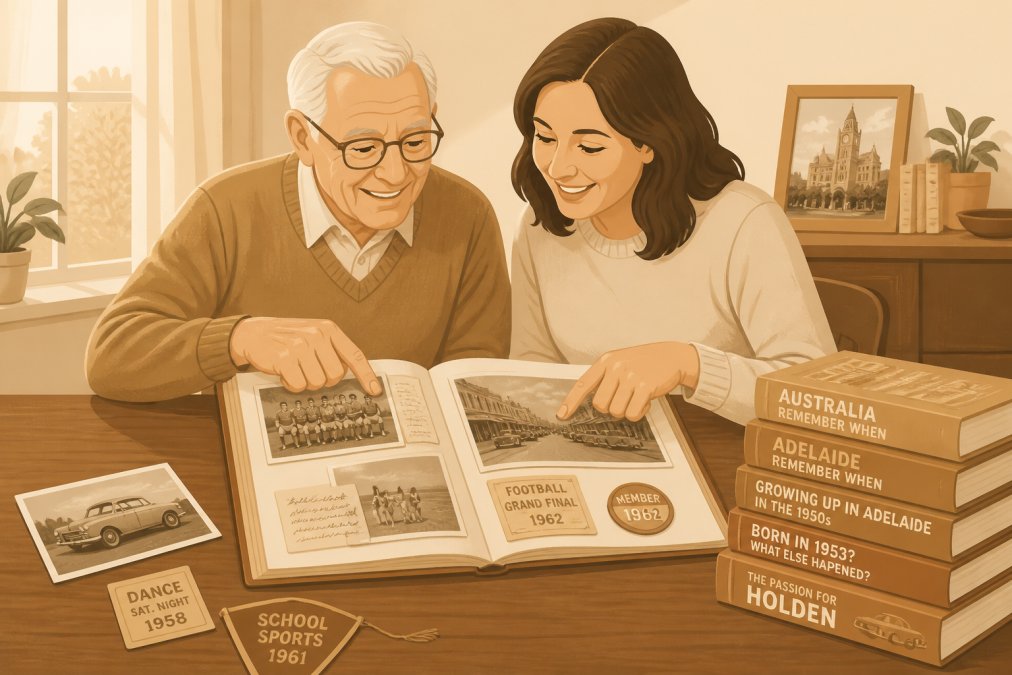
Start by sitting together in a comfortable, distraction-free space. Avoid background noise, television, radio, or busy environments dilute engagement. Open the memory book and let the person guide the pace. Don't rush through pages. If they linger on one photograph for five minutes, that's exactly right. They're processing, remembering, perhaps retrieving details they haven't accessed in decades.
Point to images and ask open-ended questions: "What do you remember about this?" or "Tell me about this time." Avoid yes-or-no questions, which close conversation. Instead, invite storytelling. When they share a memory, listen actively. Don't interrupt to correct details or add your own version. Their narrative, however it unfolds, is valid.
For those working with dementia or significant cognitive decline, person-centered care means following their lead rather than imposing structure. If they fixate on one era or skip sections, that's fine. The goal isn't completing the book, it's engagement and emotional connection. Memory books work best when used as a tool for reminiscence therapy, where the focus is on positive emotional recall rather than factual accuracy.
Memory Book Prompts for Conversation
Memory book prompts for conversation transform passive page-turning into active dialogue. These prompts work because they invite storytelling without demanding it.
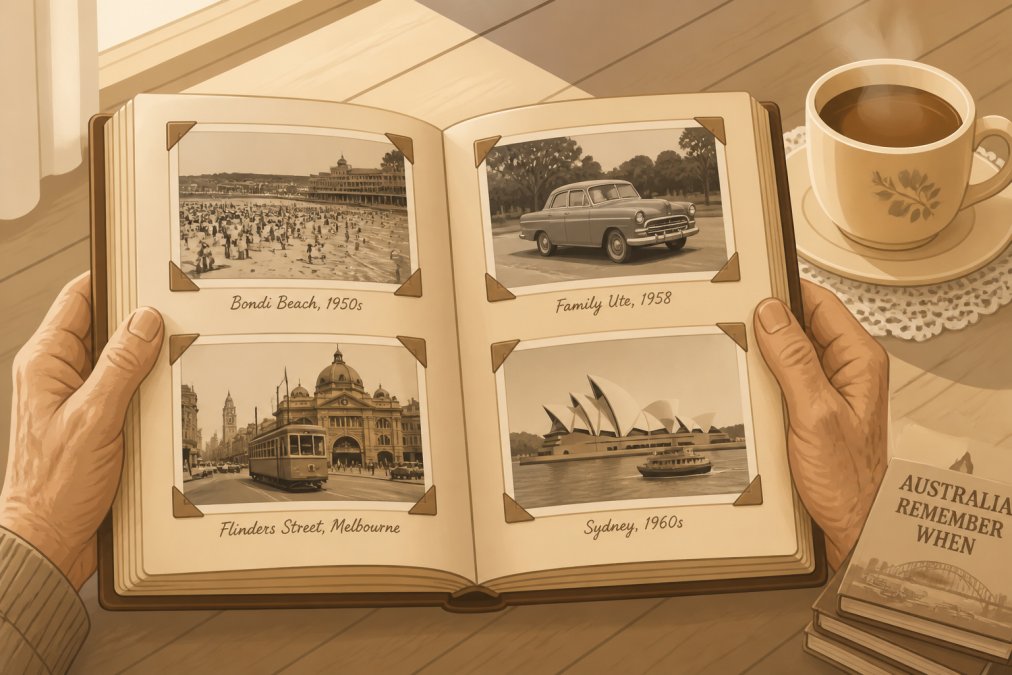
Start with era-specific prompts. If browsing a 1970s book, ask: "What was your favourite song from this decade?" or "Where were you when you saw this car on the street?" These aren't trivia questions, they're memory anchors. They give the brain a starting point for retrieval.
Use sensory prompts too. "What do you remember about the smell of petrol stations back then?" or "What did the music sound like?" Sensory triggers bypass cognitive barriers and access emotional memory more directly. This matters especially for those experiencing cognitive decline, where long-term memory often remains intact even as short-term recall falters.
Try timeline prompts: "What was happening in your life at this time?" This connects the book's content to their personal narrative. A photograph of a 1960s street scene becomes a doorway to their own story from that era.
Avoid corrective prompts. Don't say "Actually, that happened in 1965, not 1964." Instead, follow their narrative. If they misremember details, it doesn't matter. The emotional truth, that they're engaging, remembering, sharing, is what counts.
For carers working with dementia patients, prompts should be simple and concrete. "What do you see here?" beats "What does this remind you of?" The first is immediate; the second requires abstract thinking that may be difficult.
Life Story Book Examples and How to Apply Them
Life story book examples show how personal narrative transforms a generic memory book into something deeply meaningful. A life story book differs from a standard photo book, it weaves personal history, key milestones, and the person's own voice throughout.
Consider an example: Margaret, a 78-year-old from Brisbane, created a life story book combining photographs from her 1950s childhood, her wedding in 1975, her children's births, and her career as a teacher. Rather than chronological order, she arranged it thematically: "My Family," "My Work," "Places I've Loved," "Adventures." This structure made browsing intuitive and conversation natural. When her granddaughter visited, they'd open to "My Work" and Margaret would share stories about her classroom, her students, the education system's evolution. The book became a bridge between generations.
Another example: Robert, living in aged care with early-stage dementia, worked with his family to create a life story book focused on his life's passions, cricket, cars, and travel. Each section paired photographs with simple captions written in his own words (transcribed by family). When carers used this book during activities, Robert engaged more readily because the content was explicitly his. His memory book wasn't generic, it was him.
To apply this approach, start by identifying three to five themes central to the person's life. Don't try to include everything. Depth beats breadth. Then gather photographs, documents, or mementos tied to each theme. Write captions in simple language. If the person can still write, involve them. Their handwriting adds authenticity and emotional weight.
Arrange materials thematically rather than strictly chronologically. This gives the brain multiple entry points for memory retrieval. A person might struggle to recall events from 1968 in order but easily access memories when prompted by theme.
Memory Book Templates for Dementia: Tailoring Your Approach
Memory book templates for dementia require specific design choices. Standard memory books often assume intact cognitive function. Dementia-focused templates strip away complexity and emphasize visual clarity, emotional safety, and repetition.
Key design features matter. Use large, clear fonts, at least 16-point. High contrast between text and background aids readability. Avoid busy layouts. One or two images per page, paired with simple captions, work better than cluttered designs. Laminated pages protect against spills and repeated handling.
Captions should be brief, five to ten words maximum. "Dad at the beach, 1972" beats "This photograph captures Dad's love of the ocean during a family holiday to the Gold Coast in the summer of 1972." The first is scannable; the second overwhelms.
Include familiar faces. Photographs of the person's immediate family, spouse, children, grandchildren, often trigger recognition and emotional connection even when other memories feel inaccessible. Pair these with names written clearly.
Repetition is therapeutic. If a person with dementia responds well to certain pages, revisiting them repeatedly is fine. They may not remember seeing the page yesterday, but the emotional response, joy, laughter, comfort, is real and valuable each time.
The Remember When Shop's decade-specific books serve as excellent templates. Their Australian nostalgia books combine era-specific imagery with clear layout and readable fonts, making them accessible for those with cognitive decline. Many carers report that these books engage residents more effectively than generic photo collections because the curated content feels intentional and the design prioritises clarity.
Consider also creating a "pocket version", a smaller, laminated book with just five to ten key photographs. This travels easily and provides comfort during transitions, medical appointments, or moments of distress.
Maintaining Engagement and Updating Your Memory Book
Maintaining engagement with memory books requires active management. Static books lose novelty. Updating them periodically, adding new photographs, rotating themes, or refreshing captions, keeps the experience fresh.
For ongoing users, consider a seasonal rotation. Spring might bring out travel photographs; winter might focus on family gatherings. This rhythm mirrors natural cycles and gives the person something to anticipate.
Digital versions offer unique advantages here. Tablets or e-readers displaying memory book content allow easy updates without reprinting. Font size can adjust for vision changes. Digital books also enable video clips or audio recordings, a person's own voice describing a memory, or music from their era playing softly in the background.
However, don't abandon physical books entirely. Many older adults, particularly those unfamiliar with tablets, find physical pages more intuitive and tactile engagement more satisfying. A hybrid approach works well: physical books for regular use, digital versions as backup or for different settings.
Track what works. If the person consistently engages with 1970s photographs but ignores 1950s content, adjust accordingly. If they respond to images of cars more than landscapes, lean into that. Personalisation isn't a one-time task, it's ongoing refinement based on observed responses.
For carers in aged care settings, documenting engagement helps. Note which pages generate conversation, which images spark recognition, which prompts work best. This record becomes invaluable when multiple staff members interact with the same person. Consistency across caregivers amplifies the therapeutic effect.
Common Mistakes to Avoid When Using Memory Books
Several patterns undermine memory book effectiveness. Recognising these mistakes helps you avoid them.
Rushing the process. Treating memory books like you're flipping through a magazine defeats the purpose. Slow down. Silence is fine. Let the person sit with an image for as long as they need.
Correcting memories. When someone recalls a detail differently than you remember it, resist the urge to correct them. "Actually, that was 1968, not 1969" creates defensiveness and closes conversation. Their version is valid. Their emotional experience is what matters.
Forcing engagement. If someone isn't interested in the memory book on a particular day, don't push. Forced reminiscence therapy isn't therapy, it's frustration. Try again tomorrow.
Choosing the wrong era. A book celebrating the 1980s won't resonate with someone whose formative years were the 1950s. Match the content to the person's life stage. The Remember When Shop's decade-specific collections let you choose exactly the right era rather than settling for generic content.
Ignoring accessibility. Small fonts, poor lighting, cluttered layouts, and background noise all sabotage engagement. Environmental factors matter as much as content.
Treating it as cognitive rehabilitation. Memory books aren't designed to "fix" memory loss. They're tools for connection and emotional engagement. Approaching them as therapy for cognitive decline creates pressure and disappointment. Reframe them as conversation starters and comfort objects instead.
Neglecting negative emotions. Sometimes memory books surface difficult feelings, grief, regret, loss. This isn't failure. Sit with it. Listen. Offer comfort. Memory isn't all joy, and acknowledging that complexity is more respectful than forcing positivity.
Conclusion
Memory books work because they bridge the gap between past and present, between isolation and connection. They're not about perfect recall or historical accuracy, they're about creating moments of engagement, conversation, and emotional warmth.
Whether you're a family member seeking a meaningful gift, a carer working with dementia patients, or someone reconnecting with your own history, how to use memory books effectively comes down to patience, presence, and personalisation. The Remember When Shop's curated Australian nostalgia books, especially their decade-specific collections like the 1950s through 1970s series, provide a ready-made foundation. Many are author-signed, adding a personal touch that transforms a book into a keepsake.
Start with the right book, create the right environment, listen more than you speak, and let memories unfold naturally. The rest follows.
Frequently Asked Questions
What is a memory book used for?
Memory books serve as reminiscence therapy tools that stimulate cognitive function and emotional well-being. They help older adults recall life events, facilitate conversation with family members and carers, and provide person-centered care for those experiencing cognitive decline. For people with dementia or Alzheimer's support needs, memory books offer visual cues and sensory triggers that can reduce anxiety and improve engagement during daily activities.
How do memory book prompts for conversation work best?
Effective conversation starters begin with open-ended questions about the photographs and memorabilia in the book. Rather than asking 'Do you remember this?', try 'Tell me about what was happening in your life then' or 'What do you notice in this photo?' Allow pauses for reflection; silence is natural and valuable. Use the book's captions and context to jog memory recall, and follow the person's lead, if they want to linger on one era, stay there rather than rushing through pages.
Can memory books help someone with dementia?
Yes. Memory books designed as therapeutic tools support dementia care through cognitive stimulation and positive reinforcement. Large, clear photographs with legible font and simple captions work best. Consistent review sessions (3-4 times weekly) help maintain engagement and can reduce agitation. However, be mindful of negative reactions, if certain memories cause distress, gently move forward. The goal is emotional comfort and connection, not perfect recall.
How often should you review a memory book with someone?
Aim for 2-4 sessions per week, each lasting 15-30 minutes, depending on the person's attention span and energy levels. Shorter, frequent sessions work better than long, infrequent ones for cognitive stimulation. Watch for signs of fatigue or frustration and stop if engagement wanes. Consistency matters more than duration, regular reminiscence therapy sessions build familiarity and comfort with the book's contents and improve memory recall over time.
This article was written using GrandRanker