

Booktopia Alternative for Local History
Table of Contents
- Why Booktopia May Not Be Your Best Choice for Local History
- Independent Booksellers Specializing in Regional History
- Why Choose Signed Nostalgia Books for Authentic Local Heritage
- Direct-to-Publisher Purchasing and Small Press Options
- Library Inter-Loan Systems and Archival Resources
- Nostalgia Gift Ideas for Seniors Who Love Local History
- Specialized Search Strategies for Regional History Collections
- Conclusion
Last Updated: August 20, 2026
Why Booktopia May Not Be Your Best Choice for Local History
When searching for a booktopia alternative for local history, you're likely seeking deeply curated collections that celebrate regional heritage and author-signed editions, something generic online bookstores cannot provide. Booktopia treats local history like any other category: functional but impersonal, with no context or sense that someone who understands these books' emotional weight has chosen them for you. Specialised retailers understand that local history is a gateway to memory, identity, and connection, whether you're building your own collection or finding a meaningful gift for someone reconnecting with their past.
Independent Booksellers Specializing in Regional History
Independent booksellers have become custodians of local history in ways large retailers cannot match. They stock titles celebrating specific regions, decades, and communities, books major chains deprioritise due to lower sales volume. Their curatorial expertise is essential: they know their communities, understand which titles resonate most deeply, and can guide you toward books you'd never find through generic search functions.
Many independent booksellers now operate online, offering personal recommendations based on genuine expertise. They help track down out-of-print titles, notify you of relevant releases, and connect you with other collectors. This transforms book shopping from a transaction into a partnership with someone who understands what you're seeking.
Why Choose Signed Nostalgia Books for Authentic Local Heritage
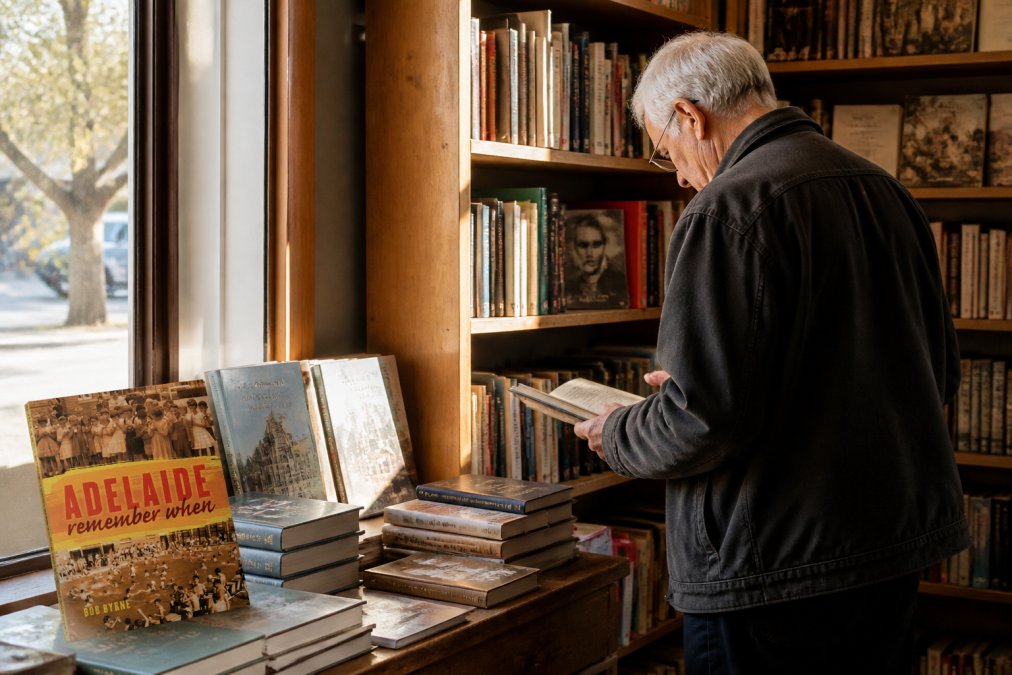
Signed nostalgia books represent something fundamentally different from standard editions. When an author personally inscribes a copy, that book becomes a direct connection between reader and documenter, transforming it into a keepsake rather than merely a collection of words and images.
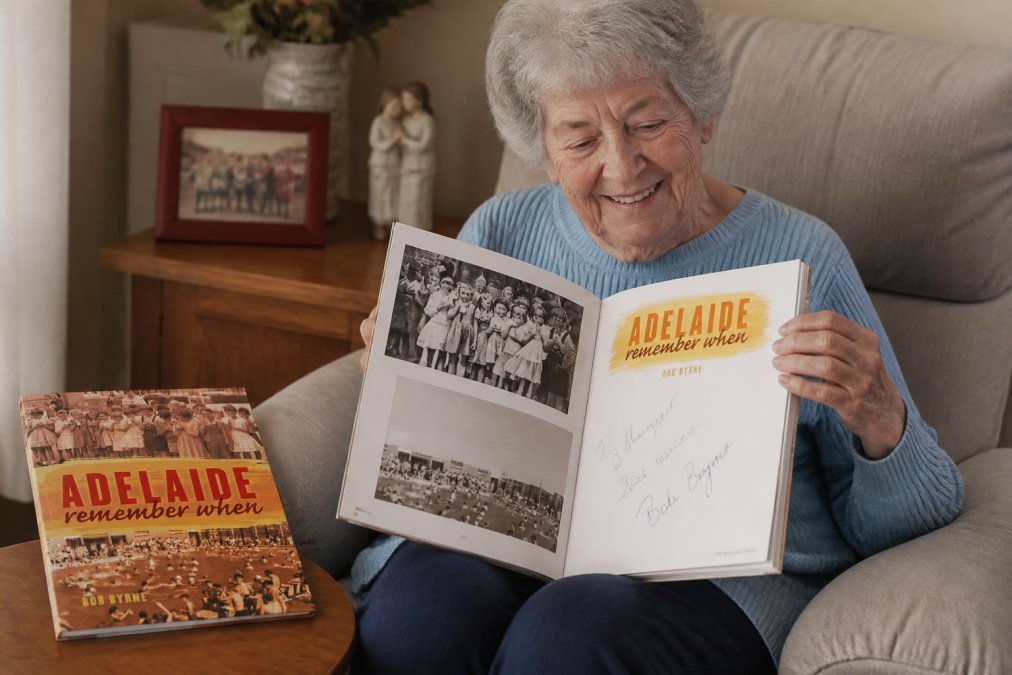
For local history enthusiasts, signed editions carry particular weight. Remember When Shop specialises in author-signed editions like Australia Remember When ($34.99) and Adelaide Remember When ($34.99), both by Bob Byrne. A signature authenticates the book and represents the author's direct engagement with the work.

Signed books also serve practical purposes in reminiscence therapy and aged care settings. Healthcare professionals have found that personal inscriptions create additional connection points, with signatures becoming conversation starters that anchor the reading experience in something tangible and real.
Direct-to-Publisher Purchasing and Small Press Options
Bypassing middlemen and purchasing directly from publishers or small presses gives you access to titles never reaching major retailers. Many independent publishers specialising in local and regional history operate primarily through direct sales, author websites, or small curated platforms.
This approach supports creators directly, provides access to titles with smaller print runs reflecting genuine community interest, and often includes detailed information about the book's creation and research process. Small presses publish work celebrating specific regions with depth that larger publishers avoid, a book about a particular suburb's history that a major publisher would consider too niche becomes invaluable for someone researching that area's past.
Many small publishers now sell through their own websites or platforms aggregating independent publishers, giving you direct access without relying on Booktopia. You can contact publishers directly with questions, request personalised recommendations, or inquire about bulk orders for community organisations.
Library Inter-Loan Systems and Archival Resources
Before purchasing local history books, most readers don't realise their library offers access to regional history collections through inter-library loan systems, often at no cost or minimal expense.
How inter-library loans work for local history. When your local library doesn't hold a title, you can request it from another library in the network. The lending library ships the book to your local branch within 1-2 weeks. Most public libraries offer this service free to members. For local history books, particularly out-of-print or regionally specific titles, inter-library loans often succeed where retail searches fail.

State library special collections and regional holdings. Each state library maintains special collections focused on regional and local history. The State Library of Victoria holds extensive collections on Victorian local history; the State Library of South Australia specialises in South Australian heritage; the State Library of Western Australia curates Western Australian regional materials. Most state libraries allow public members to request inter-library loans of items from their special collections.
Regional library networks and local history specialists. Regional library networks employ local history librarians who've spent years building area-specific collections. These professionals can guide your research, recommend titles, and connect you with other resources. Many maintain local history rooms richer in regional material than any retail platform. Contacting your regional library's local history specialist directly often yields better results than browsing retail sites.
Digitised historical collections and online archives. Libraries increasingly provide access to digitised local history materials through online databases. The National Library of Australia's Trove provides free access to digitised newspapers, manuscripts, and photographs searchable by region and date. Many state and regional libraries subscribe to additional databases like Ancestry Library Edition, free to library members.
Historical society libraries and archives. Historical societies maintain specialised collections focused on specific regions or themes. Many operate lending libraries or reading rooms open to the public. Contacting your local historical society directly can reveal collections and resources never appearing in retail catalogues.
University library special collections. University libraries often hold extensive regional history collections, particularly those in regional centres. Many allow public members to access special collections by appointment and participate in inter-library loan networks.
Local studies libraries and heritage centres. Many councils and regional organisations operate dedicated local studies libraries or heritage centres focused entirely on their area's history. Staff are typically experts in local history and can guide research far more effectively than retail staff.
Practical steps to access these resources. Start by searching your local library's catalogue for the title you want. If unavailable, ask about inter-library loan services. For extremely rare or out-of-print titles, contact your state library's special collections department directly. For regional or local history research, contact your regional library's local history specialist or local historical society. Search Trove and your library's online database subscriptions before purchasing.
Specialized Search Strategies for Regional History Collections
Finding regional history books requires fundamentally different search strategies than general book shopping.
Geographic specificity with historical context. Instead of searching "Australian history," layer geographic terms with time periods or themes. Search "Adelaide 1950s photographs" or "Melbourne industrial heritage 1960s." This combination narrows results to books focusing on the intersection of place and period.
Author-focused research paths. Local history authors often become regional authorities, and their bibliographies reveal connected works. If you discover Bob Byrne's Melbourne Remember When, searching his complete works reveals related titles and the publisher's broader catalogue.

Decade-specific and thematic clustering. Target the specific decade or theme your reader remembers. Search "Australia 1960s nostalgia" or "Australian childhood memories 1950s." Publishers organise catalogues thematically because readers seek books tied to specific life periods.
Library catalogue cross-searching. State library catalogues use subject headings and geographic indexing that commercial retailers don't. The National Library of Australia's Trove database aggregates holdings across public libraries, university libraries, and archives, often with digitised previews.
Small press and direct-publisher discovery. Regional history publishers often don't distribute through major retailers. Search for publishers directly: "[Your Region] history publisher" or "[Your State] local history press." Publishers like Wakefield Press, Scribe Publications, and UWA Publishing specialise in regional history with limited retail distribution outside their home states.
Historical society and museum shop catalogues. Historical societies, museums, and heritage organisations often publish or stock books unavailable elsewhere. Many now offer online ordering or can direct you to stockists.
Out-of-print and antiquarian book networks. For older or rare regional history titles, search antiquarian book platforms aggregating multiple independent sellers. These platforms specialise in finding out-of-print books, often with detailed condition notes and pricing transparency.
Nostalgia Gift Ideas for Seniors Who Love Local History
For older adults reconnecting with their past, nostalgia gift ideas for seniors should centre on books celebrating the specific decades and places they remember. Decade-specific photo books work exceptionally well. If your recipient was born in the 1950s or 1960s, a book like Growing up in Adelaide in the 1950s by Susan Blackburn ($29.99) offers photographs and stories from their formative years, triggering genuine memory recall.
Signed editions make particularly meaningful gifts because they carry the author's personal investment. When you give someone a book signed by the person who documented their community's history, you're giving them something rare and intentional that becomes a keepsake.
For carers and healthcare professionals, these books serve therapeutic purposes. Research from aged care facilities consistently shows that decade-specific nostalgia books facilitate conversation and memory engagement with older adults, including those with dementia. Photographs and stories create concrete anchors for discussion.
Consider the specific geography of your gift. If your recipient has strong memories of a particular city or region, choose a book celebrating that place. Australia Remember When by Bob Byrne ($34.99) works well for those with broad Australian memories, while city-specific titles like Melbourne Remember When ($34.99) resonate more deeply with people whose lives centred on a particular place.
For milestone birthdays, a signed nostalgia book becomes a meaningful keepsake acknowledging the recipient's lifetime of memories.
Conclusion
Finding a booktopia alternative for local history means shifting from convenience shopping to curated discovery. Independent booksellers, signed nostalgia books, direct-to-publisher options, and library resources each offer something generic online retailers cannot: genuine expertise, personal connection, and books chosen by people who understand why local history matters.
For older adults seeking to reconnect with their past, for carers using reminiscence therapy, and for anyone hunting for a meaningful gift, Remember When Shop offers exactly what you're looking for. Their author-signed collections, including Australia Remember When and Adelaide Remember When, combine the curatorial care of independent booksellers with online convenience. Shop Now and discover books that spark conversations, evoke cherished memories, and celebrate the Australian heritage that shaped your life.
Frequently Asked Questions
Where can I buy niche Australian history books online if Booktopia doesn't stock what I need?
Specialist retailers like Remember When Shop focus on curated local history collections, including signed nostalgia books that major retailers don't carry. Independent booksellers often have deeper regional expertise and can source out-of-print titles. Direct-to-publisher purchasing from small presses and local authors also yields titles unavailable through mass-market channels. Library inter-loan systems can locate rare or archival materials across institutional networks.
What makes signed nostalgia books a better choice than standard history books from general retailers?
Signed nostalgia books offer authenticity and personal connection, many are authored by local historians or journalists with direct experience of the era. Books like Adelaide Remember When by Bob Byrne ($34.99) combine curated photography, eyewitness accounts, and author signatures that add sentimental value. This personal touch makes them particularly meaningful for reminiscence therapy, family gifting, and preserving local literary heritage that general retailers rarely prioritize.
How do I find regional history titles that specialists like Remember When Shop carry?
Search for decade-specific or city-specific nostalgia collections rather than generic history terms. Specialist retailers curate by region and era, for example, Growing up in Adelaide in the 1950s ($29.99) targets a specific audience and time period. Check bibliographic databases, local historical societies, and publisher websites for titles focused on your region. Many specialist retailers also maintain social media communities where customers share recommendations and discoveries.
Are nostalgia gift ideas for seniors effective for people with dementia or memory challenges?
Yes. Decade-specific photo books with visual memories and familiar landmarks stimulate conversation and recall in reminiscence therapy. Carers and healthcare professionals have reported that books like Australia Remember When help engage residents by triggering recognition of places, events, and cultural touchstones from their formative years. The combination of images, stories, and author authenticity creates emotional connection that generic history books often lack.
This article was written using GrandRanker