

Creative Ways to Display Family History at Home
Table of Contents
- Gallery Walls and Photo Collages for Family History
- Family Photo Display Ideas That Spark Conversation
- How to Organise Family Photos for Meaningful Display
- Shadow Boxes and Framed Keepsakes for Heirlooms
- Family History Book Ideas: From Photo Albums to Nostalgia Collections
- DIY Crafts and Creative Projects Using Family Photographs
- Preserving and Displaying Vintage and Old Family Photos Safely
- Frequently Asked Questions
Last Updated: October 20, 2026
Gallery Walls and Photo Collages for Family History
A gallery wall turns a blank space into a personal museum of your family's story. This approach to displaying family history creates visual impact while honouring multiple generations at once, and unlike a single framed portrait, a well-designed photo collage invites conversation across decades of memories.
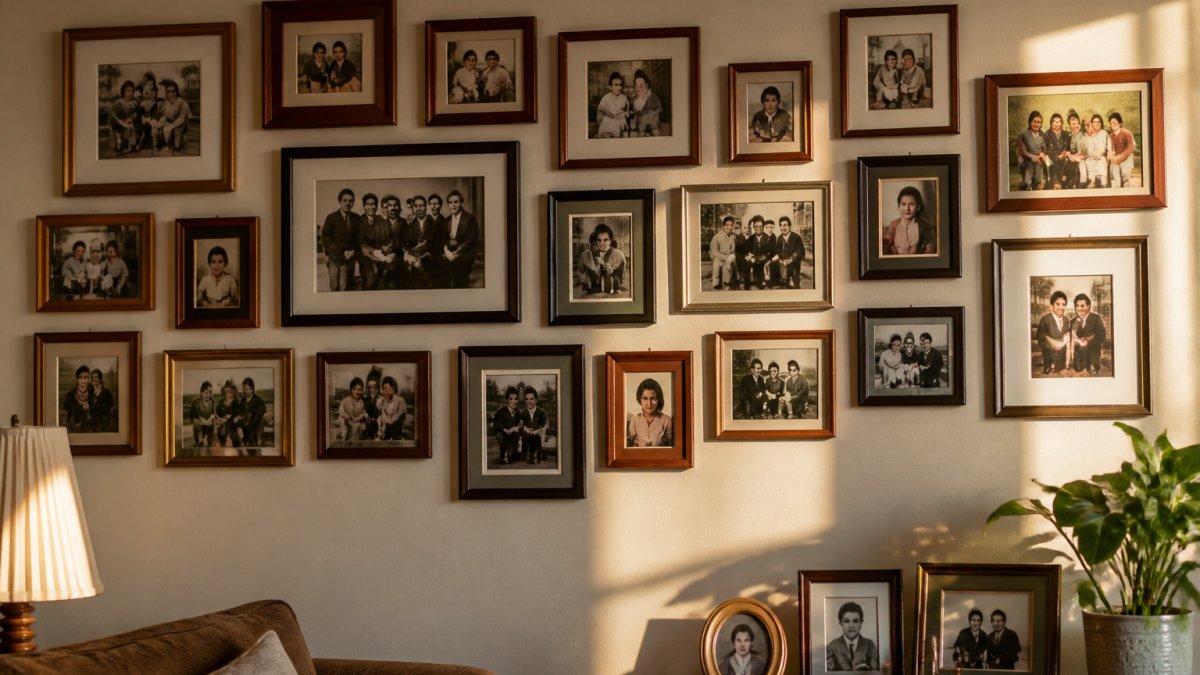
Gather photographs from different eras, mixing black-and-white images from the 1940s and 1950s with colour photographs from later decades. Vary frame sizes and styles; the real charm comes from subtle variety rather than perfectly matched frames.
Lay out your arrangement on the floor first, photograph it, then use that image as your template when hanging. Aim for a consistent gap between frames as a starting point, then adjust to what feels balanced. A common guideline is a gap of approximately 5 centimetres, but personal preference and the overall aesthetic should guide your final decision.
The Remember When Shop's Australia Remember When book ($34.99) works brilliantly alongside a gallery wall. Frame an excerpt or photograph from the book to add context, and use decade-specific images as natural entry points for younger family members to ask questions about that era.

Dedicate one section of your gallery to heirlooms: tuck a vintage military medal, old jewellery, or a handwritten recipe card into a shadow box frame and hang it alongside photographs. Layering objects and images tells a richer story than photographs alone.
Family Photo Display Ideas That Spark Conversation
The best approach to displaying family history invites people to linger and ask questions. Think about what draws someone in and makes them want to know more.
Floating shelves work beautifully: stand photographs upright in small frames at slight angles and intersperse them with objects like a vintage clock, a small vase, or framed handwritten text. This creates rhythm and encourages the eye to move along the shelf.
Ledge shelving lets you rotate displays seasonally: swap one photograph for another and the whole shelf feels new. This works particularly well when multiple generations can each contribute to what's on display.
The "memory corner" approach groups related photographs and objects together. A 1950s corner might pair photos from that decade with a vintage radio and a copy of Photos and Memories of Australia from the 1950s ($29.99); a 1970s corner could pair colour photographs with a record player and Photos and Memories of Australia from the 1970s ($29.99). Each corner becomes its own small exhibition.

Stairwell walls offer unused vertical real estate. Arrange photographs along the staircase as a visual timeline, starting with the oldest images at the bottom and progressing to recent ones as you climb.
How to Organise Family Photos for Meaningful Display
Before you can display family history effectively, you need to know what you have. Many people inherit shoeboxes of unlabelled photographs; organisation transforms chaos into a curated collection.
Sort photographs into decades or generations. This rough chronological grouping makes it easier to identify gaps and understand which eras are well-documented versus sparse.
Next, identify key moments: weddings, births, holidays, everyday life. Mix candid shots of children in the backyard, people at work, and casual gatherings in with formal occasions, since unguarded moments often spark the strongest memories.
Label photographs on the back with a soft pencil, not a pen, noting the year, the people pictured, and the location if known. These details become invaluable for younger family members and for those working with people with dementia, where specifics often trigger deeper recall.
| Task |
|---|
| Initial sorting by decade |
| Detailed labelling |
| Seasonal display refresh |
| Archive scanning |
| Frequency |
|---|
| Once |
| Ongoing |
| Quarterly |
| Annual |
| Time Required |
|---|
| 2-3 hours |
| 30 mins per session |
| 1 hour |
| 2-4 hours |
| Best For |
|---|
| Creating rough organisation |
| Building institutional knowledge |
| Keeping displays fresh |
| Preserving originals digitally |
Keep a simple spreadsheet listing which photographs are on display, where, and when they were last rotated. This prevents the same images staying up year after year and helps when multiple family members maintain displays.
Store originals in acid-free boxes away from direct sunlight, and display high-quality reproductions instead of irreplaceable originals.
Shadow Boxes and Framed Keepsakes for Heirlooms
A shadow box transforms flat photographs into a three-dimensional display of family heritage, with depth that lets you layer objects behind glass: photographs, medals, jewellery, handwritten letters, fabric swatches, or pressed flowers.
Think of a shadow box as a small museum exhibit dedicated to a single person or moment.
The key is restraint: choose 4-6 items maximum, arranged with intention, and leave negative space to make each item feel more significant.
Vintage jewellery deserves its own shadow box. Pair a grandmother's engagement ring, a father's watch, or a collection of brooches with a photograph of that person wearing the item, and an abstract object becomes a connection to someone's life and style.
Military memorabilia, medals, insignia, and photographs in uniform create powerful shadow box displays. Frame them respectfully with context: the person's name, rank, dates of service, and a photograph if you have one. Carers in aged care facilities have found such displays help residents reconnect with significant periods of their lives.
For renters or small spaces, shadow boxes solve a major problem: a single framed box takes minimal wall space but holds tremendous meaning, and you can rotate or move it without disruption.
Family History Book Ideas: From Photo Albums to Nostalgia Collections
A physical family history book is tangible, shareable, and needs no passwords or internet access. It becomes a keepsake pulled from the shelf during family gatherings.
The traditional photo album remains powerful. Rather than cramming every photograph into chronological order, organise albums thematically, one for each child, decade, or celebration, so each tells a focused story.
Printed photo books offer a more polished alternative: professionally bound pages on archival paper look like a published book rather than a scrapbook, which suits family history that will be shared widely or passed down.
Book; Australia Remember When. Bob Byrne →
The Remember When Shop specialises in precisely this: curated collections that celebrate Australian nostalgia and heritage. Books like Australia Remember When ($34.99) offer more than 200 photographs spanning the 1940s to 1980s, providing context and spark for your own family stories.
Create a "Born In" book approach for family members. If your father was born in 1953, a book like Born in 1953? What Else Happened? ($25.99) captures the year he entered the world. Pair this with family photographs from that year and you've created a personalised gift that honours both his birth year and the broader historical context.
Handwritten recipe books become treasured family history keepsakes. Collect recipes from older family members, not just the ingredients and instructions, but the stories behind each dish. Who made this? When did you first taste it? What occasions called for this meal?
Some families create "memory books" specifically for people with dementia. These books combine photographs with simple text, familiar objects, and prompts for conversation. The Remember When Shop's nostalgia books have been widely recognised as helpful resources for this purpose, providing both visual stimulation and historical context that can unlock memories and facilitate engagement.
DIY Crafts and Creative Projects Using Family Photographs
Transforming family photographs into functional art extends their life and creates new ways to engage with memories. These projects work particularly well for photographs you have multiple copies of or high-quality scans.
Tea towels and kitchen textiles turn everyday items into displays of family history.
Decoupage projects layer photographs onto wooden boxes, frames, or furniture. Cut out individual photographs from copies and glue them onto a wooden box using decoupage medium, then seal with a protective coating.
Photo wreaths create seasonal displays. Arrange photographs in a circular pattern on a foam or wire base. Change the photographs seasonally or rotate them throughout the year.
Ornaments and decorations preserve photographs in three-dimensional form. Clear glass or acrylic ornaments can hold a rolled photograph, a small memento, or a handwritten message.
Canvas transfers create large-scale wall art from family photographs. Print a photograph onto transfer paper, then apply it to stretched canvas using heat and pressure.
The most successful DIY projects combine a meaningful photograph with an object that gets used or seen regularly. A mug with a family photograph becomes part of someone's morning routine.
Preserving and Displaying Vintage and Old Family Photos Safely
Original photographs from the 1940s, 1950s, and 1960s are fragile. Improper handling, storage, or display can fade them permanently.
Storage environment matters. Keep photographs in cool, dry conditions. Heat accelerates fading; humidity promotes mould and deterioration. Avoid basements (damp), attics (temperature fluctuations), or direct sunlight.
Use archival-quality materials. Acid-free boxes, acid-free tissue paper, and photo-safe sleeves prevent chemical deterioration.
Handle originals minimally. Skin oils, dust, and moisture on hands damage photographs over time.
Scan and back up. A high-resolution digital scan creates a backup if the original is lost or damaged.
| Preservation Task |
|---|
| Check storage conditions |
| Inspect originals for damage |
| Update digital backups |
| Rotate displayed photographs |
| Frequency |
|---|
| Quarterly |
| Annually |
| Annually |
| Seasonally |
| Why It Matters |
|---|
| Prevents mould and fading |
| Catches problems early |
| Ensures copies exist |
| Prevents uneven fading |
| Time Required |
|---|
| 15 minutes |
| 30 minutes |
| 1-2 hours |
| 1 hour |
Frame originals with UV-protective glass. If you display an original photograph, use framing glass that filters ultraviolet light. This significantly slows fading.
Label photographs properly. Use a soft pencil on the back of photographs, never pen or marker.
According to The Library of Congress guidelines on photograph preservation, proper storage and handling can preserve photographs for over a century.
Displaying family history at home transforms your space into a personal archive and conversation starter.
The Remember When Shop understands the power of these connections. Our curated collections like Australia Remember When and decade-specific books provide both inspiration and context for your displays.
Frequently Asked Questions
What are the best ways to preserve family photos while displaying them?
Keep original photographs away from direct sunlight, moisture, and heat by displaying them on interior walls rather than near windows or external doors. Use acid-free frames and archival-quality mounting materials to prevent deterioration. Consider displaying high-quality reproductions of originals instead, keeping the originals in a cool, dry storage area. Decade-specific photo books like Australia Remember When offer professionally preserved images that capture family history safely without risking damage to irreplaceable originals.
How can I make a family history display meaningful for older relatives and those with dementia?
Arrange photographs chronologically or by family member to create a narrative that encourages conversation and memory recall. Include labels with names, dates, and brief descriptions of what's shown. Carers working with dementia patients find that reminiscence displays work best when photos span familiar decades; books like Photos and Memories of Australia from the 1950s-1970s spark recognition and engagement. Rotate displays seasonally to maintain interest and provide fresh conversation prompts during visits.
What's the difference between displaying family photos and organising them for actual use?
Organising means cataloguing, labelling, and storing photos systematically so you can find specific images later. Displaying means selecting meaningful photos to showcase in your home. Start by organising your collection by decade, family branch, or event; this makes it easier to choose pieces for display. Once organised, you can create curated displays that tell a story, whether through a gallery wall, a shadow box of heirlooms, or a coffee-table photo book that invites browsing and conversation.
How can I display family history in a small space or rental property?
Use floating shelves or ledges to display framed photos without permanent wall damage, ideal for renters. Lean artwork against walls or furniture rather than hanging it. Portable display options include photo albums, coffee-table books, and decorative easels. For renters, removable adhesive strips work well for lighter frames. Family history books like Australia Remember When offer a compact way to share generations of memories in a single, beautiful volume that fits any bookshelf.
Where should I avoid displaying family photos in my home?
Avoid direct sunlight, which fades colours and damages photographs over time. Keep photos away from moisture-prone areas like bathrooms and kitchens near sinks. Don't display originals near fireplaces, radiators, or air-conditioning vents, as temperature fluctuations cause warping and deterioration. Avoid high-traffic areas where photos risk being knocked or damaged. Instead, choose interior walls in living rooms, hallways, or studies where they're protected and can be appreciated without risk.