

How Detailed Are History Photo Books: A Complete Review
Table of Contents
- What Makes a History Photo Book Detailed
- How to Preserve Family Memories with Australian History Books
- Best History Photo Books for Gifts: What Sets Quality Editions Apart
- Technical Specifications That Define Detail in Historical Photobooks
- The Difference Between Albums and Photobooks
- Why Detail Matters for Reminiscence and Legacy Preservation
- Conclusion
Last Updated: August 23, 2026
What Makes a History Photo Book Detailed
A detailed history photo book combines high-resolution imagery, archival printing standards, and thoughtful curation to create a lasting record of a specific era or place. This extends beyond simply printing old photographs to encompass technical specifications, narrative structure, and preservation methods that ensure longevity.
Remember When Shop demonstrates this distinction well. Their decade-specific titles like Photos and Memories of Australia from the 1950s and Photos and Memories of Australia from the 1970s show how detail manifests across multiple dimensions: image resolution, paper quality, binding durability, and contextual information that transforms a collection of photographs into a cohesive visual narrative.

The most detailed history photo books share several technical and editorial hallmarks. Photographs scanned at 300 dots per inch or higher retain crisp detail when printed at standard book size (peer-reviewed research). Archival-quality paper, typically acid-free and lignin-free, resists yellowing and degradation over decades (loc.gov). Sewn binding holds pages far more securely than adhesive-only methods.
Image resolution and print quality standards
The technical foundation of detail rests on image resolution. Photographs scanned at lower resolutions (under 200 DPI) produce visible pixelation when printed. Professional-grade history photo books typically use 300 DPI as a minimum standard, with many premium editions employing 600 DPI or higher. This becomes especially important when photographs contain small details, facial expressions in crowd scenes, text on shop signs, architectural ornaments, that reward close examination.
Print quality extends beyond resolution to colour fidelity and tonal range. A well-executed print captures subtle gradations in black-and-white photography, preserving the full spectrum from deep blacks to bright whites. Many detailed history photo books employ offset printing rather than digital methods, as it delivers superior consistency and better handles the nuanced tones found in historical colour photography.
Paper stock dramatically influences how detail appears. Matte finishes reduce glare and allow viewers to examine fine details without reflection interference. Heavier paper stocks (typically 150 gsm or above) provide a more substantial feel and resist buckling over time.
Archival quality versus restoration approaches
Two distinct philosophies shape how history photo books handle aging photographs: preservation of original detail through restoration, or archival presentation of images as they exist today.
Restoration approaches enhance faded photographs, remove damage like creases or stains, and sometimes colourize black-and-white originals. This reveals detail that time has obscured. However, restoration introduces subjective interpretation; different restorers make different choices about colour balance and contrast levels.
Archival approaches present photographs as they exist in original collections, with minimal digital manipulation. This maintains historical integrity; viewers see exactly what previous generations saw, including the wear that documents the photograph's journey through time.
The best detailed history photo books blend both approaches, presenting archival originals alongside carefully restored versions. Remember When Shop's titles frequently employ this dual presentation, showing how photographs look in their preserved form whilst offering context about the era they document.
How to Preserve Family Memories with Australian History Books
History photo books function as powerful tools for reminiscence and memory preservation within family contexts and care settings. The detail in a well-constructed history photo book becomes the catalyst for conversation, memory activation, and emotional connection across generations.
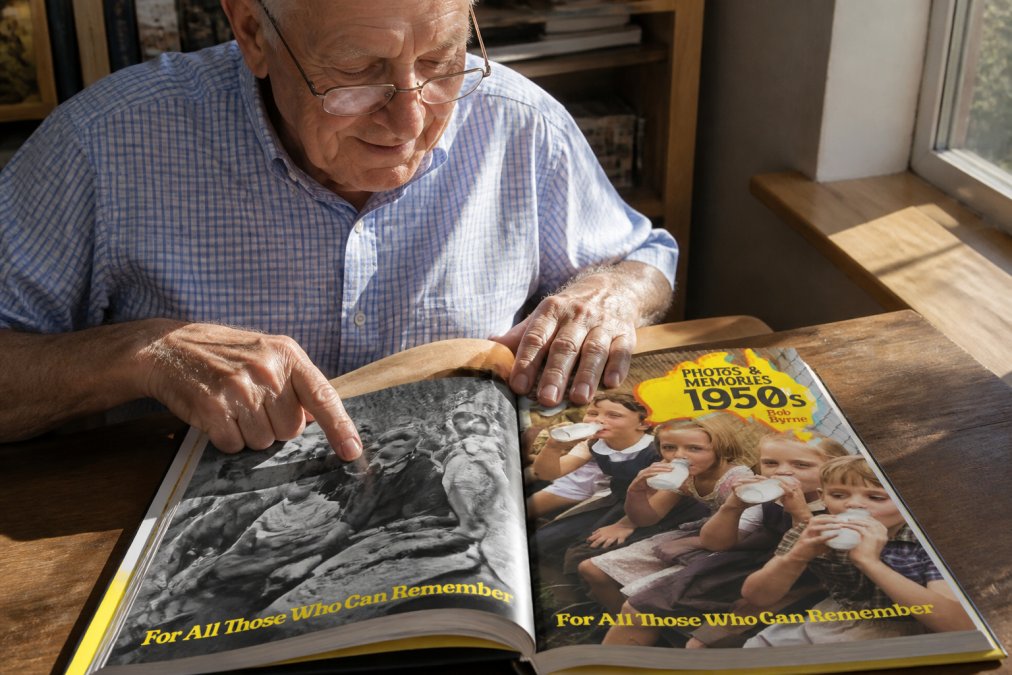
Carers in aged care facilities have found that decade-specific history photo books create powerful prompts for reminiscence therapy (peer-reviewed research). A photograph of a 1950s Australian street scene, detailed enough to show shop names and clothing styles, triggers specific memories, where someone worked, what their first car looked like, which friends they spent time with. The detail becomes the bridge between present awareness and past experience.
Metadata and annotation for genealogical context
Metadata transforms a beautiful image into a genealogical resource. A photograph of a family gathering means far more when annotated with names, dates, locations, and relationships. When creating history photo books for family preservation, adding metadata ensures that future generations understand what they're viewing.
For genealogists tracing family history, metadata turns casual photographs into primary source documents. A photograph annotated with "Smith family reunion, Christmas 1965, backyard of 42 Elm Street" becomes historically valuable. Digital metadata embedded in photograph files allows for searchable archives. When physical books include QR codes linking to digital metadata, readers can access extended information and related photographs.
Chronological ordering and narrative curation
The sequence in which photographs appear shapes how readers experience and remember them. Strict chronological ordering creates a timeline effect, allowing readers to trace change across months or years. Thematic organisation groups photographs by subject, workplaces, celebrations, transport, domestic life, highlighting patterns across time.
The most detailed history photo books employ hybrid approaches, progressing chronologically through major sections whilst using thematic subsections within each era. Remember When Shop's decade-specific titles use this layered approach, progressing through each decade chronologically whilst grouping photographs by themes that illuminate how Australians experienced that era.
Best History Photo Books for Gifts: What Sets Quality Editions Apart
When selecting a history photo book as a gift, several quality markers distinguish genuinely detailed editions from generic nostalgia collections.
Decade-specific collections and visual storytelling
Decade-specific history photo books offer advantages over broader historical surveys. A book focused entirely on the 1950s can include far more detail than one attempting to cover the entire twentieth century. Quality decade-specific books employ visual storytelling that goes beyond simple image collection, illustrating how people actually lived during that decade.
The best examples include photographs from multiple Australian regions. A book focused only on major cities misses the detail of rural and regional life. Remember When Shop's Photos and Memories of Australia from the 1950s, authored by Bob Byrne, draws on diverse sources to present a comprehensive picture of Australian life across the decade.

Visual storytelling also involves image sequencing. Photographs placed in deliberate order create narrative momentum. A sequence showing suburban street construction from empty land through building stages to completed homes tells a story that individual photographs cannot. Detailed history photo books employ this sequencing intentionally, guiding readers through visual narratives that illuminate how change occurred. spotting quality prints.
Author credibility and primary source documentation
The credibility of a history photo book's author significantly influences the reliability and detail of its content. Authors with expertise in Australian social history, journalism backgrounds, or deep research experience bring authority that casual compilers cannot match. Bob Byrne, author of Remember When Shop's decade-specific titles, brings forty years of Australian media experience and substantial research into social history. His established following of over 375,000 engaged followers on the Australia Remember When Facebook page reflects reader trust in his curation.
Primary source documentation matters enormously for detail and accuracy. Books drawing on archival photographs, newspaper collections, and historical records provide detail grounded in documented history. The most detailed history photo books acknowledge their sources, credit photographers where known, and explain how historical context was researched.
Technical Specifications That Define Detail in Historical Photobooks
Beyond content and curation, specific technical choices determine how much detail a reader can perceive and appreciate in a printed history photo book.
Binding techniques and paper stock longevity
Sewn binding, where signatures are stitched together before the cover is attached, creates books that remain flexible and durable through repeated reading. Perfect binding, where pages are glued directly to the spine, degrades with frequent use. For history photo books intended as keepsakes and reminiscence tools, sewn binding represents a genuine investment in longevity.
Paper stock composition determines archival longevity far more than most readers realise. Acid-free paper resists yellowing and brittleness. Lignin-free paper avoids chemical breakdown that causes discolouration. Books printed on archival-standard paper remain readable and visually intact for a century or more. Paper weight (measured in gsm) influences both durability and reading experience. Heavier stocks (150 gsm and above) feel substantial and resist buckling.
Colour fidelity and image sequence layout
Colour accuracy requires careful attention to printing technology and colour management. Offset printing delivers superior colour consistency compared to digital printing, especially across large print runs. Colour fidelity becomes especially important when history photo books include colour photographs from the 1950s onwards.
Image sequence layout influences how much detail readers can appreciate. Full-bleed images create visual impact and allow larger sizes. The best detailed history photo books size images according to their content, enlarging photographs that reward close examination and using smaller sizes for images whose impact lies in overall composition.
The Difference Between Albums and Photobooks
Traditional photo albums involve mounting individual prints into pre-made books. This allows flexibility but typically features unbound pages that shift with use. Quality varies dramatically depending on adhesive and paper stock.
Photobooks involve professional printing of a designed layout. Photographs are arranged on pages according to deliberate design, then the entire book is printed as a unit. This ensures consistency, durability, and professional appearance. For history photo books, this distinction matters profoundly. The photobook format allows for careful curation, sequencing, and contextual annotation that transforms a collection of images into a coherent historical document.
Why Detail Matters for Reminiscence and Legacy Preservation
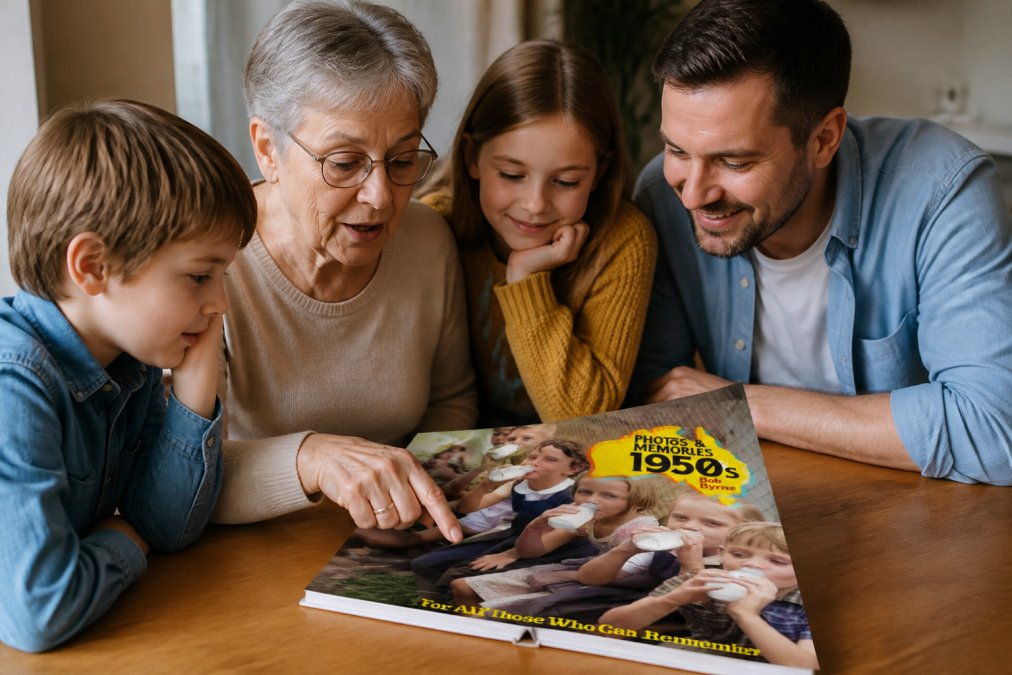
The detail in a history photo book serves purposes extending far beyond aesthetic appreciation. For older adults, particularly those experiencing memory changes, detailed photographs function as powerful reminiscence tools. A photograph detailed enough to show shop names, vehicle styles, and clothing fashions triggers specific memories that generic images cannot access.
Carers working with people living with dementia report that decade-specific history photo books, especially those featuring Australian locations and cultural references familiar to their clients, create meaningful engagement opportunities. The detail provides concrete starting points for conversation. Rather than abstract discussion about "the old days," a photograph showing a specific 1960s street scene with identifiable landmarks becomes a shared reference point.
For family legacy preservation, detail transforms a book from entertainment into a historical document. Future generations consult detailed history photo books to understand what their ancestors' world looked like, how people dressed, what technology existed. The detail that might seem incidental to current readers, the style of a car, the design of a storefront, fashion choices in a crowd scene, becomes invaluable historical evidence for descendants.
The most meaningful history photo books combine detail with emotional resonance. Remember When Shop's titles succeed because they combine technical quality with thoughtful curation that acknowledges what mattered to Australians during specific decades. A detailed photograph of a 1970s Australian street scene is a window into a specific moment in Australian social history, captured with enough clarity that viewers can see themselves, their families, and their communities reflected back across decades.
Reconnecting with Australian history and personal memories becomes profoundly meaningful when the books you choose offer genuine detail and lasting quality. Remember When Shop specializes in curated decade-specific collections like Photos and Memories of Australia from the 1950s and Photos and Memories of Australia from the 1970s, each featuring author-signed copies and carefully selected photographs that illuminate how Australians lived during transformative eras. These books combine archival-quality printing with thoughtful curation, creating keepsakes that serve both as personal reminiscence tools and family heirlooms. Whether you're seeking a meaningful gift for an older relative or a resource for aged care reminiscence therapy, detailed history photo books preserve not just images, but the texture of lived experience across generations.
Frequently Asked Questions
What level of historical detail should a high-quality history photo book include?
A quality history photo book combines high-resolution images with contextual information: accurate captions identifying people, locations, and dates; chronological ordering that shows change over time; and narrative elements that explain the significance of each photograph. Books like Photos and Memories of Australia from the 1950s ($29.99) include year-by-year chronicles alongside photographs, allowing readers to understand both the visual record and the historical events shaping each moment. Professional editions also include metadata about original sources and restoration methods used, giving readers confidence in authenticity.
How can history photo books help with reminiscence therapy and memory engagement?
Detailed history photo books serve as powerful reminiscence tools by combining familiar imagery with specific dates, place names, and personal stories. For people with dementia or memory challenges, this multi-layered detail triggers recognition and conversation. The visual narrative, arranged chronologically or thematically, helps structure memories and provides context for storytelling. Books featuring local history or decade-specific Australian content resonate particularly well because they reflect lived experience. Carers and healthcare professionals report that books combining high-quality photographs with accessible historical captions create the most engaging reminiscence sessions.
What makes a history photo book a valuable heirloom versus just a decorative book?
A heirloom-quality history photo book combines archival longevity with personal or cultural significance. This means using acid-free paper stock, professional binding techniques that withstand repeated handling, and colour fidelity that preserves detail across decades. Equally important is authenticity: books with verified historical sources, author credentials, and transparent restoration practices hold their value and reliability. Author-signed copies, like those from Remember When Shop, add personal provenance. The detail level, from image resolution to caption accuracy, determines whether the book remains a useful reference or becomes merely sentimental over time.
How do decade-specific photo books balance imagery with historical context?
The best decade-specific collections weave visual storytelling with historical narrative. Rather than presenting images as isolated moments, they arrange photographs chronologically and connect them to major events, cultural shifts, and everyday life. Photos and Memories series books (1940s through 1970s, each $29.99) achieve this by pairing photographs with year-by-year chronicles that explain what was happening in Australia, from wartime rationing to the moon landing. This approach helps readers understand not just what people looked like or wore, but why those years mattered. The detail emerges from the relationship between image and context, not from photographs alone.
How do I know if a history photo book is using restoration or archival-quality originals?
Quality publishers disclose their approach to image sourcing and restoration. Look for books that specify whether photographs are original prints, digitally restored from archives, or professionally enhanced for print. Reputable authors like Bob Byrne, who has 40 years of media experience and over 375,000 followers on the Australia Remember When Facebook page, typically explain their methodology. Check for information about source verification, archive partnerships, and restoration techniques used. Books that hide this information may be relying on lower-quality or unverified images. Author credentials and publisher reputation are your best indicators of transparency about image authenticity.
This article was written using GrandRanker