
Best Australian Nostalgia Books 2026
Table of Contents
- Why Australian Nostalgia Books Matter
- Classic Australian Literature That Evokes the Past
- Best Australian Memoirs 2026: Personal Stories and Reflections
- Decade-Specific Photo Books: Reconnecting with Your Era
- Thematic Curation: Books Grouped by Memory and Emotion
- Specialised Collections: Cars, Regional Stories, and More
- Using Nostalgia Books for Reminiscence and Connection
- Choosing the Right Nostalgia Book as a Gift
Last Updated: August 9, 2026
Why Australian Nostalgia Books Matter
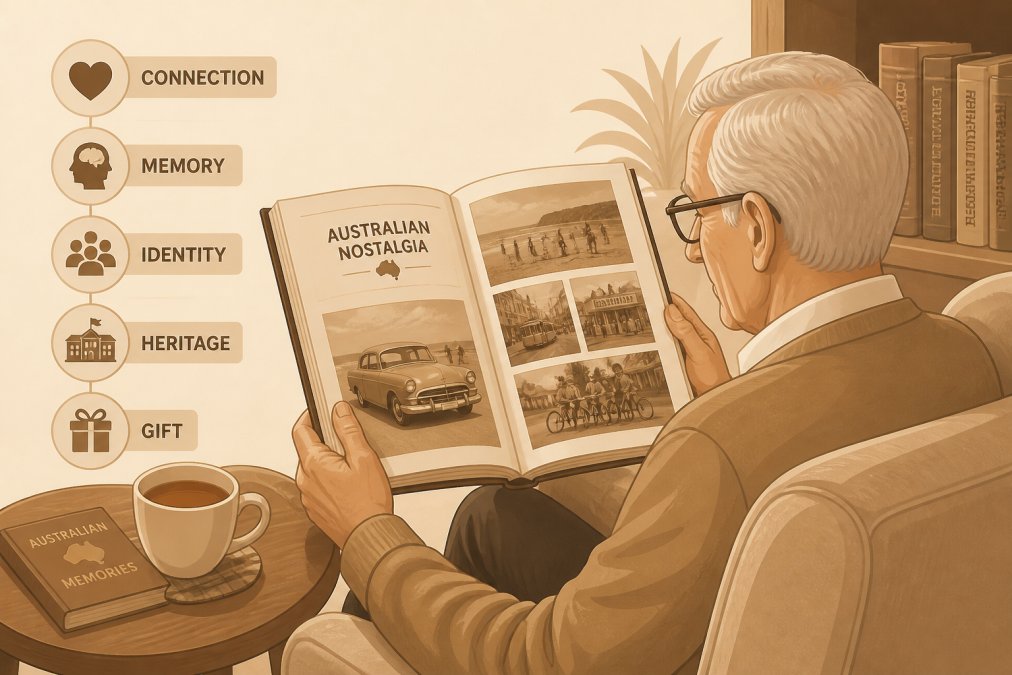
For many Australians, the best Australian nostalgia books offer far more than entertainment, they're gateways to reconnecting with formative years and shared cultural moments. Whether reliving the 1950s milk delivery rounds, the 1960s transistor radio era, or the 1970s disco optimism, these books unlock memories that feel increasingly precious as time passes.

What makes Australian nostalgia books special is their hyper-local focus. They capture everyday details that define an era: the corner shop that vanished, the car your dad drove, the television programmes that shaped your childhood. This specificity triggers genuine emotional resonance because the memories are yours.
Carers in aged care facilities have recognised the therapeutic value of these books. Reminiscence therapy, using objects, photographs, and stories to stimulate memory and conversation, relies on exactly these kinds of anchors. A photograph of a 1950s Australian street scene opens a doorway to conversation and connection that can be profoundly meaningful for someone with dementia or cognitive decline.
The Remember When Shop specialises in curating collections for this exact purpose. Their decade-specific photo books and author-signed collections have become trusted resources for families, carers, and individuals seeking to reconnect with Australian history and personal memory.
Classic Australian Literature That Evokes the Past
The foundation of Australian nostalgia lies in classic literary fiction that captures the texture of life across different eras.
Cloudstreet by Tim Winton
Tim Winton's Cloudstreet remains one of the most evocative portraits of post-war Australian life. Set in Perth from the 1940s through the 1960s, the novel follows two working-class families sharing a sprawling old house. Winton's prose captures the specific rhythms of Australian speech, the landscape, and the quiet dramas of ordinary people building lives after war. The house itself becomes a character, creaking floorboards, weathered walls, the smell of cooking and salt air. You inhabit the 1950s rather than simply reading about them. The novel won the Miles Franklin Award, cementing its place in the Australian literary canon.
Picnic at Hanging Rock by Joan Lindsay
Joan Lindsay's Picnic at Hanging Rock, set in 1900 colonial Victoria, operates as a mystery wrapped in atmosphere. Three schoolgirls and a teacher disappear during a picnic, and the novel never fully explains what happened. Instead, it captures the unease of the colonial period, rigid social structures, and the landscape's strange, unsettling power. For readers seeking Australian nostalgia, the book offers a portrait of a vanished world where certainties have dissolved into mystery. Its influence on Australian culture is substantial, it inspired a celebrated film adaptation and remains widely read in schools.
The Harp in the South by Ruth Park
Ruth Park's The Harp in the South focuses on the Darcy family in impoverished Sydney suburb Surry Hills during the 1940s. This is working-class Australian life rendered with dignity and unflinching honesty, exploring poverty, family bonds, resilience, and the small joys that sustain people through hardship. What's remarkable is its authentic dialogue and character work. The voices feel real, the way people actually spoke, their concerns, their humour in the face of difficulty. Park's novel is the first in a trilogy, allowing readers to extend their journey through the Darcy family's story.
Best Australian Memoirs 2026: Personal Stories and Reflections
While classic fiction captures imagined worlds, memoirs offer real voices reflecting on lived experience.
The Land Before Avocado by Richard Glover
Richard Glover's The Land Before Avocado is a witty, affectionate examination of Australian life in the 1970s. Glover uses personal anecdotes and cultural observation to paint a picture of a decade that feels simultaneously recent and impossibly distant, covering fashion, food, television, technology, and social norms. What makes this essential for nostalgia seekers is its blend of specificity and universality. The book's real subject is how quickly culture shifts, how the everyday becomes the quaint, and how each generation assumes its present will feel normal forever.
Growing Up in Country Australia
This anthology, edited by Rick Morton, collects nearly forty stories from writers reflecting on rural Australian life. Contributors include established authors, emerging voices, First Nations writers, and new migrants, deliberately offering diverse perspectives on what it meant to grow up beyond the cities. Rather than a single narrative voice, you encounter multiple perspectives on rural experience. Some stories emphasise isolation and hardship; others celebrate connection to land and community.
Decade-Specific Photo Books: Reconnecting with Your Era
Beyond narrative and memoir, decade-specific photo books offer visual journeys through time, often paired with captions and contextual notes that help readers situate photographs within their own memories.
Photos and Memories of Australia from the 1950s
The 1950s represented post-war optimism, suburban expansion, and the rise of consumer culture. Remember When Shop's Photos and Memories of Australia from the 1950s (author-signed copy, $29.99) takes readers through this transformative decade with colour images and portraits. The photographs focus on small local details, the corner shop, milk delivery, neighbourhood gathering, rather than grand historical events. What makes decade-specific photo books particularly effective for reminiscence therapy is their accessibility. Unlike novels requiring sustained concentration, photo books can be browsed at any pace.

Photos and Memories of Australia from the 1960s
The 1960s were transformative, a decade of social change, technological innovation, and cultural shift. Remember When Shop's Photos and Memories of Australia from the 1960s (author-signed copy, $29.99) documents the "Swingin' Sixties" Down Under, capturing both iconic moments and everyday details that made the decade distinctive.
Photos and Memories of Australia from the 1970s
The 1970s occupy a particular place in Australian nostalgia, often remembered with affection despite the decade's economic and social turbulence. Remember When Shop's Photos and Memories of Australia from the 1970s (author-signed copy, $29.99) captures this era through visual documentation spanning the entire decade.
| Decade | Starting Price | Best For | Key Features |
|---|---|---|---|
| 1950s | $29.99 | Post-war nostalgia seekers | Post-war optimism, suburban expansion |
| 1960s | $29.99 | Those remembering social change | Technological innovation, cultural shift |
| 1970s | $29.99 | Retro enthusiasts | Economic turbulence, distinctive fashion |
Thematic Curation: Books Grouped by Memory and Emotion
Some readers connect more deeply with books organised around emotional or thematic lines rather than chronologically.
Stories of Resilience and Community
Australian nostalgia often centres on themes of resilience and community. The Harp in the South exemplifies this approach, celebrating how families and communities survive hardship. Similarly, Cloudstreet explores community and interconnection across decades. When selecting nostalgia books thematically, consider what emotional currents run through your own memories and choose books that will resonate most deeply.
Australian Identity and Cultural Belonging
Another powerful thematic thread is the question of identity and belonging. The Secret River by Kate Grenville examines complex interactions between colonists and Indigenous Australians, offering more than comfortable nostalgia by complicating our understanding of Australian history. My Place by Nadia Wheatley and Donna Rawlins travels backward through time from 1988 to 1788, exploring belonging through the concept of "Country," a distinctly Australian Indigenous understanding of land and connection.
Specialised Collections: Cars, Regional Stories, and More
Beyond general decade books and classic literature, Remember When Shop curates specialised collections focusing on specific aspects of Australian life.
Cars We Used to Drive: A Journey Through Australian Motoring History
Cars We Used to Drive: Australians on the Move, 1940s to 1960s by Don Loffler (Remember When Shop, $54.95) serves readers passionate about Australian automotive history. For many Australians, the family car is inseparable from childhood memory. A book dedicated to Australian cars of a particular era serves as a visual and historical archive of this important dimension of Australian life.
Regional Narratives: Growing Up in Adelaide in the 1950s
Growing Up in Adelaide in the 1950s by Susan Blackburn (Remember When Shop, $29.99) exemplifies the value of regional specialisation. Rather than covering all of Australia, this book focuses specifically on one city during one decade, allowing detailed exploration of what life was actually like in that specific place and time. For Adelaideans who grew up in the 1950s, or whose parents did, this book offers particular resonance.

Using Nostalgia Books for Reminiscence and Connection
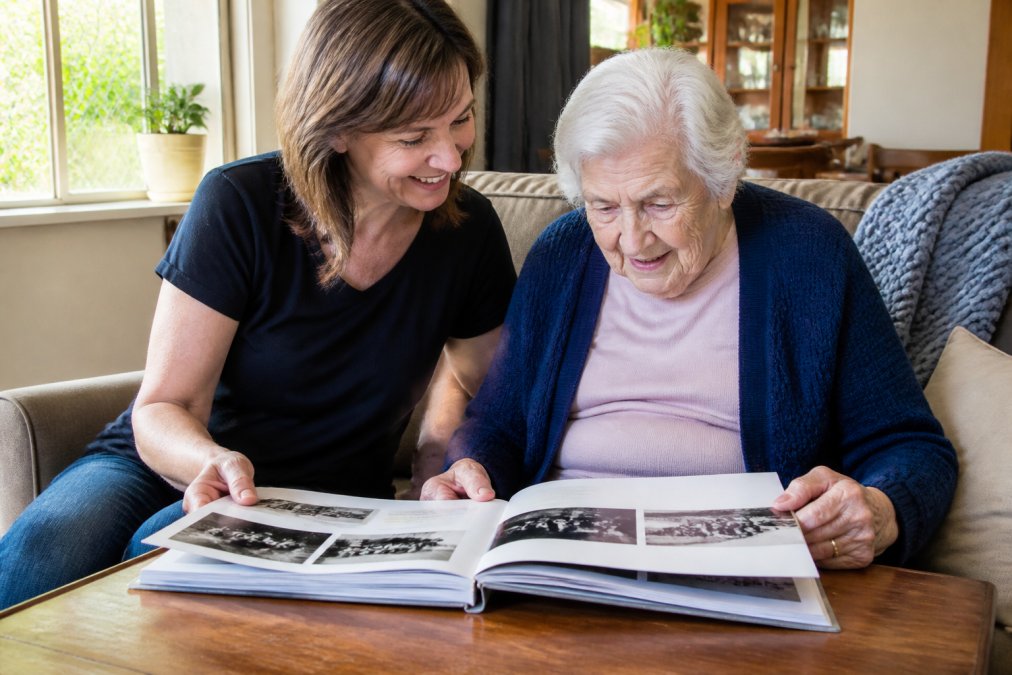
Reminiscence therapy uses objects, photographs, and stories to stimulate memory and conversation. Nostalgia books are ideal tools because they combine visual triggers with contextual information that facilitates conversation. When using a nostalgia book for reminiscence purposes, the goal isn't necessarily to "remember correctly." Rather, it's to create opportunities for conversation, connection, and engagement. A photograph might trigger a memory, or it might trigger a tangentially related story. Both are valuable.
For carers in aged care facilities, nostalgia books provide structured reminiscence activities. Rather than generating conversation from scratch, you can open a book and let photographs guide the interaction. Many facilities have found that decade-specific photo books, particularly those focused on local or regional history, are especially effective because they tap into shared cultural memory.
For family members caring for an older relative at home, nostalgia books offer similar benefits. Sitting together with a book, looking through photographs, and listening to stories creates meaningful connection across generations.
Choosing the Right Nostalgia Book as a Gift
Selecting a nostalgia book as a gift requires considering the recipient's interests, their era of strongest memory, and the purpose you hope the book will serve. Consider the recipient's formative years and which decade holds the strongest memories. Think about the format that will suit them best. Do they prefer narrative and prose, or are they more visual? Someone who loves reading will connect with classic Australian literature or memoir collections. Someone who prefers browsing photographs will find decade-specific photo books more engaging. For someone with declining cognitive function, photo books often work better than lengthy novels.
Consider the gift's purpose. Are you hoping to spark conversation and reminiscence? A photo book or anthology of short stories works well. Are you hoping for a meaningful reading experience? A novel like Cloudstreet or The Harp in the South offers deeper engagement. Are you hoping to acknowledge their particular regional identity? A regional book shows thoughtfulness and recognition of their specific experience. Author-signed copies, available for many Remember When Shop titles, add a personal touch that transforms a book from a gift into a keepsake.
Selecting the best Australian nostalgia books means recognising that memory and connection matter. Whether through classic literary fiction, personal memoir, visual photo archives, or specialised collections, these books validate lived experience, facilitate conversation, and create bridges between generations.
Remember When Shop has built its reputation by understanding this deeper purpose. Their curated collections, including author-signed copies of titles like Australia Remember When ($34.99) and Remember When: Snapshots of Australia ($39.99), combine quality production with genuine understanding of what nostalgia seekers value. For those looking to reconnect with Australian history, to give a meaningful gift to an older relative, or to facilitate reminiscence therapy in a care setting, Remember When Shop's collections offer thoughtfully curated options that honour the importance of memory and connection. Shop Now and discover the Australian nostalgia books that will resonate most deeply with your own experience or the person you're gifting to.
Frequently Asked Questions
How can Australian nostalgia books help someone with dementia or memory loss?
Nostalgia books, particularly decade-specific photo collections like those from Remember When Shop, serve as powerful reminiscence therapy tools. They trigger memories through familiar images, names, and stories from a person's lived experience. Carers and healthcare professionals use these books to stimulate conversation and engagement. The visual nature of photo-based nostalgia books makes them especially effective, as they don't require sustained reading concentration and allow for natural pauses and discussion. Many families report that these books create meaningful moments of connection and recognition, even with advanced memory loss.
What makes Remember When Shop's Australian nostalgia books different from other retailers?
Remember When Shop specialises in curated collections of Australian nostalgia books, many featuring author-signed copies that add personal value and authenticity. Their decade-specific photo books, such as Photos and Memories of Australia from the 1950s ($29.99), combine professional curation with genuine historical content. These books are specifically recognised by carers and aged care professionals as effective reminiscence tools. The combination of author signatures, decade-specific focus, and proven effectiveness in therapeutic settings distinguishes them from generic nostalgia books found in mainstream retailers.
Which classic Australian literature best captures nostalgia for different eras?
Classic Australian literature offers distinct nostalgic windows into different periods. Cloudstreet by Tim Winton evokes Perth from the 1940s-1960s with rich family saga storytelling. The Harp in the South by Ruth Park captures post-war Sydney's working-class life in the 1940s with authentic dialogue and social detail. A Town Like Alice by Nevil Shute spans wartime and post-war Australian settlement. For readers seeking literary fiction with strong cultural identity and atmospheric writing, these works provide both narrative depth and historical authenticity that resonates with those seeking to reconnect with their era.
Are Australian nostalgia books suitable as gifts for people in aged care facilities?
Yes, Australian nostalgia books are highly suitable and increasingly used in aged care settings. Remember When Shop's books are specifically recognised by carers and healthcare professionals as effective reminiscence therapy resources. Decade-specific titles help residents reconnect with their formative years, whilst photo-based collections encourage group engagement and conversation. Many facilities use these books during activities programs. For bulk orders or facility-wide programmes, it's worth enquiring about options directly. These books provide meaningful engagement without requiring extensive reading stamina, making them ideal for diverse cognitive and physical abilities.
This article was written using GrandRanker