
Best Birthday Gifts for Seniors with Memory Loss
Table of Contents
- How to Choose Birthday Gifts for Seniors with Memory Loss
- Quick Comparison: Gifts for People with Dementia
- Nostalgic Gifts for Seniors: Memory Books and Decade Collections
- Reminiscence Activities for Dementia: Turning a Gift into a Shared Experience
- Memory Books for Seniors: What Makes Them Different from Standard Photo Albums
- Low-Cost, Homemade and Experience-Based Birthday Gifts
- How to Present and Use the Gift on the Day
- Frequently Asked Questions
Last Updated: October 15, 2026
How to Choose Birthday Gifts for Seniors with Memory Loss
Finding the best birthday gifts for seniors with memory loss starts with one shift in thinking: stop shopping for what they used to do and start shopping for what still brings them comfort today.
That is why nostalgia works so well.
Below, we cover how to match a gift to the person, compare the main options, and present it well on the day.
Safety and Accessibility Checks Before You Buy
Run through these checks before you pay for anything:
- No small removable parts that could be swallowed
- No sharp edges, glass frames or heavy items that could be dropped
- Easy to hold, open and use without fine motor control
A gift that frustrates the person is worse than no gift at all. If they cannot work it within a few seconds, it will sit unused.
Matching Gifts to Interests and Abilities
The best gift matches the person's stage and their history. Ask yourself three questions.
First, what did they love? A former nurse, a farmer, a dancer or a footy fan will each respond to different memory prompts. Second, what can they still do? Someone in the early stages may enjoy a jigsaw puzzle or conversation cards. Someone in the middle to later stages often does better with a tactile activity or a book you read together.
Quick Comparison: Gifts for People with Dementia
Use this table to shortlist before you read the detail below.
| Gift type | Best for | Engagement level | Typical cost |
|---|---|---|---|
| Nostalgia photo book | Early to middle stages | High, shared | $25.99-$34.99 |
| Decade-specific memory book | People who love history | High, shared | $29.99 |
| Born In year book | Birthday-specific gifting | Medium to high | $25.99 |
| Familiar music player | All stages | High, calming | Varies |
| Fidget or busy blanket | Middle to later stages | Medium, tactile | Varies |
| Conversation cards | Early stages, groups | High, social | Low |
| Photo album with prompts | All stages | Medium to high | Low to medium |
The books in this table come from our own range, priced in Australian dollars. Music players, blankets and cards are widely available from general retailers, and we have kept the guidance general so you can source them wherever suits.
Nostalgic Gifts for Seniors: Memory Books and Decade Collections
Nostalgic gifts for seniors work because they draw on remote memory, which typically holds up longer than recent memory in dementia.
For a birthday that lands on a specific year, the Born In series by Ron Williams is hard to beat. Each title covers one year of Australian life, from 1939 onward. Born in 1950? What else happened? is $25.99 and pairs neatly with a 2026 birthday for someone turning 76.
Decade-Specific Photo Books for Personalised Gifting
If you know which decade matters most, go straight to it. Our Photos and Memories series covers each decade in turn, at $29.99 each. Photos and Memories of Australia from the 1950s captures the end of rationing and the arrival of television. Photos and Memories of Australia from the 1970s covers colour television, the Dismissal and Countdown on a Saturday night.

For anyone with a strong connection to a particular city, Melbourne Remember When gathers more than 200 photos and recollections from readers, also at $34.99.

Reminiscence Activities for Dementia: Turning a Gift into a Shared Experience
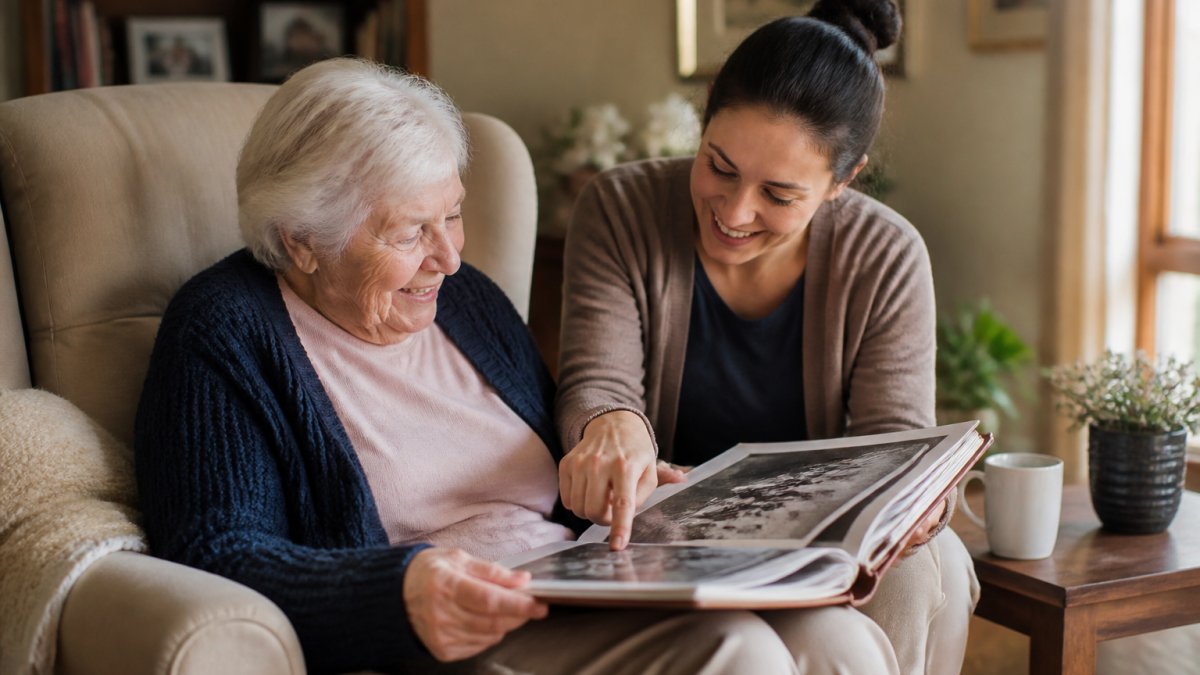
A memory book only works if you use it with the person. Reminiscence activities for dementia are simply structured ways of prompting and enjoying memories together, and a photo book is one of the easiest tools for the job.
Try this approach:
- Choose a quiet time of day when the person is usually settled
- Open the book to one page, not the whole thing
- Point to an image and make a simple statement about it
- Pause and give them time to respond
- Follow whatever they say, even if it drifts from the photo
- Close the book when interest fades, not when you finish
Sessions of ten to fifteen minutes often work better than long ones. If the person becomes restless, stop and return another day.
Memory Books for Seniors: What Makes Them Different from Standard Photo Albums
Memory books for seniors are different from standard photo albums because they pair images with context, captions and stories that spark recognition, rather than simply recording family events.
A standard album holds your family photos.
Book; Australia Remember When. Bob Byrne →
The distinction matters when you are choosing. If you want a keepsake of your own family, build an album.
Our titles, including Growing up in Adelaide in the 1950s at $29.99, are built around that principle.

Low-Cost, Homemade and Experience-Based Birthday Gifts
Most gift guides assume you will buy something. But for a birthday, the most meaningful gifts are often the ones that cost little and involve time rather than money. This is also the area where you can make the day feel celebratory without relying on the person to remember the occasion.
Why experience-based gifts work for memory loss
A birthday can create pressure. The person may sense that something is expected of them, or feel anxious because they cannot recall why people are gathered. An experience-based gift sidesteps that pressure because it is shared in the moment rather than remembered afterwards. The value is in the doing, not the recalling.
Homemade gifts under $20
These are inexpensive, personal and low-risk:
- A photo album you assemble yourself from family pictures, with short captions in large print. Cost: printing only, usually $10 to $20.
- A playlist of songs from their twenties, loaded onto a simple single-button device. Cost: the device, typically $20 to $40, plus your time.
- A framed print of a local landmark from their youth, printed at a local shop. Cost: $10 to $25 depending on size.
Experience-based gifts
An outing or shared activity often lands better than an object because it engages the senses and the social self:
- A shared outing to a familiar place, such as a beach, garden, old neighbourhood or favourite cafe
- A picnic in a quiet park at a time of day when they are usually settled
- A visit from a familiar pet, or a short session with a therapy animal if available locally
Budget ranges at a glance
- Under $20: homemade album, handwritten letter, memory jar, biscuits
- $20 to $50: playlist device, framed print, simple sensory item, small outing
- $50 to $100: a substantial memory book, a shared meal out, a longer outing with transport
Adapting an experience to current abilities
The same outing can be wonderful or distressing depending on how it is framed. A few adjustments make a difference:
- Go at the person's best time of day, usually mid-morning for many people
- Keep the outing short, often under two hours
- Limit the number of people to two or three familiar faces
Making the birthday feel celebratory without memory pressure
The birthday itself can be marked in ways that do not depend on the person remembering it. A small cake with one candle, a favourite song played at the right moment, or a short visit from one or two close people can all signal celebration without creating confusion. Avoid asking "do you remember what day it is?" and avoid quizzing them about the occasion.
The common thread across all of these is familiarity and low pressure. A gift that connects to a known part of their life, and that does not ask them to perform or remember, will usually outperform something novel, however expensive.
How to Present and Use the Gift on the Day
Presentation can make or break the moment. Keep the setting calm, limit the number of people, and give the gift one at a time rather than in a pile.
Open the gift with them rather than handing it over. Turn to a page, point to a photo and start a simple conversation. If they lose interest, put it aside without comment and try again later.
For a birthday celebration, consider a quiet morning gathering over a large afternoon party. Familiar music in the background and a small number of familiar faces will usually keep the person more comfortable and engaged.
Frequently Asked Questions
What are some good gifts for seniors who are forgetful?
Gifts that tap into long-term memory work best. Nostalgia books featuring familiar Australian places, faces and events from the 1940s to 1980s give someone with memory loss something concrete to hold and talk about. A book like Australia Remember When ($34.99) contains over 200 photos across 250 pages, covering everyday life from the milkman to Graham Kennedy on TV. Other reliable options include framed family photos, a simple music player loaded with songs from their twenties, or a fidget blanket for quiet moments.
What is a good gift for someone with memory loss?
The most useful birthday gifts for seniors with memory loss are simple, familiar and easy to use without instruction. A decade-specific photo book works because the images match memories that are still strong, even when short-term recall has faded. A Born In book ($25.99) covers a single year in Australian history, which makes it highly personal. Music players, comfortable clothing and tactile items also work well. Avoid anything with complex settings, small buttons or instructions that need to be remembered.
Are nostalgic gifts helpful for people with dementia?
Nostalgic gifts for seniors are widely used in aged care as part of reminiscence activities for dementia. Looking at familiar photos and reading short memories gives the person a focus for conversation and a way to share stories from their past. Carers report that nostalgia books are useful for group sessions because they prompt discussion without pressure. The key is choosing content from the right era. Someone born in 1945 will connect most with 1950s material, while a person born in 1960 may prefer 1970s books.
How do I choose a safe gift for someone with memory loss?
Check for sharp edges, small parts that could be swallowed, heavy items that are hard to lift, and anything that requires remembering instructions. Books are a safe choice because they are lightweight, familiar and can be used independently. Avoid gifts with cords, batteries that need changing, or complex locking mechanisms. If the person lives alone, consider whether the gift needs supervision. A photo book or memory book can be enjoyed alone or with a visitor, which makes it flexible.
What activities can I do with a person living with dementia using a gift?
A nostalgia book is designed to be shared. Sit together and turn to a page showing a familiar scene, such as a corner shop or an old tram. Ask open questions rather than testing their memory. Let them lead the conversation. You can also pair a book with music from the same decade or use it alongside conversation cards. The goal is connection, not correct answers, so follow whatever topic the person wants to explore.
Choosing a birthday gift for someone with memory loss comes down to familiarity, safety and shared time. We built Remember When Shop around that idea, with Australian nostalgia books that carers and families use to reconnect with people living with dementia. Our range includes author-signed copies, decade-specific photo books and Born In titles, all designed to spark conversation and comfort. Get started with Remember When Shop and give a gift that brings a familiar smile on the day.