
Historic Newspapers vs Nostalgia Books: Which Gift Works Best
Table of Contents
- Historic Newspapers vs Nostalgia Books: Core Differences
- Archival Quality and Material Durability
- Personalised Birthday Gift Ideas for Seniors
- Benefits of Signed Nostalgia Books for Reminiscence and Memory
- Authenticity, Curation, and Historical Record
- Cost-Benefit Analysis: Value for Money
- Digital vs Physical Preservation: Why Tangible Matters
- Which Option Should You Choose?
Last Updated: August 27, 2026
Historic Newspapers vs Nostalgia Books: Core Differences
Choosing between historic newspapers and nostalgia books shapes how someone experiences memory. Historic newspapers capture journalism as it happened, headlines, advertisements, the voice of a particular day. Nostalgia books are deliberately crafted collections blending photographs, stories, and cultural commentary to tell a broader narrative about a decade or region. One is a primary source frozen in time. The other is an edited reflection on what mattered most.
For someone reconnecting with their past, this distinction matters enormously. A newspaper from the day they were born carries different weight than a book filled with photos from their childhood neighbourhood. Both trigger memory, but they work in fundamentally different ways.
What Historic Newspapers Offer
Historic newspapers are authentic documents arriving as reproductions of the actual publication, masthead, classifieds, sports pages, and all. When your father sees the front page from the day Australia won the 1956 Melbourne Olympics, he's looking at what people actually read that morning. The advertisements tell you what cost what. The obituaries name people he knew.
This authenticity carries weight in reminiscence therapy. Carers report that handling an actual newspaper engages residents differently than looking at a curated photo book. There's something about the texture of newsprint, the layout of a full page, the discovery of unexpected stories that sparks different kinds of memories.
The drawback is scope. A single newspaper captures one day. To give someone a sense of an entire decade, you'd need multiple papers, which becomes expensive and unwieldy as a gift.
What Nostalgia Books Deliver
Nostalgia books are editorial projects gathering hundreds of photographs arranged chronologically or thematically to tell a story about a place or period. Remember When Shop's collections, particularly Australia Remember When and Remember When: Snapshots of Australia 1950s-1980s, contain over 200 photographs per book, curated to capture the texture of everyday life across decades.

These books work differently in memory. They don't ask you to remember a specific day. They ask you to remember a feeling, a neighbourhood, a way of living. You'll see the milkman's cart, the corner shop, the backyard incinerator, the Hills Hoist. The photographs trigger not just individual memories but a whole constellation of associated experiences.
For gift-giving, a nostalgia book is complete. It's one object that delivers hours of browsing and conversation. When family members gather, they can flip through together, point out familiar places, share stories. Author-signed copies add a personal touch, transforming it from a mass-produced book into a keepsake.
| Aspect | Historic Newspapers | Nostalgia Books |
|---|---|---|
| Time Span | Single day | Entire decade or era |
| Content Type | Journalism, ads, classifieds | Curated photographs, stories |
| Primary Use | Specific date commemoration | Broad reminiscence and browsing |
| Physical Engagement | Newsprint texture, full pages | Photographs, captions, stories |
| Gift Completeness | Requires multiple copies for depth | Self-contained in one volume |
| Author Signature Option | Rarely available | Often available, adds keepsake value |
Archival Quality and Material Durability
The physical object matters more than most gift-givers realise. A book that falls apart after a few months of handling isn't a keepsake, it's a disappointment.
Nostalgia books from Remember When Shop are hardcover bound, designed to withstand repeated handling. The paper quality is substantial enough that pages don't tear easily when turned. This durability is intentional, these books are meant to be picked up, leafed through, shared with visitors, and handled by grandchildren.

Historic newspaper reproductions vary widely in quality. Some are printed on archival-grade paper that resists yellowing and deterioration. Others will fade and become brittle over time. If you're investing in a historic newspaper, check whether it's printed on acid-free paper and stored properly.
For aged care facilities, durability takes on practical importance. A book handled by multiple residents needs to survive that use. The hardcover binding and quality paper of nostalgia books from Remember When Shop means they'll hold up through months of group reminiscence sessions.
Personalised Birthday Gift Ideas for Seniors
A milestone birthday calls for a gift that acknowledges the person's life and the era they've lived through. This is where nostalgia books excel as personalised gifts, even without custom printing.
Decade-Specific Nostalgia Books for Milestone Birthdays
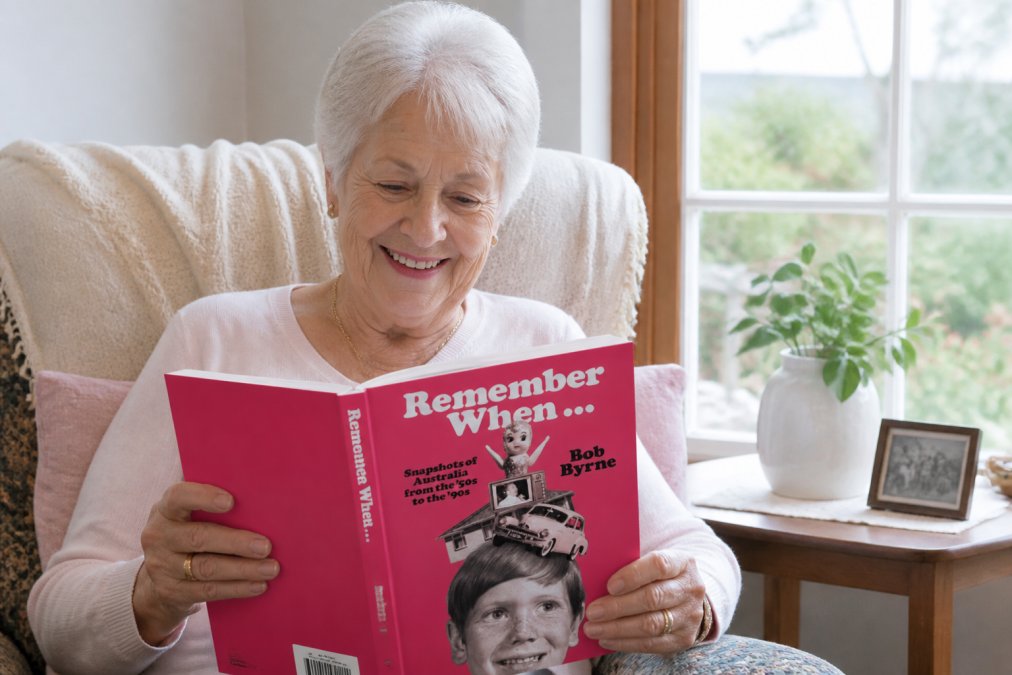
If your mother turned 70 this year, she was born in 1956 and grew up through the 1960s and 1970s, formative decades in Australian culture. A book like Remember When: Snapshots of Australia 1950s-1980s from Remember When Shop ($39.99) will contain photographs from the exact years she remembers most vividly. She'll see the cars her parents drove, the shops on her local high street, the fashion she wore as a teenager.
The personalisation comes from the match between the book's era and the recipient's lived experience. A 65-year-old who grew up in Melbourne will find Melbourne Remember When ($34.99) speaks directly to their memories, the Coles Cafeteria, the Palais Theatre, the department stores on Bourke Street.

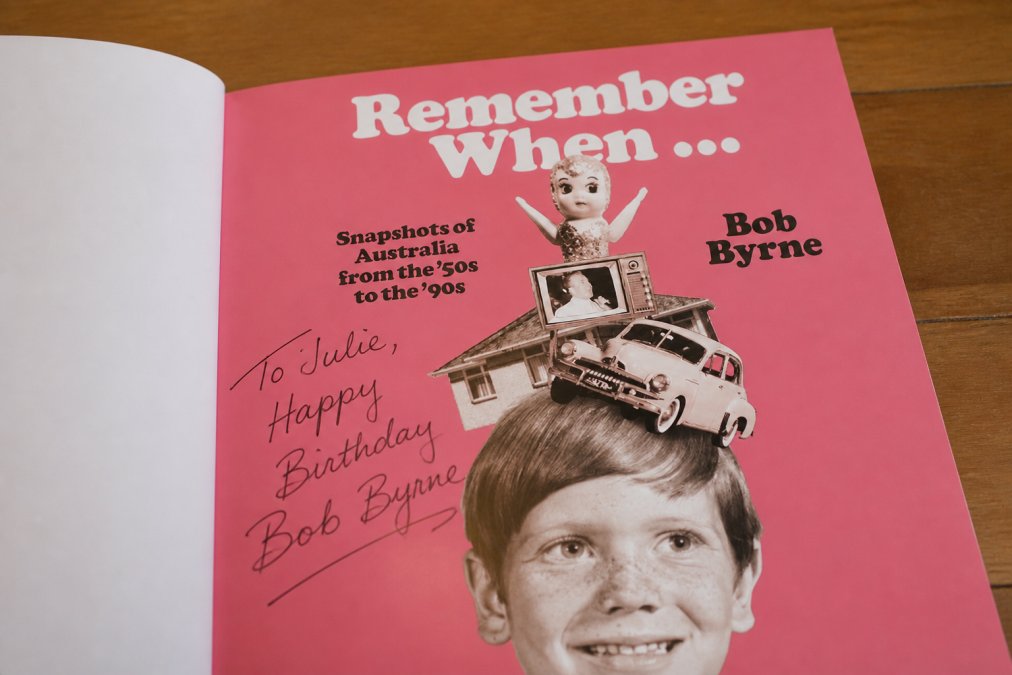
Author-signed copies add another layer of personalisation. The handwritten dedication transforms the book from a commercial product into a keepsake.
Commemorative Newspaper Reprints for Special Occasions
A historic newspaper from a specific milestone, a 50th wedding anniversary, a 90th birthday, or the day Australia won a major sporting event they attended, carries symbolic weight. This works best when paired with context and framing, which signals that you see this as a permanent keepsake.
The limitation is practical. Historic newspapers are single-use gifts. Once you've looked at them, the experience is largely complete. Nostalgia books reward repeated browsing.
Benefits of Signed Nostalgia Books for Reminiscence and Memory
Research on reminiscence therapy is clear: engaging with memories of significant life periods improves mood, reduces anxiety, and facilitates social connection (peer-reviewed research). Nostalgia books work as tools for this purpose because they're designed to trigger broad memory networks.
Emotional Connection and Keepsake Value
A signed nostalgia book from Remember When Shop becomes a personal artefact in a way that unsigned copies don't. The author's handwritten inscription creates a connection between the recipient and the creator. For older adults, this transforms the book from a commercial product into something that feels chosen and valued.
This emotional dimension is particularly important for people in aged care. A resident who receives a signed nostalgia book receives evidence that someone outside their immediate family thought of them and invested in making it personal.
The keepsake value is enduring. A signed nostalgia book becomes something a person keeps on their bedside table, displays on their bookshelf, shows to visitors. It's not consumed and discarded like most gifts. unique housewarming gifts.
Effectiveness in Dementia Care and Aged Facilities
Carers in aged care have reported that nostalgia books from Remember When Shop are effective tools for reminiscence therapy (the NIH). The combination of familiar photographs, decade-specific content, and the tactile experience of handling a substantial hardcover book engages multiple sensory and cognitive pathways.
For someone with dementia, the book doesn't require them to retrieve specific facts from memory (peer-reviewed research). Instead, the photographs prompt associative memory. Seeing a photograph of a 1960s Australian street might not trigger the exact address, but it triggers the feeling of that place, the people who lived there, the daily rhythms of life.
The repetition is valuable too. A person with dementia might look at the same nostalgia book multiple times in a week, and each time the photographs still prompt memories. Staff report that introducing nostalgia books into group activities creates moments of genuine connection and engagement.
Authenticity, Curation, and Historical Record
Historic newspapers are primary sources, unedited documents from a specific moment. This authenticity has real value for understanding exactly what information was available on a particular date. But this authenticity comes with a limitation: bias. A newspaper from 1964 reflects the editorial perspective of that paper, the advertising priorities of that era, the cultural assumptions of the time.
Nostalgia books are explicitly curated. The Remember When Shop team selects photographs from thousands of submissions, choosing images that tell a coherent story about a place or era. This curation is an editorial choice reflecting decisions about what's worth remembering and what defines a period.
This curation is actually a strength for gift-giving and reminiscence purposes. A nostalgia book is designed to evoke feeling and memory, not to serve as a historical archive. The photographs are chosen because they resonate, because they capture something true about the era, because they're likely to trigger recognition and memory.
Remember When Shop's books are transparent about their sources. The photographs come from readers and followers of the Australia Remember When Facebook page, from personal collections, from archives. There's no pretence that these are objective historical documents. They're curated collections, and that's their strength.
Cost-Benefit Analysis: Value for Money
Nostalgia books from Remember When Shop range from $29.99 to $39.99 for author-signed copies. Historic newspaper reproductions can range from $15 to $40 depending on the publication and paper quality. On the surface, the prices look comparable.
But the value proposition differs significantly. A historic newspaper is a single-use experience. The primary engagement is limited.
A nostalgia book is a multi-use object rewarding repeated browsing. A person might spend an evening with it, then return weeks later and notice details they missed. They might show it to family members and have conversations about the photographs. The engagement extends over months and years.
For aged care facilities considering bulk orders, the cost-benefit shifts further in favour of nostalgia books. A single book can be used with multiple residents in group reminiscence sessions. The durability means it will survive months of handling. The value per use becomes very attractive.
The author-signed element adds perceived value without adding significant cost. A handwritten inscription transforms a $34.99 book into something that feels more personal and valuable.
Digital vs Physical Preservation: Why Tangible Matters
You could theoretically find digital images of historic newspapers online or access photographs of Australian life from the 1950s-1980s through digital archives. Why choose a physical book?
Physical objects engage memory differently than digital images. Handling a book, feeling the weight of it, turning pages, encountering images you didn't expect to see, triggers different kinds of cognitive engagement than scrolling through images on a screen.
For older adults and people with dementia, this distinction is particularly important. A physical book is tactile and present in the room. It doesn't require navigating technology. You open it and engage with it immediately.
The permanence matters too. A digital archive might be reorganised, taken offline, or become inaccessible if the hosting platform changes. A physical book persists. It's owned, not accessed. It can be passed to the next generation.
For reminiscence therapy and memory care, the physical book is the superior choice. Carers in aged facilities specifically request physical nostalgia books rather than digital alternatives.
Which Option Should You Choose?
Choose a historic newspaper if you're commemorating a specific date that holds significance, want an authentic primary source document from a particular moment, plan to frame it and display it, or are looking for a single, symbolic gift.
Choose a nostalgia book if you want a gift that rewards repeated browsing, the person values reconnecting with the broader culture and daily life of an era, you want something that will facilitate conversation and memory-sharing, you're selecting a gift for someone in aged care, or you want a gift that feels personal and curated specifically for them.
For most gift-givers, nostalgia books from Remember When Shop represent the better value and the more versatile gift. They're complete objects that deliver ongoing engagement. Author-signed copies add a personal touch that transforms them into keepsakes. The durability means they'll be handled and enjoyed for years.
If you're shopping for an older adult reconnecting with Australian nostalgia, Australia Remember When ($34.99) or Remember When: Snapshots of Australia ($39.99) deliver the breadth and depth that make a meaningful gift. For someone with specific geographic memories, city-specific collections like Melbourne Remember When or Adelaide Remember When: The Boomer Stories ($29.99) create an even more personal match.
The choice between historic newspapers and nostalgia books isn't really about the format. It's about whether you're commemorating a moment or celebrating an era. For most gift-givers, celebrating an era with all the texture and depth that a curated nostalgia book provides is the more rewarding choice.
The challenge with choosing the right gift for an older adult isn't finding something nostalgic. It's finding something that honours their memories while delivering genuine engagement and joy. Remember When Shop specialises in exactly this, curating decade-specific nostalgia books with author-signed personalisation, designed to evoke cherished memories and facilitate reminiscence. Whether you're shopping for a milestone birthday, an anniversary, or a gift for a loved one in aged care, the Remember When Shop collection offers the depth, durability, and personal touch that transform a gift into a keepsake. Explore Remember When Shop's collection of author-signed Australian nostalgia books
Frequently Asked Questions
What is the difference between a historic newspaper book and a nostalgia book?
Historic newspapers are reprints of original front page headlines and articles from specific dates, preserving journalistic integrity and primary source material. Nostalgia books, like those from Remember When Shop, combine curated collections of photographs, personal memories, and stories organised by decade or region. Newspapers focus on major events; nostalgia books capture everyday life, cultural moments, and personal connections. Nostalgia books often include author signatures, adding keepsake value. Both offer historical record, but nostalgia books emphasise emotional resonance and personal memory triggers, making them particularly effective for reminiscence therapy and aged care settings.
Why are signed nostalgia books considered better gifts for elderly relatives?
Signed nostalgia books combine multiple gift benefits: they evoke cherished memories through curated photographs and decade-specific content, provide a tangible keepsake with author authentication, and offer deeper emotional connection than unsigned reprints. The author's signature transforms the book into a collectible, increasing sentimental value. For seniors, these books trigger conversation and engagement with family members, and customer feedback highlights their effectiveness in dementia care and reminiscence therapy. The personalised touch, whether through the author's signature or the book's focus on specific regions like Melbourne or Adelaide, makes the gift feel intentional and thoughtful rather than generic.
Are historic newspaper books worth the money compared to nostalgia books?
The answer depends on your goal. Historic newspapers excel at capturing major events and maintaining journalistic integrity, ideal if you want a specific date or headline. However, nostalgia books typically offer better value for gift-giving: they contain 200+ photographs, 250+ pages of curated content, decade-spanning coverage, and often include author signatures. At $29.99-$39.99, nostalgia books provide more touchpoints for memory stimulation. Newspaper reprints, while valuable as primary sources, may sit unused unless the recipient has a specific interest in that exact date or event. For meaningful gifts and reminiscence therapy, nostalgia books deliver stronger emotional return and engagement.
How do I know a nostalgia book will actually help someone with dementia or in aged care?
Nostalgia books are recognised tools in reminiscence therapy, a validated approach in aged care and dementia support. They work by triggering long-term memories through visual and contextual cues, photographs of familiar places, vehicles, shops, and everyday scenes from the person's formative years. Books like Remember When: Snapshots of Australia and Australia Remember When have been widely praised by carers and healthcare professionals for stimulating conversation and engagement. The decade-specific format ensures content matches the person's lived experience. Start with a book covering the years they'd remember (1950s-1980s), and use it as a conversation starter during visits. Many aged care facilities have found these books valuable for group activities and one-on-one reminiscence sessions.
What makes Remember When Shop's nostalgia books different from generic nostalgia books available elsewhere?
Remember When Shop specialises in curated Australian nostalgia with author-signed copies, decade-specific regional focus (Adelaide, Melbourne, Australia-wide), and content sourced from community memories and historical archives. Books like Australia Remember When feature over 200 photographs and 250+ pages of Baby Boomer-era memories. The author, Bob Byrne, has 40 years of media experience and runs the Australia Remember When Facebook page with 375,000+ followers, ensuring authenticity. Many copies are personally signed, adding collectible and keepsake value. The books are specifically designed for reminiscence therapy and have been endorsed by aged care professionals, distinguishing them from generic retailers' offerings.
This article was written using GrandRanker