
8 Must-Read Colonial History Books That Bring the Past Alive
Last Updated: October 25, 2026
Quick Summary
Colonial history books tell the foundational stories of Australia's settlement, survival, and struggle, exploring how European settlers arrived and transformed the landscape while acknowledging the complex relationships between settlers and Indigenous peoples. The best colonial history books balance multiple perspectives, including First Nations voices, convict experiences, and frontier conflicts that shaped the nation.
- Dark Emu by Bruce Pascoe is the most common entry point for readers wanting to understand pre-colonial Aboriginal agriculture and land management
- The Fatal Shore by Robert Hughes is the best-known narrative history of convict transportation to New South Wales, published in 1986
- Henry Reynolds' The Other Side of the Frontier is the foundational study of Aboriginal resistance to European expansion
- Historical fiction like The Secret River by Kate Grenville uses researched settings and real events as a backdrop for invented characters and dialogue
- Carers have found colonial history books particularly helpful in reminiscence therapy for people with dementia and memory loss
Table of Contents
- Why Colonial History Books Matter to Older Readers
- Books About Early Colonial Australia That Shaped the Nation
- First Nations History Books Australia: Indigenous Voices and Perspectives
- Australian Colonial Historical Fiction That Brings Stories to Life
- Australian History Books for Beginners: Where to Start Your Journey
- How to Choose the Right Colonial History Book for Your Needs
- Finding Your Next Colonial History Book
- Frequently Asked Questions
Why Colonial History Books Matter to Older Readers
Reading colonial history books connects you to the world you lived through, bringing back memories of how Australia was shaped and the stories your grandparents told.
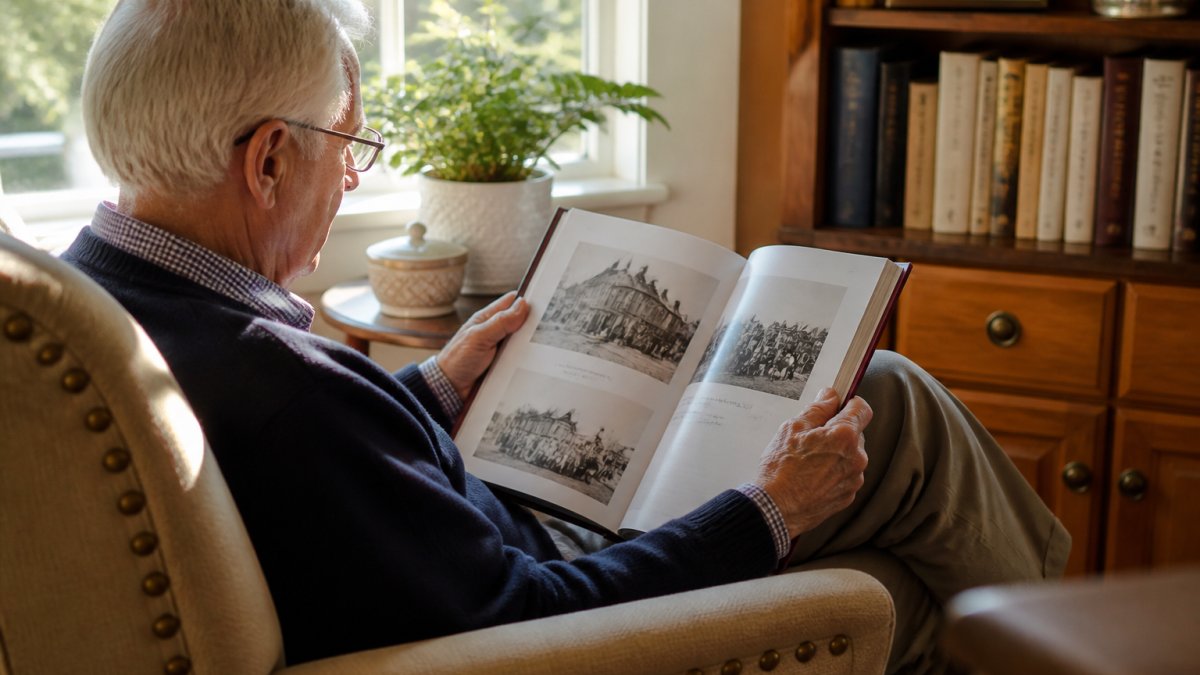
For many people aged 60 and over, colonial history isn't just academic, it's personal. Find Australian history books specifically recommended for elderly readers to discover titles that resonate with your life experience.
Carers and healthcare professionals have found that colonial history books work particularly well in reminiscence therapy. Learn about the benefits of reminiscence therapy for seniors to understand how this approach supports memory and wellbeing. When someone with dementia or memory loss reads about the era they remember, it can trigger conversations, smiles, and moments of clarity (pubmed.ncbi.nlm.nih.gov). Our nostalgia books (particularly Australia Remember When and Remember When: Snapshots of Australia 1950s - 1980s) have been widely recognised as helpful by carers in aged care and those working with people with dementia. Explore reminiscence therapy books specifically chosen for dementia and memory care to find resources tailored to your needs.
Books About Early Colonial Australia That Shaped the Nation
Early colonial history books tell the foundational stories of settlement, survival, and struggle, exploring how the first European settlers arrived and transformed the landscape and society.
Several key themes run through books about early colonial Australia: convict transportation, which brought thousands of people to Australia as punishment or labour; squatters who claimed vast tracts of land, often in conflict with First Nations peoples; and the Gold Rush, which brought waves of migration and transformed towns overnight.
When choosing books about early colonial Australia, look for ones that balance multiple perspectives.
First Nations History Books Australia: Indigenous Voices and Perspectives
Understanding First Nations history is essential to understanding colonial Australia. Indigenous Australians had lived on this continent for tens of thousands of years before European arrival.
Many colonial history books have historically overlooked or minimised First Nations perspectives. That's changing.
Reading books about First Nations history Australia alongside settler accounts gives you a fuller picture. You'll understand the Frontier Wars, the conflicts that occurred as settlers expanded into traditional lands.
Australian Colonial Historical Fiction That Brings Stories to Life
Historical fiction brings colonial Australia to life in ways that straight history sometimes cannot.
Australian colonial historical fiction often weaves real historical events into compelling narratives. A character might be a convict on the First Fleet, a squatter claiming land in the outback, or a shopkeeper in a gold rush town.
The best Australian colonial historical fiction doesn't shy away from the hard truths.
Australian History Books for Beginners: Where to Start Your Journey
If you're new to colonial history, the fastest way in is a short, sequenced reading pathway rather than a random pile of recommendations. The list below is organised chronologically, pre-colonial Country, invasion and early settlement, frontier conflict, and later colonial society, so each book builds on the last. Every title is widely held and available through most public libraries and bookshops; brief notes flag the genre and what each book does best.
Stage 1: Pre-colonial and deep history
- Dark Emu by Bruce Pascoe (nonfiction, 2014), A short, accessible argument about Aboriginal agriculture and land management before 1788. It is the most common entry point for readers who want to understand that the continent was not 'empty' or 'primitive' at contact. Read it as a provocation that has generated significant public debate, not as a final word.
- The Original Australians by Josephine Flood (nonfiction, revised editions), A more conventional archaeological and anthropological overview of Aboriginal Australia before and during colonisation. Pairs well with Pascoe because it supplies the scholarly scaffolding.
Stage 2: Invasion, settlement and the convict system
- The Fatal Shore by Robert Hughes (nonfiction, 1986), The best-known narrative history of convict transportation to New South Wales. It is vivid and readable, though later scholarship has qualified some of its claims; treat it as a strong narrative introduction rather than the last word.
- The Convict Valley by Mark Dunn (nonfiction, 2020), A more recent, locally grounded account of convict life and settlement in the Hunter region. Useful for readers who want social history from the ground up rather than a grand narrative.
- 1788 by Watkin Tench (primary source, first published 1789; modern editions widely available), A first-hand account by a First Fleet officer. Read it alongside a modern history to see how contemporary assumptions shaped what was recorded and what was left out.
Stage 3: Frontier conflict and First Nations resistance
- The Other Side of the Frontier by Henry Reynolds (nonfiction, 1981), The foundational study of Aboriginal resistance to European expansion. Short, clearly written, and essential for understanding why 'settlement' is a contested word.
- Forgotten War by Henry Reynolds (nonfiction, 2013), A concise account of the frontier wars as a genuine military conflict. A good follow-up if you want the argument stated plainly.
- Talking to My Country by Stan Grant (memoir/essay, 2016), A Wiradjuri journalist's personal and historical reflection on dispossession and identity. Short enough to read in an evening and useful for connecting the colonial past to the present.
Stage 4: Gold, expansion and colonial society
- The Rush That Never Ended by Geoffrey Blainey (nonfiction, 1963; later editions), The standard history of Australian mining, including the gold rushes and their social and economic effects. Dense but rewarding; skim the technical chapters if you want the social history.
- The Australian Colonial Experience edited collections and regional histories, For readers who want to go deeper into a particular colony or region, local historical societies and state libraries publish accessible regional histories that are often overlooked by national reading lists.
If you prefer fiction as your entry point, start with a well-regarded colonial novel (see the historical fiction section above) and then read the nonfiction behind it. The combination is usually more memorable than either alone. Deepening your understanding of these eras often requires exploring more historical non-fiction to bridge the gap between imaginative storytelling and the documented realities of the past.
How to Choose the Right Colonial History Book for Your Needs
Choosing well comes down to three questions: what kind of evidence you want, whose perspective you want to hear, and how much time and difficulty you want to take on. The guidance below uses named examples so you can see the difference rather than just read about it.
History, Fiction, Memoir, and Primary Sources: What's the Difference?
History books present researched, documented accounts written by historians who weigh primary sources and other scholarship.
Historical fiction uses real events as a backdrop for invented characters.
Memoirs are first-hand accounts by people who lived through the events. Example: Watkin Tench's 1788 is a First Fleet officer's account.
Primary sources are documents, letters, photographs, or objects from the period itself.
Matching the Book to Your Goal
| Your goal | Best genre | Named example to start with | What to watch for |
|---|---|---|---|
| Get the big picture quickly | Nonfiction overview | The Fatal Shore by Robert Hughes | Older narrative histories may reflect the assumptions of their time; pair with a recent First Nations-centred work |
| Understand First Nations perspectives | Nonfiction or memoir | Dark Emu by Bruce Pascoe; Talking to My Country by Stan Grant | Check the author's background and whether the book is argued from primary sources or synthesis |
| Feel what the period was like | Historical fiction | The Secret River by Kate Grenville | Fiction compresses and invents; use it as an emotional entry point, not a factual reference |
| Hear an authentic voice | Memoir or primary source | 1788 by Watkin Tench | Primary sources carry the biases of their authors and era; read the editor's introduction |
| Study a specific region or topic | Regional or topic history | Local historical society publications; The Rush That Never Ended by Geoffrey Blainey for mining | Regional histories are often overlooked by national lists but are usually more concrete |
| Share reading with an older relative or care resident | Illustrated or photographic history | Period-photograph collections and decade-specific nostalgia books | Prioritise visual content, familiar settings, and manageable length over scholarly depth |
A Note on Balance
The most common mistake general readers make is reading only one side of the story. A settler narrative without a First Nations-centred work, or a frontier-conflict account without a sense of pre-colonial society, gives you a partial picture.
Once you know which genre and perspective you want, recommendations from librarians, local history groups, and readers with similar interests become far more useful, you can ask a specific question ('a short First Nations-centred history of the frontier') rather than a general one.
Finding Your Next Colonial History Book
Start by identifying what draws you: a particular period (the convict era, the Gold Rush, the Frontier Wars), a region you know or have wondered about, or First Nations history, settler stories, or both.
| Selection Criteria | Best For | What to Look For |
|---|---|---|
| Broad overview | Beginners new to colonial history | Clear structure, accessible writing, covers major periods |
| First Nations focus | Understanding Indigenous perspectives | Author background, balanced treatment, primary sources included |
| Regional history | Learning about a specific area | Local detail, community stories, maps or photographs |
| Historical fiction | Emotional engagement with the period | Strong narrative, authentic historical detail, diverse perspectives |
| Memoir or primary sources | Authentic voices from the past | Original documents, clear historical context, readability |
| Reminiscence therapy | Memory engagement and conversation | Photographs, familiar settings, sensory detail, manageable length |
Once you've identified what you're looking for, seek recommendations from librarians, local history groups, or online communities of history readers. Ask friends and family what colonial history books they've found meaningful.
The Remember When Shop specialises in curating collections that celebrate Australian nostalgia and history.
Frequently Asked Questions
What are the best must-read colonial history books for someone new to the topic?
Start with books that combine accessible narrative with strong historical grounding. Look for works that cover early settlement, convict transportation, and the experiences of both settlers and First Nations peoples. Titles that blend primary sources with modern context help beginners understand how colonisation unfolded without overwhelming detail. Many readers find decade-specific photo books valuable because visual memories often trigger personal recollection and engagement with the broader historical timeline.
Are colonial history books effective for reminiscence therapy with dementia patients?
Yes. Books featuring photographs, personal stories, and familiar historical periods can stimulate memory and conversation in aged care settings. Visual content paired with narrative about everyday colonial life often resonates more strongly than abstract history. Carers report that books covering specific decades or local regional history encourage residents to share their own memories and experiences, making them valuable tools for engagement and connection.
How do I choose between a colonial history book and historical fiction about the same period?
History books prioritise documented facts, primary sources, and scholarly analysis of events and people. Historical fiction uses real settings and sometimes real figures but weaves in imagined dialogue, internal thoughts, and plotlines. For learning specific facts about convict transportation or frontier conflict, choose history. For emotional immersion in how people experienced colonisation, choose fiction. Many readers benefit from reading both to gain factual knowledge and human perspective.
Which colonial history books include First Nations perspectives?
An increasing number of modern colonial history books centre Indigenous voices and experiences. Look for titles that cover frontier conflict, land dispossession, and deep time (ancient Australia before colonisation). Books that acknowledge both settler and First Nations accounts provide more complete understanding of colonisation's impact. First Nations authors writing about their own history offer authentic perspective that complements settler-focused narratives.
Reading colonial history books is more than an intellectual exercise, it's a way of honouring the past and understanding yourself. Whether you're exploring the convict system, the Gold Rush, or First Nations resilience, these books offer connection, insight, and the chance to relive and reflect on the eras that shaped you and the nation. Start with what calls to you, and let the stories guide your journey through Australia's complex and fascinating colonial history.
