

Nostalgia Books vs Generic History: Which Works Best
Table of Contents
- Nostalgia Books vs Generic History: What's the Real Difference
- The Emotional Connection to Childhood Memories
- Why Choose Signed Nostalgia Books for Meaningful Gifts
- Benefits of Decade-Specific Photo Books
- Best History Gifts for Seniors and Milestone Occasions
- Evaluating Quality: What Distinguishes Premium Nostalgia Books
- Conclusion
Last Updated: August 24, 2026
Nostalgia Books vs Generic History: What's the Real Difference
Nostalgia books are curated collections celebrating specific times, places, and everyday moments through photographs, personal stories, and cultural memories. Generic history presents factual timelines and broad narratives designed to educate rather than evoke. At Remember When Shop, we've built our collection around the principle that the right nostalgia book unlocks conversations, triggers vivid memories, and creates emotional connection in ways traditional history texts cannot.
The distinction matters most when the goal is emotional resonance rather than factual comprehension. This guide explores what sets nostalgia books apart, why they work for specific audiences, and how to choose based on your actual needs.
Defining Nostalgia vs Historical Fact
Nostalgia is a sentimental longing for the past, typically focused on personal or collective memories of a specific era. It's emotionally driven and subjective, what feels nostalgic to someone who grew up in 1960s Melbourne might mean nothing to someone from 1980s Sydney.
Generic history is factual narrative. It documents what happened, when, and why, without necessarily prioritising emotional weight. A generic history book about the 1950s might explain postwar economic policy; a nostalgia book shows milk bottles on doorsteps, corner shops, and the feeling of summer nights.
The key tension: historical accuracy and nostalgic resonance don't always align. A nostalgia book might gloss over difficult truths to preserve warmth of memory. A history book might present facts so clinically they fail to connect with lived experience. Neither is wrong, they solve different problems.
Curated Content vs Broad Coverage
Nostalgia books are deliberately selective, focusing on a particular place, decade, or cultural thread. This curation creates intimacy and specificity. Generic history aims for comprehensiveness, covering multiple perspectives and competing narratives. This breadth is valuable for learning but can dilute emotional impact.
When you open Australia Remember When, you're getting over 200 carefully selected photographs of everyday life from the 1940s to 1980s, the things people actually remember and miss (nla.gov.au). That's curated content designed to spark recognition, not traditional education.

The trade-off is real. A curated nostalgia book won't give you political context or economic forces shaping an era. If that's what you need, a history text is right. But if you need to reconnect someone with their own past's texture, curation wins.
The Emotional Connection to Childhood Memories
Memory is a web of emotions, sensations, and associations. When someone sees a photograph of a 1950s Adelaide street, they're not just seeing architecture, they're feeling summer heat, hearing childhood sounds, maybe smelling the ice cream van.
Nostalgia books excel here. They trigger layered, embodied memories in ways abstract historical facts cannot. A generic history book might tell you milk delivery was common in postwar Australia. A nostalgia book shows the milkman's horse and cart, the glass bottles, the routine, and suddenly someone who lived through it is transported.
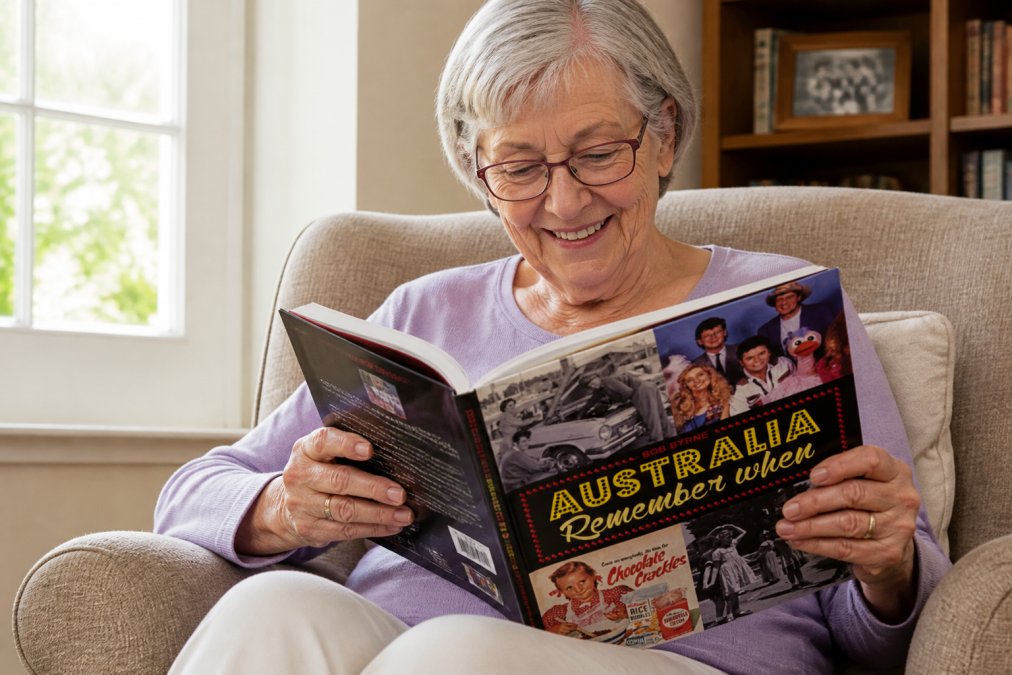
Healthcare professionals recognise this power (peer-reviewed research). Reminiscence therapy uses memories and memorabilia to engage people with cognitive decline, relying on exactly this principle. The emotional resonance of a familiar image opens pathways direct questioning cannot. A person with advancing dementia might not answer "What did you do in the 1960s?" but might light up seeing a familiar street corner or beloved landmark.
Generic history is more intellectual, it asks you to think about the past and understand it within broader context. That's valuable, but it doesn't necessarily touch emotional centres driving memory and connection. For reconnecting with lived experience, nostalgia books offer something more immediate and personal. choosing sentimental gifts.
Why Choose Signed Nostalgia Books for Meaningful Gifts
Signed copies carry something generic history texts cannot: the author's personal endorsement. When you give someone a book signed by Bob Byrne, author of Australia Remember When or Melbourne Remember When, you're giving them a tangible connection to someone who curated and celebrated the very memories they treasure.
This matters for gift-giving psychology. A signed book is a keepsake signalling thoughtful choice that acknowledges the recipient's specific history and interests. It's not interchangeable with a generic history text ordered in bulk.
Many carers working with older adults find signed nostalgia books carry additional weight in reminiscence therapy. The author's signature becomes a conversation starter itself. For milestone occasions, 70th birthdays, anniversaries, retirements, a signed nostalgia book signals genuine understanding and respect for the recipient's past.
Benefits of Decade-Specific Photo Books
Decade-specific books go deep rather than broad. A book focused on the 1950s shows fashion, cars, shops, entertainment, and everyday routines in one concentrated narrative. A 75-year-old who grew up in Adelaide in the 1950s has specific memories; a generic Australian history book covering 1900-2000 contains maybe 10-15% relevant material, while a decade-specific book is 100% relevant.
How Decade-Specific Books Enhance Reminiscence Therapy
Reminiscence therapy works best when content precisely targets lived experience (the NIH). This precision drives engagement, when every page contains something recognisable, the therapeutic effect strengthens. The person actively engages with every image rather than skimming irrelevant content.
Material Culture and Everyday Objects in Nostalgic Narrative
Nostalgia books focus on material culture, milk bottles, wireless sets, corner shops, cars, clothes. These objects carry emotional weight tied to specific moments and feelings. Generic history treats material culture as background detail; nostalgia books make it central, validating lived experience rather than subordinating it to larger narratives.
Best History Gifts for Seniors and Milestone Occasions
Choosing a gift for an older adult requires understanding what they want from a book. Are they reconnecting with their own past, or learning new historical information? The answer determines whether a nostalgia book or generic history text is right.
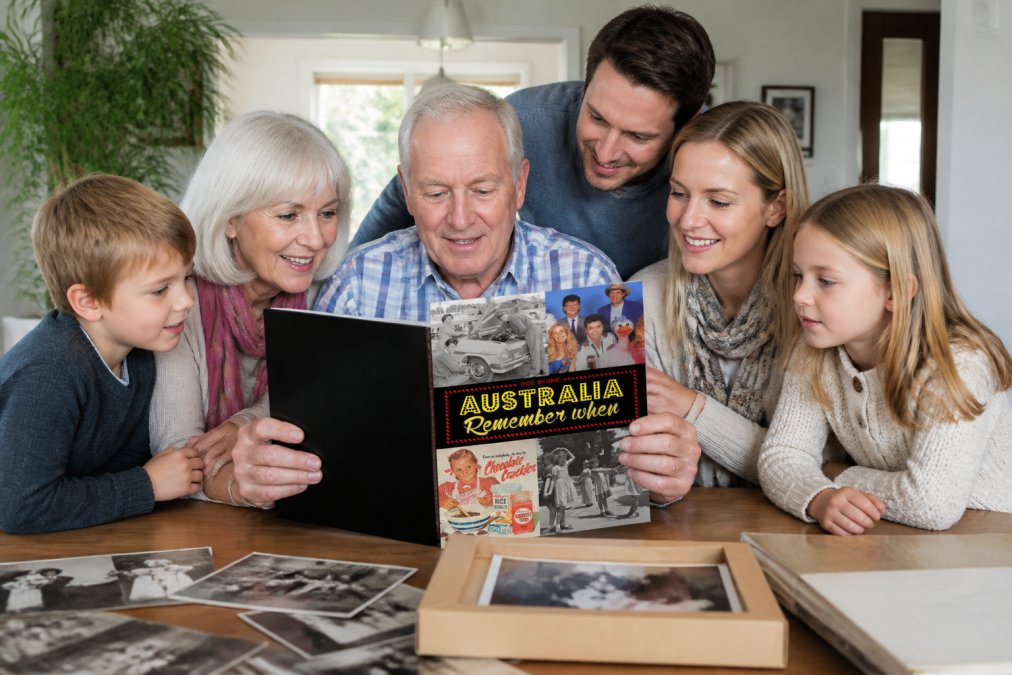
For milestone occasions, nostalgia books almost always outperform generic history. They honour the person, acknowledge their journey, and create reflection and connection. Generic history can be right in specific contexts, if the recipient actively reads history, enjoys broader contexts, and has expressed interest in particular periods. But if uncertain, or if the goal is emotional connection rather than education, a nostalgia book is the safer, more meaningful choice.
Gift-Giving Psychology and Personal Identity
Gifts communicate identity. A generic history book says, "I think you're interested in learning." A signed nostalgia book says, "I understand your past, I respect your memories, and I've chosen something celebrating who you are."
For older adults, this distinction is significant. Many have spent decades building identities rooted in lived experience. A gift honouring that experience resonates differently than one framed primarily as educational. For people with dementia, a signed copy becomes more than a book, it's a tool for reconnection and a symbol of respect.
Evaluating Quality: What Distinguishes Premium Nostalgia Books
Not all nostalgia books are equal. Premium ones are genuinely curated, thoughtfully designed collections.
Curation and editorial vision. Premium nostalgia books have clear point of view. Australia Remember When, with over 200 carefully selected photographs spanning the 1940s to 1980s, represents years of curation, different from generic photo collections.
Specificity of content. Premium books focus on defined geography, decade, or theme. Melbourne Remember When is about Melbourne specifically. This specificity creates resonance.
Quality of production. Premium nostalgia books are keepsakes using quality paper, thoughtful typography, and careful image reproduction. Generic history texts prioritise information density; nostalgia books recognise the reading experience matters.
Author presence and authenticity. Signed books carry additional credibility. Bob Byrne's signature on Australia Remember When provides personal endorsement beyond curation.
Relevance to lived experience. Premium nostalgia books are designed for people who lived through the era. Every page should contain something recognisable.
| Criterion | Nostalgia Books | Generic History |
|---|---|---|
| Emotional resonance | High, designed to trigger memories | Lower, focused on facts |
| Specificity | Decade, place, or theme-focused | Broad coverage across time periods |
| Curation | Selective, editorial vision | Comprehensive, encyclopedic |
| Gift-giving value | High, personal and meaningful | Moderate, educational but impersonal |
| Use in reminiscence therapy | Highly effective | Limited effectiveness |
| Production quality | Premium, designed as keepsake | Functional, prioritises content |
| Relevance to lived experience | Very high for target audience | Variable depending on reader |
The choice between nostalgia books and generic history isn't about which is objectively better, it's about what you're accomplishing. For reconnecting someone with their past, sparking intergenerational conversation, supporting reminiscence therapy, or giving meaningful gifts, nostalgia books win. For understanding historical context, learning about broader trends, or studying unfamiliar periods, generic history is better.
For most gift-giving occasions involving older adults, especially for therapeutic purposes, premium nostalgia books like Australia Remember When or decade-specific collections deliver far more value than generic history. The difference is significant, it's between a book sitting on a shelf and one becoming a cherished keepsake and bridge between past and present.
At Remember When Shop, we've built our collection around this principle. Our signed nostalgia books connect to memory, honour lived experience, and serve as engagement tools in aged care and therapeutic settings. When you choose a nostalgia book over generic history, you're choosing emotional resonance and personal meaning over factual comprehensiveness. For the right person and occasion, that's what matters most.
Frequently Asked Questions
What is the fundamental difference between nostalgia books and generic history?
Nostalgia books focus on personal memories, everyday objects, and cultural moments that shaped individual lives, while generic history books emphasize factual events, dates, and broader historical narratives. Nostalgia books use subjective experience and collective memory to create emotional resonance; history books prioritise historical accuracy and documented evidence. For older adults, nostalgia books often feel more personally relevant because they celebrate the specific decade or city they lived through, not just what happened in history textbooks.
Why do nostalgia books make better gifts for elderly relatives than generic history?
Nostalgia books trigger authentic connection to personal memories, milkmen, local landmarks, childhood adventures, in ways generic history cannot. They're curated to reflect lived experience rather than academic overview. For people with dementia or memory concerns, decade-specific nostalgia books have been recognised by carers and healthcare professionals as powerful tools for reminiscence therapy, sparking conversation and engagement. Books like Australia Remember When (over 200 photos, 250+ pages, $34.99) are specifically designed to evoke happy memories and create intergenerational discussion.
How do decade-specific photo books differ from general history textbooks?
Decade-specific photo books focus on everyday life, fashion, vehicles, entertainment, and local culture within a defined period, say the 1950s-1980s, using photographs and anecdotal evidence. General history textbooks cover broad events, political movements, and documented facts across longer timeframes. Photo books emphasise material culture and social history; textbooks emphasise historical context and factual accuracy. For gift-giving and reminiscence, decade-specific books are superior because they match the exact years someone remembers and celebrate the ordinary moments that defined their youth.
Are signed nostalgia books considered better keepsakes than unsigned copies?
Signed copies add authentic personal connection and lasting value as keepsakes. When authored by someone like Bob Byrne, whose work is curated from community memories and lived experience, a signed copy becomes a tangible link to both the author's voice and the collective past they've captured. Many customers report that author-signed editions feel more meaningful as milestone gifts (birthdays, anniversaries) and are treasured as heirlooms. The personalisation elevates the book from a retail purchase to a cherished memento.
Can nostalgia books be used effectively in aged care or dementia support?
Yes. Carers and healthcare professionals working with dementia patients have recognised decade-specific nostalgia books as valuable reminiscence therapy tools. Books like Australia Remember When and Remember When: Snapshots of Australia 1950s-1980s stimulate memory, facilitate conversation, and provide comfort through familiar imagery and shared cultural memory. The evocative photographs and anecdotal narratives encourage storytelling and emotional engagement, making them practical resources for aged care facilities and family carers supporting older adults.
This article was written using GrandRanker