
Preserve Family Memories with Australian History Books
Table of Contents
- Why Preserving Family Memories Matters
- Step 1: Gather and Collect Family Stories and Heirlooms
- Step 2: How to Write a Family Memoir That Connects to Australian History
- Step 3: Using Historical Timelines for Genealogy and Context
- Step 4: Preserving Family Archives Through Digital and Physical Methods
- Step 5: Self-Publishing Your Family History Book
- Using Decade-Specific Australian History Books to Anchor Family Memories
- Frequently Asked Questions
Last Updated: September 3, 2026
Why Preserving Family Memories Matters
Families are the foundation of our identity, yet so many of us let precious memories slip away. Without deliberate effort, the stories that shaped us, the everyday moments, the voices of those we've loved, the context of our lives, disappear within a generation or two. This is where the practice of preserving family memories becomes essential, particularly when woven together with the historical backdrop that gives those memories meaning.
When you preserve family memories, you're not just keeping photographs safe. You're creating a bridge between generations. You're anchoring personal stories in the broader narrative of Australian history, which gives them weight and significance. A photograph of your grandmother at her kitchen table in 1962 becomes richer when you know what was happening in Australia that year, the cultural shifts, the everyday details of life, the broader context that shaped her experience.
The Remember When Shop understands this deeply. Their curated collection of decade-specific Australian history books, particularly titles like Australia Remember When and Photos and Memories of Australia from the 1950s, serve as both mirrors and anchors. They reflect the era your family lived through while providing the historical scaffolding that makes personal stories unforgettable.

Step 1: Gather and Collect Family Stories and Heirlooms
Before you can preserve anything, you need to know what you have. This first step is about taking inventory, not just of physical items, but of the stories that live in people's memories.
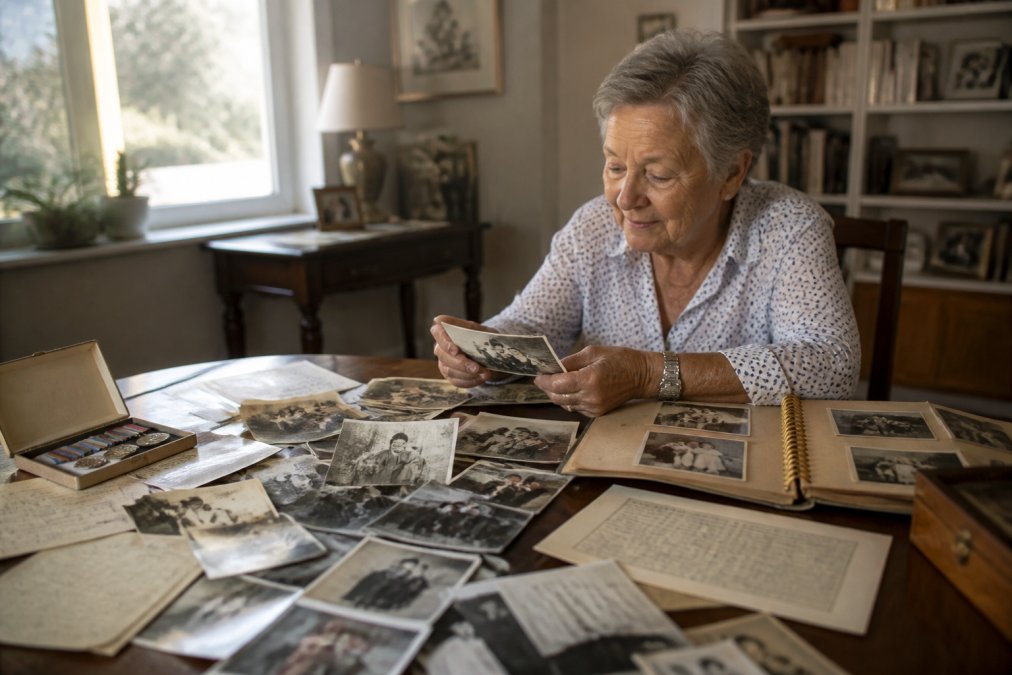
Start by identifying what's already in your home. Look for old photographs, letters, postcards, diaries, birth and marriage certificates, newspaper clippings, school reports, and any other documents that tell your family's story. Many people are surprised by what they find once they actually look: a box of slides in the attic, letters tied with ribbon, old bank statements that reveal where your grandparents lived and what they earned. These aren't just objects, they're primary sources that ground your family history in verifiable fact.
Next, conduct informal interviews with older family members. Ask them about their memories, their experiences, what life was like during the decades they lived through. What was school like? What were their first jobs? What do they remember about major events? Record these conversations if possible, audio or video. These oral history recordings become invaluable, especially when combined with historical context. When your grandmother describes rationing during the 1940s, that story gains dimension when you can reference the actual historical events she witnessed.
Don't overlook heirlooms and objects. A piece of furniture, a piece of jewellery, a tool, a recipe book, these carry stories. Who owned it? When did they get it? Why was it important to them? Objects trigger memories in ways photographs sometimes don't.
As you gather, organize loosely by era or by person. You don't need a perfect system yet, just a way to prevent items from scattering. Many families find that grouping by decade helps, especially when you're planning to connect family stories to Australian historical context. If your parents were born in the 1950s, you'll want their stories, photographs, and documents clustered together so you can later weave them with the historical narrative of that decade.

Step 2: How to Write a Family Memoir That Connects to Australian History
Writing a family memoir is different from simply collecting memories. It requires structure, narrative, and intentional connection to the broader historical moment. The goal is to create something that reads as a story, not a list.
Begin by choosing your narrative frame. Are you writing a chronological account of your family across generations? Are you focusing on one person's life? Are you organizing around major historical events and how your family experienced them? The Remember When Shop's decade-specific books offer a useful model here, they anchor personal stories within the specific cultural and historical context of each era. You might structure your family memoir similarly: "My Parents' 1960s" or "Growing Up in the 1970s: Our Family's Story."
Once you've chosen your frame, write scenes rather than summaries. Instead of "My father worked hard," write: "Every morning at 5:30 a.m., Dad would leave for the factory, his lunch tin packed with sandwiches wrapped in wax paper. On Saturdays, he'd spend hours in the garden, coaxing vegetables from soil that seemed determined not to yield." Scenes create emotional resonance. They let readers see and feel the past.
Use the primary sources you've gathered to anchor your narrative in fact. If you have a letter your grandmother wrote in 1952, quote from it. If you have a photograph of your parents' wedding, describe it in detail, what they wore, the setting, the faces of people in the background. These specific details make your memoir credible and vivid.
Connect your family's story to the historical moment. What was happening in Australia when your parents married? What economic conditions shaped their choices? What cultural shifts did they navigate? Books like Photos and Memories of Australia from the 1960s provide the historical texture you need. When you write about your mother's first job, you can reference the broader context of women's work in that era. When you describe your father's car, you can situate it within the history of Australian automotive culture.

Write in your own voice, not in the voice you think a memoir should have. Your family will remember how you actually speak. Authenticity matters more than formality. If your grandfather used particular expressions or had a distinctive way of telling stories, let that come through.
Step 3: Using Historical Timelines for Genealogy and Context
A historical timeline serves two purposes: it organizes your genealogy chronologically, and it anchors your family's story within the broader narrative of Australian history. This is where the work becomes richer.
Start by creating a simple family timeline. List birth dates, marriage dates, deaths, major moves, job changes, and significant events. Then, alongside each family entry, add the corresponding historical events. When your grandmother was born in 1928, what was happening in Australia? When your parents married in 1965, what was the cultural and economic context?
This juxtaposition is powerful. It shows how your family's personal timeline intersected with larger historical forces. A job loss in 1975 takes on different meaning when you understand the economic conditions of that year. A decision to migrate within Australia makes sense when you know about regional development and employment opportunities.
Use decade-specific Australian history books as your reference. Australia Remember When spans from the 1940s to the 1980s, providing photographs and context for each era. Photos and Memories of Australia from the 1950s offers detailed context for that specific decade, the end of rationing, the arrival of television, the dream of suburban life. When you're writing about your family's experiences in that decade, these books provide the historical scaffolding that makes your family's choices and experiences intelligible.
Create a visual timeline if it helps. You don't need anything elaborate, a simple document with years down the left side, family events in one column, and historical events in another. This becomes a reference tool as you write your family history. It prevents anachronisms (saying something happened before it was possible) and helps you understand causation (why your family made certain choices given the conditions they faced). collecting historical memorabilia.
Step 4: Preserving Family Archives Through Digital and Physical Methods
Once you've gathered, written, and organized your family history, you need to preserve it in ways that protect it from deterioration and loss. This means using both digital and physical preservation methods.
For physical items, the goal is to slow deterioration. Photographs should be stored in acid-free boxes or albums, away from direct sunlight, heat, and humidity (si.edu). Keep original documents in archival-quality folders. If you have fragile items, old letters, photographs, documents, consider having them professionally conserved before they deteriorate further. Many libraries and heritage organizations offer conservation advice.
Digitization is essential. Scan photographs at high resolution (at least 300 dpi for archival quality) (loc.gov). Create digital copies of documents, letters, and any handwritten materials. Store these digital files in multiple locations, not just on your computer. Use cloud storage as a backup, but also keep copies on external hard drives stored in a safe place. Digital files can be lost to hardware failure, so redundancy matters (nist.gov).
Organize your digital files logically. Use folder structures that reflect your organizational system: by decade, by person, by type of document. Name files clearly with dates and descriptions. "Photo_1965_Grandma_Kitchen.jpg" is more useful than "IMG_0043.jpg."
For audio or video recordings of family members, convert them to digital formats if they're not already. Old cassette tapes and video tapes degrade over time. Digital formats are more stable and easier to share.
Create a master document that explains your archive, what you have, where items are stored, how files are organized, and what any abbreviations or codes mean. This document is invaluable for family members who come after you. They'll understand your system and be able to maintain it.
Step 5: Self-Publishing Your Family History Book
Self-publishing has made it possible for families to create professional-quality books without the expense of traditional publishing. Your family history, once written and organized, can become a tangible book that multiple family members can own and treasure.
Start by choosing a self-publishing platform. Services like Blurb, Lulu, and IngramSpark allow you to upload a formatted document and order printed copies. You can create a single copy for yourself or order multiple copies to distribute to family members. The cost is reasonable, typically between $20 and $50 per book, depending on length and quality.
Format your manuscript properly. Use a clear, readable font (serif fonts like Garamond or Times New Roman work well for body text). Leave adequate margins. Include a title page, table of contents, and perhaps an introduction explaining the scope of your project. If you've included photographs, ensure they're high-resolution and properly positioned within the text.
Consider the structure of your book. Will you organize it chronologically? By person? By theme? A logical structure helps readers follow your family's story. Include chapter breaks, perhaps organized by decade or by generation. This mirrors the structure of books like Australia Remember When, which use decade-based organization to create natural narrative divisions.
Proofread carefully. Errors in a family history are particularly noticeable because family members will read it closely. Have someone else read it too, fresh eyes catch mistakes you've missed.
Before you finalize, decide on binding and paper quality. A hardcover book feels more substantial and lasts longer than paperback. Quality paper matters too, it affects how photographs reproduce and how the book feels in hand. These details make your family history feel like a proper book rather than a printout.
Once your book is published, consider creating multiple copies. One for yourself, one for your parents, one for siblings. Some families create enough copies to give one to each family member. This distributes your family history across the family, ensuring it survives even if one copy is lost.
Using Decade-Specific Australian History Books to Anchor Family Memories
The most effective way to preserve family memories is to anchor them in historical context. This is where decade-specific Australian history books become invaluable tools. They provide the broader narrative that gives your family's personal stories meaning and resonance.
Consider how Photos and Memories of Australia from the 1950s works. The 1950s were a transformative decade in Australia, the end of wartime rationing, the arrival of television, the beginning of suburban expansion, the emergence of teenage culture. If your parents were young in the 1950s, their experiences were shaped by these larger forces. A photograph of your mother in a new dress takes on different meaning when you understand the context of post-war optimism and consumer culture. Your father's first car becomes part of a larger story about Australia's relationship with automobiles and mobility.
The Remember When Shop's Australia Remember When spans multiple decades from the 1940s to the 1980s, making it a comprehensive reference for families whose stories span generations. As you write your family history, you can reference specific photographs and historical moments from the book, creating connections between your family's experiences and the broader Australian narrative.
This approach transforms family history from a collection of anecdotes into a coherent narrative. Your grandmother's story isn't just about her individual choices and experiences, it's about how she navigated the specific historical moment she lived through. This contextual framing makes family history more engaging, more understandable, and more memorable.
When you preserve family memories using this method, you're creating something that will resonate across generations. Future family members won't just have a collection of stories, they'll have a narrative that explains how their family fit into Australian history, how their ancestors responded to the challenges and opportunities of their time, and how those choices rippled forward to create the family they inherited.
Preserving family memories requires intention, but the process itself becomes a gift. When you gather stories, write them down, connect them to historical context, and create a permanent record, you're doing more than documenting the past. You're affirming that your family's experiences matter, that their choices and challenges are worth remembering, and that their story deserves to be told. The Remember When Shop's decade-specific Australian history books, available at rememberwhenshop.com.au and priced from $29.99, provide the historical framework that makes this work meaningful. Start today with the books and resources that will help you preserve what matters most to your family.
Frequently Asked Questions
How do Australian history books help preserve family memories?
Australian history books provide historical context that anchors personal memories to broader national events. When you read about the 1950s or 1960s in books like 'Photos and Memories of Australia from the 1950s', you reconnect with the era your family lived through. This contextual framework helps trigger forgotten details, validates the significance of everyday moments, and makes family stories more meaningful to younger generations who didn't experience that time.
What's the best way to structure a family history book that incorporates Australian historical events?
Organise your family memoir chronologically by decade, mirroring the structure of decade-specific Australian history books. Start with an introduction explaining your family's background, then work through each period, weaving personal anecdotes with the historical events happening around your family. For example, if your parents married in 1965, explain what was happening in Australia that year. Use primary sources (old photos, letters, documents) to support each section, and include a family tree early on so readers understand relationships.
Can nostalgia books actually help someone with dementia engage and remember?
Yes. Reminiscence therapy using decade-specific photo books has been recognised as helpful for people with dementia and older adults. Books like 'Australia Remember When' contain familiar imagery from the 1940s-1980s that can trigger long-term memories and spark conversation. The visual and emotional connection to the past can reduce anxiety, improve mood and create meaningful moments for carers and family members. The key is using the books as a conversation starter rather than expecting passive reading.
What primary sources should I use when documenting family history?
Gather birth certificates, marriage licences, photographs, letters, diaries, school reports, newspaper clippings mentioning family members, old wage slips, and postcards. These primary sources provide factual accuracy and authentic detail that make your family history credible. Cross-reference dates and events with Australian historical timelines to ensure accuracy. If you're interviewing older relatives, record their recollections and note the date of the interview. Physical items like old bus tickets or ration cards add sensory richness to your narrative.
This article was written using GrandRanker