

Protect Signed Book Dust Jackets: A Step-by-Step Guide
Table of Contents
- Why Protecting Signed Book Dust Jackets Matters
- What You'll Need Before You Start
- Archival Book Covers for Long-Term Protection
- Step-by-Step Guide to Applying Protective Sleeves
- How to Prevent Ink Fading on Signed Books
- Best Practices for Storing Signed Books
- Handling and Reading Techniques for Signed Editions
- Common Mistakes to Avoid
- Frequently Asked Questions
Last Updated: October 1, 2026
Why Protecting Signed Book Dust Jackets Matters
Signed books are personal connections to authors and moments in time. When signed, a book's value and sentimental worth increase dramatically, and the dust jacket protects both the cover and the author's inscription. Without proper protection, dust, sunlight, humidity, and handling damage jackets, fading signatures, bleaching colours, and creasing spines. Once damaged, a signed edition loses appeal and resale value.
Collectors ask how to keep signed Australian nostalgia books pristine. The answer lies in archival materials and proper storage; a few simple steps prevent costly damage.

What You'll Need Before You Start
Gather the right materials before starting; the wrong supplies can harm books.
Essential materials:
- Archival-quality protective sleeves (acid-free mylar or polyester film)
- Soft cotton gloves or clean hands
- Measuring tape or ruler
- Scissors (for trimming sleeves if needed)
- Acid-free tissue paper
- pH-neutral storage boxes
Avoid regular plastic wrap, adhesive tape, or non-archival materials; they trap moisture and damage jackets. Archival supplies cost more but protect your investment for decades.
Ensure sleeves are acid-free; acidic materials cause yellowing and brittleness. Mylar and polyester film are gold standards for preservation.
Archival Book Covers for Long-Term Protection
Archival covers protect against environmental hazards without damaging dust jackets.
What makes a cover archival:
- Made from acid-free materials (mylar or polyester film)
- UV-blocking properties to prevent ink fading
- Non-adhesive design (no tape required)
- Reversible and removable
- Chemically neutral pH (typically 6.5-7.5)
Why Adhesive Choice Matters for Signed Books
Archival sleeves create a barrier against dust, sunlight, and spills. But adhesive choice determines whether protection lasts decades or causes irreversible damage.
The adhesive problem: Regular pressure-sensitive tapes contain acids that migrate onto paper, eventually making dust jackets brittle, yellowed, and stained. For signed books, the signature area may be permanently discoloured. Adhesive residue is nearly impossible to remove without damaging the jacket.
Archival-safe adhesive alternatives: If you must use tape on a protective sleeve (not on the jacket itself), use only:
- Gummed paper tape (water-activated, acid-free) - the museum standard
- Archival double-sided tape (pH-neutral, acid-free) - for sealing sleeve edges
- Wheat paste or rice starch adhesive - traditional bookbinding method, fully reversible
Never use:
- Clear plastic tape (polyvinyl chloride, highly acidic)
- Masking tape (contains acid-based adhesive)
- Duct tape or gaffer tape (rubber-based, off-gases chemicals)
- Hot glue (irreversible, damages paper fibres)
The Chemistry Behind Mylar vs. Polyester
Mylar is generally more durable and UV-resistant than standard polyester film, making it a preferred choice for valuable signed books. Archival sleeves are chemically neutral and don't off-gas harmful compounds like regular plastics, which contributes to their higher cost, often 2-3 times more than non-archival options. For signed books, using archival sleeves to protect signed book dust jackets is essential; they slow environmental damage and preserve handwriting for generations.
Step-by-Step Guide to Applying Protective Sleeves
Applying a protective sleeve takes about ten minutes; work carefully to avoid creases.
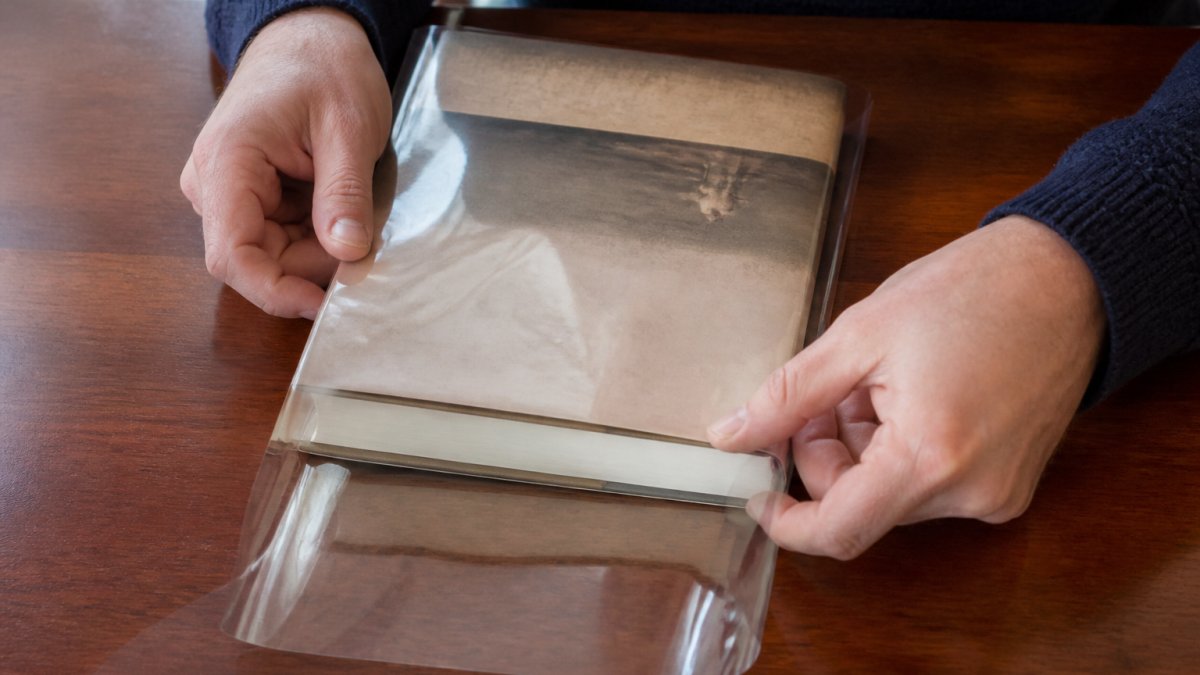
Measuring Your Dust Jacket Accurately
Measure your dust jacket precisely; ill-fitting sleeves bunch up or leave gaps. Measure height (including back flap) and width when wrapped. Order sleeves that match or slightly exceed these measurements. Standard hardcover jackets can vary significantly, so always measure yours specifically.
Installing the Protective Sleeve Without Damage
Remove the dust jacket carefully, sliding it off slowly with both hands; don't pull sharply or twist. Lay the jacket flat on a clean surface. Check the sleeve for tears. Smooth out air pockets. The jacket should sit snugly but not tight; too small will crease it, too large allows shifting. Once inserted, check that it's centred with even edges. Gently press the sleeve for good contact without creasing the jacket.
How to Prevent Ink Fading on Signed Books
The signature is the most vulnerable part of a signed book. UV light is the primary culprit; sunlight fades ink over months, and indoor lighting over years. Humidity fluctuations cause paper to expand and contract, stressing ink. Stable humidity between 30% and 50% keeps ink intact.
Store signed books away from direct sunlight in interior rooms. Avoid windowsills, exterior walls, and humid rooms. Rotate displayed books periodically.
Keep most valuable signed copies in climate-controlled storage boxes to protect against light and humidity swings.
Best Practices for Storing Signed Books
Where and how you store signed books matters as much as what you wrap them in. Poor storage conditions can undo all your protection efforts.
Book; Melbourne Remember When. Bob Byrne. (Author signed copy). →
Environmental Factors: Humidity, Light, and Temperature
Temperature and humidity fluctuations cause paper to expand and contract, stressing the binding and ink. Keep signed books at 16°C-21°C with 30-50% humidity. Avoid basements (damp), attics (hot and dry), and kitchens (steam and swings).
UV rays fade ink and bleach paper within months. Climate-controlled storage is best for valuable editions; a spare bedroom closet or a temperature-controlled unit protects from irreversible environmental damage.
Storage Orientation and Shelf Placement
Store signed books upright; stacking flat compresses spines and creases jackets. Leave space around each book to prevent friction and edge wear. For valuable copies, store horizontally in archival boxes to distribute weight and protect from dust and light.
Avoid shelves above radiators, near vents, or in direct sunlight, as these create damaging temperature and humidity extremes.
Handling and Reading Techniques for Signed Editions
Careful handling prevents damage that protection can't reverse. Signed editions require different care, as the signature is a separate preservation challenge.
Protecting the Signature: Oils, Moisture, and Light
Signature ink is often lighter and more prone to fading than printed text, and it's exposed to skin contact every time you open the book. Wash and dry hands before reading; skin oils transfer within seconds and can cause uneven darkening. Signatures fade faster than printed text. When moisture levels fluctuate, the paper expands and contracts, affecting ink stability.
Safe Reading Practices
Open the book gently. Don't crack the spine by forcing the covers flat. Support the book with both hands when reading. Never dog-ear pages or write in signed books; even pencil marks are permanent and reduce resale value. Use bookmarks instead of folding pages.
If you spill anything on a signed book, don't panic. Blot gently with acid-free tissue. Do not rub.
Long-Term Maintenance Schedule
Protection isn't a one-time task. Signed books require periodic inspection to catch problems early.
Quarterly (every 3 months):
- Visually inspect the dust jacket for signs of foxing (brown spots), edge wear, or colour fading.
- Check that the protective sleeve is intact and hasn't shifted.
- Ensure the storage area remains cool and dry (use a basic thermometer and humidity gauge if possible).
Annually:
- Remove the book from storage and inspect the signature for any fading or discolouration.
- Gently dust the protective sleeve with a soft, dry cloth (never the jacket itself).
- Rotate the book's position on the shelf or in the box to ensure even light exposure.
- Check for any signs of mould, water damage, or pest activity in the storage area.
Every 2-3 years:
- If the protective sleeve shows signs of wear (cloudiness, small tears, or brittleness), replace it with a new archival sleeve.
- Review your storage conditions; if you've moved house or changed your climate control, reassess whether your books are still in an ideal environment.
- For particularly valuable signed editions, photograph the signature and jacket condition for insurance purposes.
Signs you need to intervene immediately:
- Visible mould or mildew on the jacket or sleeve.
- Water stains or warping of the dust jacket.
- Significant fading of the signature (compare to photos taken when you acquired the book).
- Tears or creasing in the protective sleeve that expose the jacket.
- Pest damage (small holes, droppings, or debris).
If you notice any of these, move the book to a safer location immediately and consider professional conservation if the damage is significant.
Common Mistakes to Avoid
Even well-intentioned collectors make mistakes that damage signed books.
Don't use regular plastic wrap; it traps moisture and causes mould. Don't expose signed books to direct sunlight; UV rays fade signatures within months. Don't stack signed books flat; weight crushes the spine and binding. Don't handle signed books with wet or dirty hands; moisture causes water spots. Don't force protective sleeves onto dust jackets; tight sleeves crease the jacket.
Protecting signed book dust jackets from damage isn't complicated, but it does require the right approach. The combination of archival protective sleeves, stable storage conditions, and careful handling keeps your signed books pristine for decades. Remember When Shop's collection of signed Australian nostalgia books deserves this level of care; each one is a connection to the past and a gift worth preserving. Start with quality archival materials, measure your jackets carefully, and store them in a cool, dry place. Your future self will thank you when you open that signed copy years from now and find the author's inscription still clear and vibrant.
Frequently Asked Questions
What's the best material for archival book covers to protect signed dust jackets?
Mylar and acid-free polyester film are the gold standards for archival protection. Mylar offers superior clarity and durability, allowing the dust jacket design and signature to remain visible whilst shielding against moisture, dust, and UV damage. Acid-free materials prevent chemical deterioration that can yellow or fade the paper and ink over time. Avoid PVC-based plastics, which trap moisture and degrade signed editions. Look for covers specifically labelled as archival quality to ensure they meet preservation standards.
How do you store signed books to prevent fading and damage?
Store signed books upright on shelves away from direct sunlight, which fades signatures and dust jacket colours. Maintain stable humidity between 30-50% and temperature around 18-21°C to prevent warping and ink degradation. Keep them in a climate-controlled space away from kitchens and bathrooms where moisture and temperature fluctuate. Use book supports or stands to prevent leaning, which stresses the spine and binding. Never stack signed editions horizontally, as this increases pressure on the dust jacket and can cause edge wear or creasing.
Should you remove the dust jacket from a signed book?
Generally, no. Keeping the dust jacket on protects the book's condition and preserves the author's signature. However, if the jacket shows severe damage or the signature is on the book cover itself (not the jacket), you may remove it carefully and store it separately in an archival sleeve. Most collectors prefer jackets to remain in place with protective covering, as they add significant value to the edition and protect the underlying hardcover from fading and shelf wear.
What should you do if a signed book's dust jacket shows foxing or staining?
Foxing (brown spots caused by humidity and age) and stains require careful handling. Do not attempt to clean or treat the jacket yourself, as this risks damaging the signature and paper further. Instead, place the book in an archival protective sleeve to prevent the condition from worsening and to stabilise humidity around it. If the damage is severe, consult a professional book conservator before taking any action. For prevention, ensure your storage environment maintains consistent humidity and stays away from direct sunlight and environmental hazards.